February 19, 2026


Last Updated: January 2026
GEO stands for Generative Engine Optimization. It refers to the practice of optimizing content so AI-powered search platforms—like ChatGPT, Perplexity, and Google AI Overviews—find, understand, and cite it when generating responses to user queries.
This guide explains what GEO means, how it relates to traditional SEO, and why it has become an essential part of search optimization in 2026.
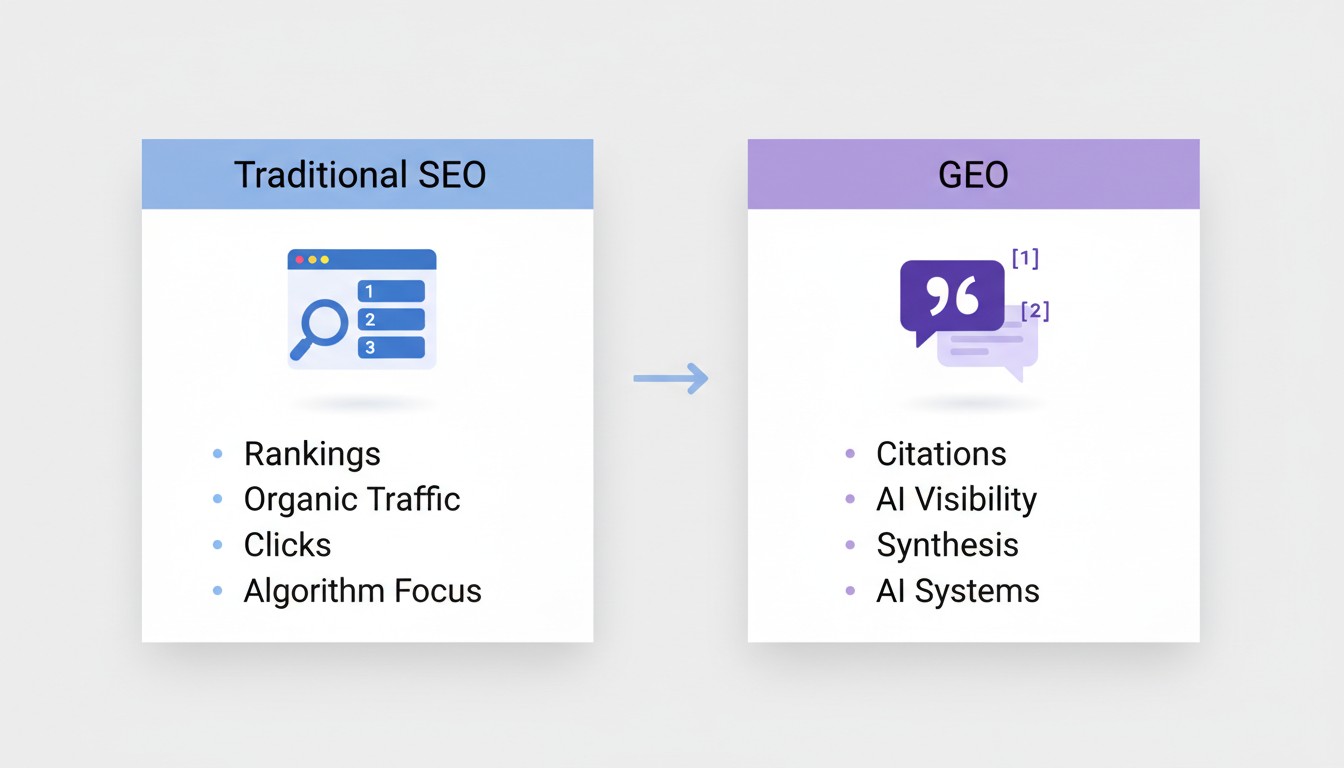
Generative Engine Optimization (GEO) is the process of structuring content to appear in AI-generated search responses. Unlike traditional SEO, which aims to rank pages in search results, GEO focuses on getting content selected as the source when AI systems synthesize answers.
The term "generative engine" refers to AI systems that generate responses rather than simply returning links. These include:
When users query these systems, they receive synthesized answers rather than lists of links. GEO ensures your content becomes part of those synthesized answers.
Traditional SEO and GEO share foundations but serve different purposes.
Aspect | Traditional SEO | GEO |
Primary Goal | Rank pages in search results | Get cited in AI-generated responses |
Success Metric | Rankings, organic traffic, clicks | Citation frequency, AI visibility |
User Behavior | Click through to websites | Receive answers directly |
Optimization Target | Search engine algorithms | AI retrieval and synthesis systems |
Content Focus | Comprehensive pages that rank | Extractable statements AI can quote |
Traditional SEO makes your content discoverable and rankable. GEO makes your content quotable and selectable. Both matter because AI systems often reference content that already performs well in traditional search.
Research shows significant overlap between top organic results and AI citations. Strong SEO performance supports better AI visibility, making the disciplines complementary rather than competing. Understanding generative AI SEO optimization helps bridge these two approaches effectively.
User behavior has shifted significantly toward AI-powered search:
Brands invisible in AI responses lose visibility to competitors who appear. This isn't a future concern—it's the current reality of how many users find information.
AI search often provides complete answers without requiring users to click through to source websites. This creates both challenges and opportunities:
Challenge: Traditional traffic metrics may decline even when content performs well.
Opportunity: Brands cited as authoritative sources build awareness and credibility even without direct clicks.
GEO addresses this shift by ensuring your brand appears as the trusted source, regardless of whether users click through. Many organizations now track AEO optimization metrics alongside traditional SEO KPIs to measure their performance in both ecosystems.
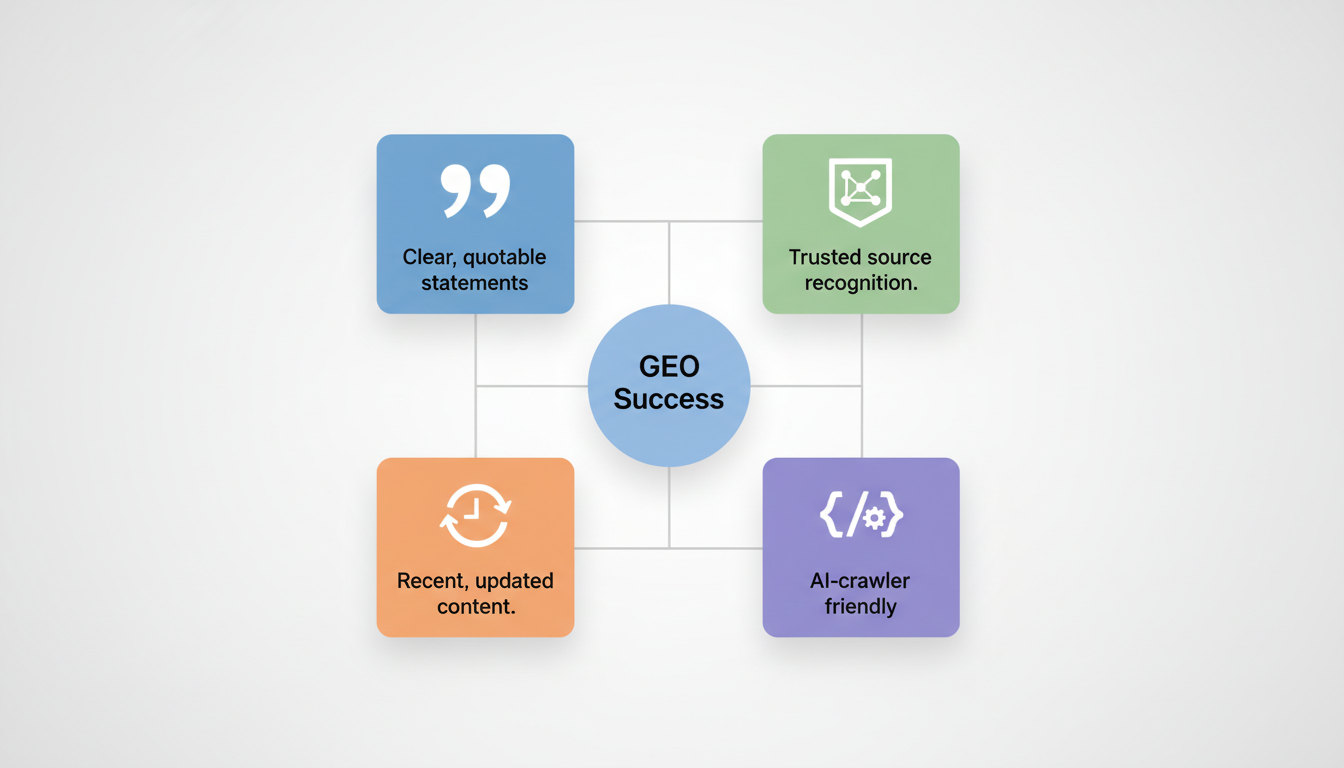
Effective GEO builds on several foundational concepts.
AI systems extract specific passages rather than summarizing entire articles. They look for clear, quotable statements that can stand alone in generated responses.
Optimize for extraction by:
AI systems evaluate whether sources deserve citation. They assess authority through entity relationships—connections between your brand, your experts, and topics you cover.
Build entity authority by:
Understanding AI overview authority signals helps you build the right signals that generative engines look for when evaluating sources.
AI platforms favor recent content over outdated material. Perplexity in particular strongly weights recency when selecting sources to cite.
Maintain freshness by:
AI crawlers need to access your content. This requires:
Proper schema validation AI search implementation ensures AI systems can parse and understand your content structure correctly.
You may also encounter the term AEO (Answer Engine Optimization). GEO and AEO refer to essentially the same practice with slightly different emphasis:
In practice, both terms describe optimizing content for AI-powered search visibility. The techniques overlap almost entirely.
If you're new to GEO, start with these steps:
GEO is Generative Engine Optimization—the practice of optimizing content for AI-powered search platforms.
GEO complements SEO—strong traditional SEO performance often supports better AI visibility.
The shift is happening now—billions of searches happen through AI platforms monthly.
Core tactics include: extractable content structure, entity authority building, content freshness, and technical accessibility.
No. GEO builds on SEO foundations. AI platforms frequently reference content that performs well in traditional search. Most organizations need both disciplines working together rather than choosing one over the other.
Not necessarily. Most GEO optimization involves restructuring existing content rather than creating entirely new pages. The same quality content can serve both SEO and GEO purposes with structural adjustments.
Track citation frequency across AI platforms, AI referral traffic in analytics, share of voice versus competitors, and citation accuracy. Tools like Otterly.AI and Profound provide AI-specific visibility metrics.
By submitting this form, you agree to our Privacy Policy and Terms & Conditions.