
February 19, 2026


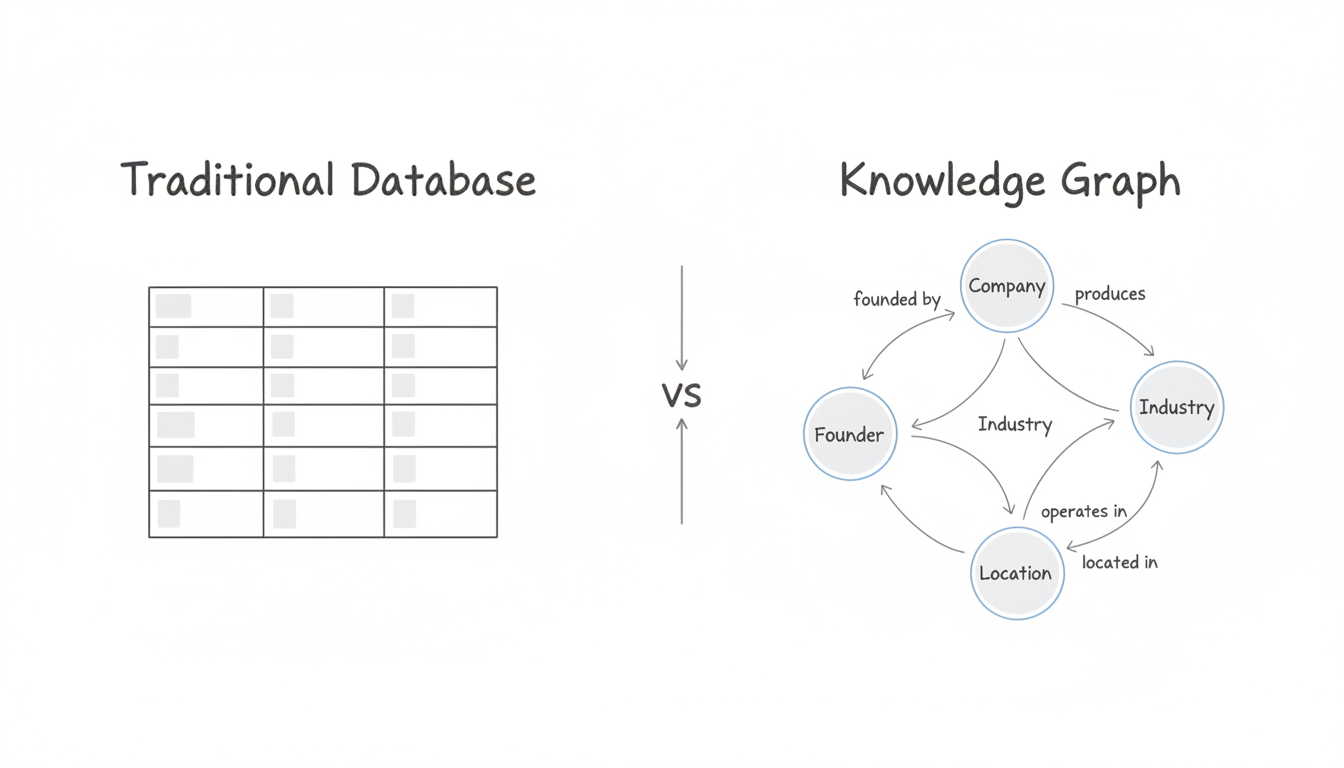
Knowledge graphs have transformed how search engines understand and present information. Rather than simply matching keywords to pages, Google's Knowledge Graph connects entities—people, places, organizations, and concepts—to deliver more accurate, contextual search results. Understanding how knowledge graphs work is essential for modern SEO strategy.
This guide explains what knowledge graphs are, how Google's Knowledge Graph impacts SEO, and how to optimize your content for entity-based search.
A knowledge graph is a way of organizing information so that it is structured, interconnected, and machine-readable. According to WikiConsult's knowledge graph definition, knowledge graphs organize data in graph structures where entities (nodes) connect through relationships (edges), enabling machines to understand context and meaning.
Core components of a knowledge graph:
Component | Description |
Entities | People, places, organizations, concepts, things |
Attributes | Properties that describe entities (name, date, location) |
Relationships | Connections between entities (founded by, located in) |
Identifiers | Unique IDs that distinguish entities (KGMID) |
Unlike traditional databases that store data in tables, knowledge graphs represent information as a network of interconnected facts—allowing machines to understand how things relate to each other.
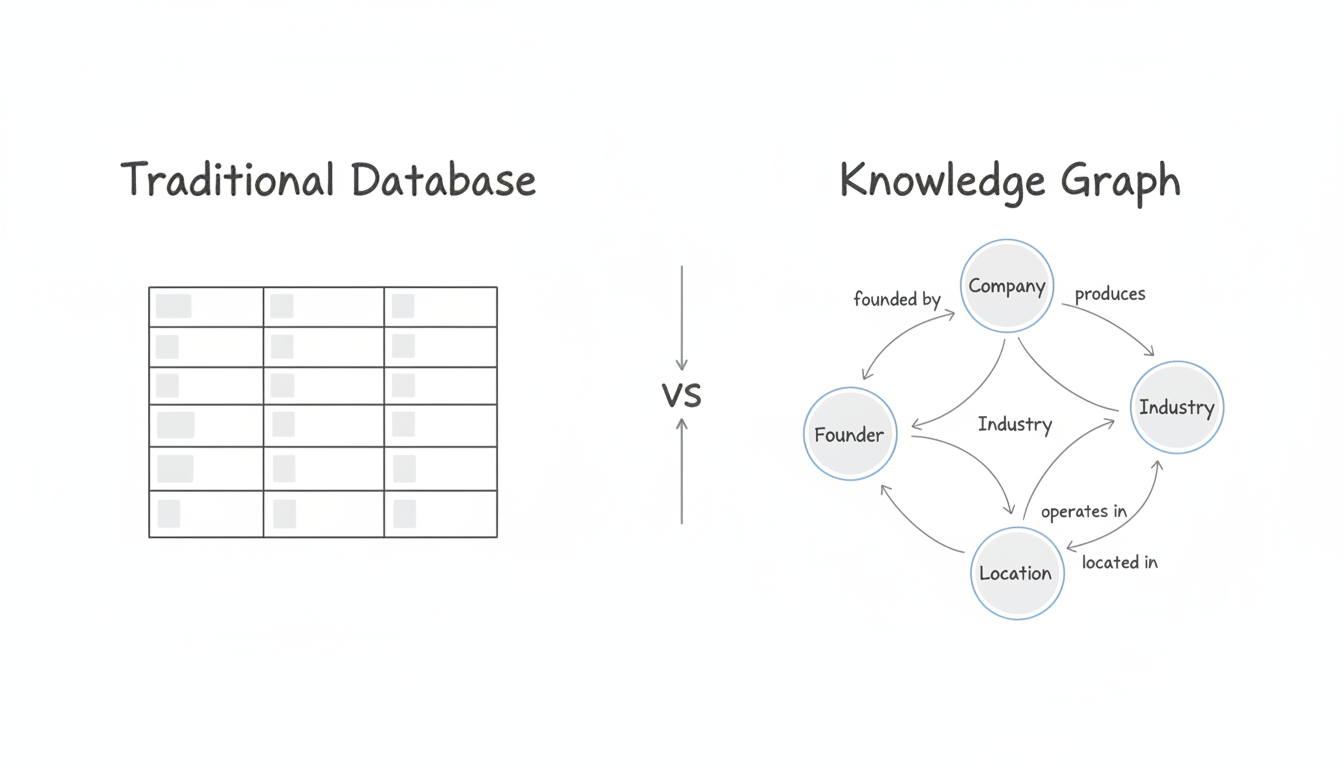
Google launched its Knowledge Graph in 2012 to help search understand the meaning behind queries rather than just matching keywords. According to PM Consulting, Google's Knowledge Graph is essentially a massive database of entities, and every entity has a unique identifier called a KGMID (Knowledge Graph Machine ID).
How Google's Knowledge Graph works:
Knowledge Graph sources:
Knowledge panels are the most visible manifestation of Google's Knowledge Graph. According to Indexsy's knowledge panel analysis, knowledge panels are information boxes that appear prominently in search results, providing concise details about entities.
Types of knowledge panels:
What knowledge panels display:
Knowledge graphs impact SEO in several significant ways, especially as search engines evolve toward AI-powered search assistant technologies.
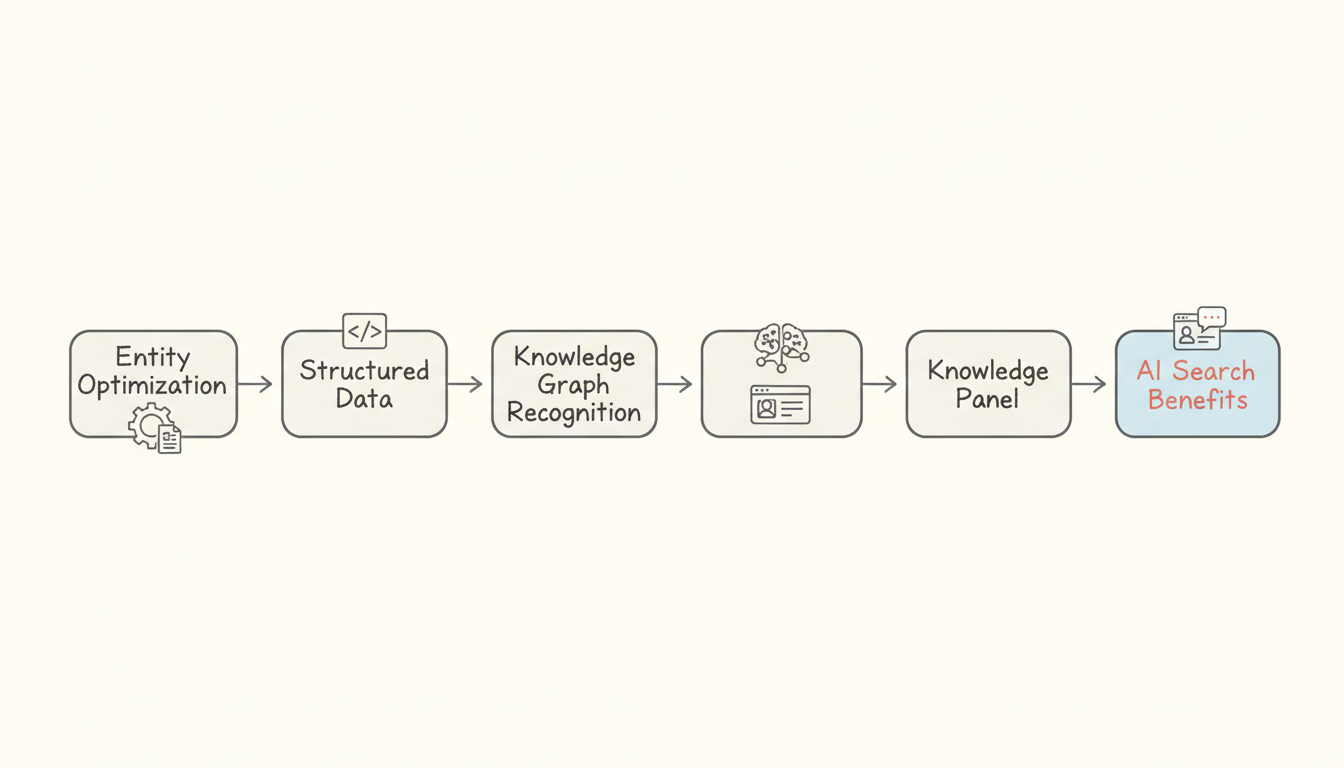
Modern SEO increasingly focuses on entities rather than just keywords. According to ClickRank's entity SEO guide, entity SEO is the practice of optimizing content so search engines recognize concepts, not just keywords—allowing search engines to differentiate based on context.
Entity SEO benefits:
Appearing in a knowledge panel significantly increases brand visibility and credibility. According to Indexsy, knowledge panels can greatly enhance visibility and credibility in search results, though they may affect click-through rates differently depending on the query type.
Knowledge panel impact:
Knowledge graphs are foundational to AI search systems. According to Hill Web Creations, Google Search, its Knowledge Graph, and all leading LLMs recognize and process websites and domain names as distinct, identifiable entities—making entity optimization crucial for AI search visibility.
AI search connections:
While you can't directly add your entity to Google's Knowledge Graph, you can influence whether Google recognizes and includes your entity.
According to WikiConsult, being listed in Crunchbase, Wikidata, or Wikipedia increases the chances of appearing in a knowledge panel or being mentioned by AI systems like ChatGPT.
Authoritative sources to target:
Schema markup helps search engines understand entity information on your website. Implementing howto-schema-ai-search can enhance your visibility in AI-driven search results by providing clear, structured information about your content.
Key schema types for entity optimization:
For local businesses, consistent Name, Address, Phone (NAP) information across the web strengthens entity recognition.
NAP consistency locations:
Structure content around entities and their relationships rather than just keywords. This approach aligns with aeo-content-guidelines that help optimize for both traditional and AI-powered search engines.
Entity content strategies:
Knowledge graphs represent the foundation of semantic search and AI-driven discovery.
Future developments:
According to Revved Digital, AI search engines now use entities as their building blocks to understand and organize information, making entity optimization essential for visibility in both traditional and AI-generated search results. This shift has influenced searchgpt-market-share as AI-powered search continues to grow.
Understanding knowledge graphs is essential for modern SEO:
For SEO practitioners in 2026, understanding knowledge graphs means understanding how modern search engines think—in entities, relationships, and context rather than just keywords and links.
By submitting this form, you agree to our Privacy Policy and Terms & Conditions.



