February 19, 2026


Google AI Overviews have transformed how users find information—and some brands have figured out how to thrive in this new landscape. While many websites report traffic declines, others are capturing significant visibility and qualified leads through AI Overview citations. These success stories reveal patterns that any organization can apply.
This analysis examines real case studies of companies winning in AI Overviews and extracts the strategies driving their success.
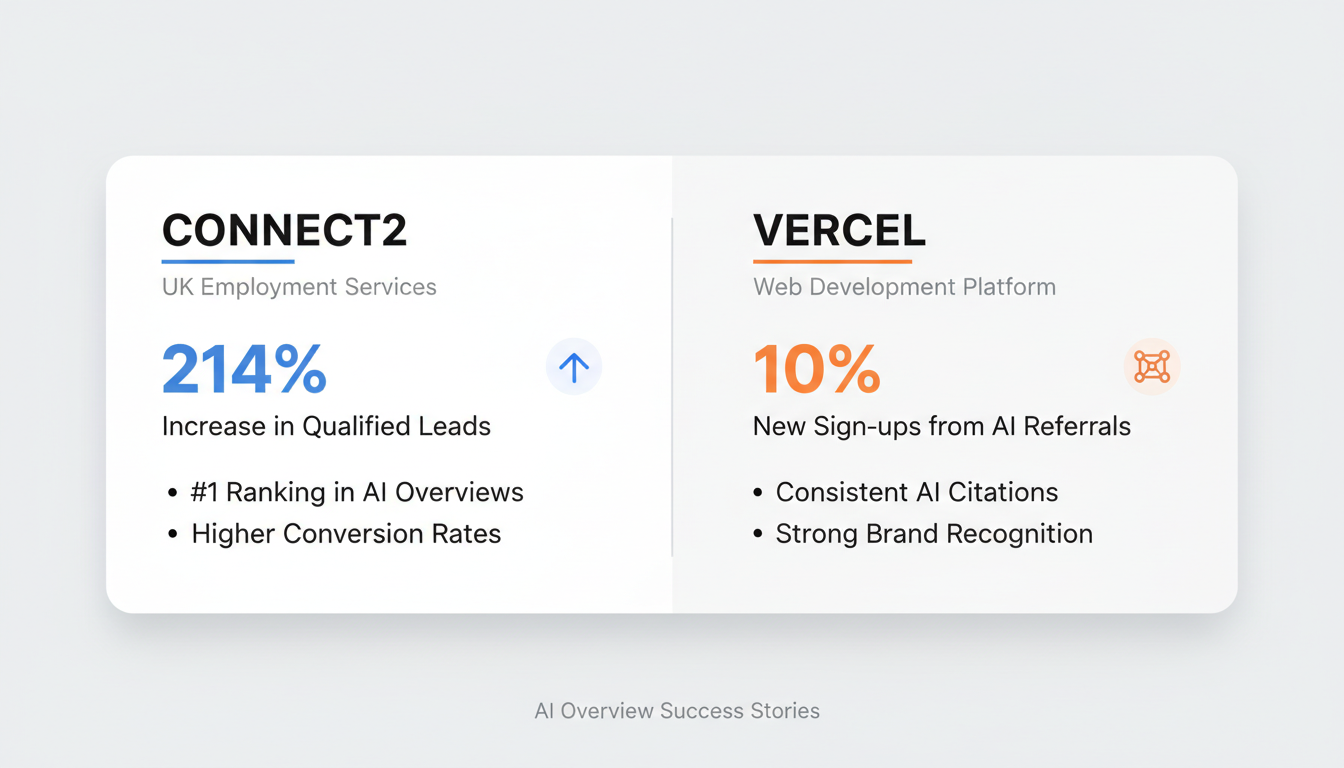
Connect2, a UK-based employment services company, provides one of the most documented AI Overview success stories. Their results demonstrate what's possible with focused optimization.
Within three months of implementing their AI Overview strategy:
Connect2's approach centered on several key elements:
Content restructuring: They reorganized existing content to directly answer questions users ask. Each page focused on providing complete, authoritative responses that AI systems could confidently cite.
E-E-A-T enhancement: The company emphasized credentials, experience, and trustworthiness signals throughout their content. Author bylines, company expertise, and industry certifications became prominent.
Technical optimization: Structured data implementation helped search engines understand content context. Schema markup clarified entities, relationships, and content types.
The Connect2 case demonstrates that AI Overview success isn't about gaming algorithms—it's about becoming the most authoritative, helpful source on your topics.
Vercel, the web development platform, discovered an unexpected growth channel: AI chatbot referrals including ChatGPT.
Vercel's success stems from factors that extend beyond traditional SEO:
Developer community presence: Vercel has extensive documentation, tutorials, and community engagement. AI systems trained on web content encounter Vercel frequently in technical contexts.
Clear product positioning: When developers ask AI systems about deployment platforms or Next.js hosting, Vercel's consistent messaging across thousands of sources makes it the obvious answer.
Documentation quality: Comprehensive, well-structured documentation provides exactly what AI systems need to generate accurate recommendations.
Vercel's case illustrates how brand presence across the web—not just owned properties—influences AI citation patterns.
Research analyzing AI Overview citations reveals consistent patterns among winning sites, similar to what we see in generative AI search optimization more broadly.
Studies examining thousands of AI Overview responses found:
Analysis of frequently-cited sources reveals shared characteristics:
Established authority: High domain authority correlates strongly with AI Overview inclusion. Sites with extensive backlink profiles and long publishing histories appear more frequently.
Comprehensive coverage: Winners don't publish thin content. They create thorough resources that fully address user questions, implementing strategies from AI content optimization best practices.
Brand web presence: The correlation between brand mentions across the web and AI Overview appearance is stronger than traditional ranking factors. Being discussed, referenced, and linked across authoritative sources matters.
Structured information: Content organized with clear headings, tables, lists, and logical structure gets cited more often. AI systems extract structured content more easily.
Based on documented successes, these strategies consistently produce results.
Answer-first content: Start articles with direct answers to the main question. Don't bury key information below introductions or background sections.
Comprehensive topic coverage: Address related questions within the same content. When AI systems need to synthesize complete answers, thorough coverage wins.
Original research and data: Unique statistics, surveys, and analysis get cited. AI systems value sources that provide information unavailable elsewhere.
Schema markup deployment: Implement relevant schema types—Article, FAQ, HowTo, Organization, Person. Structured data helps AI systems understand content context.
Page experience optimization: Fast-loading, mobile-friendly pages with good Core Web Vitals perform better. Technical excellence supports content authority.
Content freshness: Regular updates with accurate, current information signal relevance. Outdated content loses citation opportunities.
Cross-platform consistency: Maintain consistent brand information across your website, social profiles, Wikipedia, Wikidata, and industry directories. AI systems cross-reference sources.
Earned media presence: PR coverage, guest contributions, and industry mentions expand your brand's web footprint. More authoritative mentions increase AI citation likelihood.
Community engagement: Active participation in relevant forums, communities, and discussions builds the brand presence that AI systems recognize.
Winning brands track specific metrics to measure progress, using approaches similar to AI search success metrics by industry.
AI Overview appearance rate: What percentage of your target queries trigger AI Overviews featuring your brand?
Citation frequency: How often does your content get cited in AI-generated responses?
Referral traffic from AI: Monitor traffic from AI chatbots and AI-enhanced search through analytics.
Brand mention growth: Track mentions across the web using brand monitoring tools.
Compare your metrics against industry averages:
Understanding what doesn't work clarifies the path to success. Common mistakes include:
Over-optimization for keywords: Sites focusing on keyword density rather than comprehensive answers fail to earn citations. AI systems recognize natural, helpful content.
Thin content at scale: Publishing hundreds of shallow articles hoping some get cited wastes resources. Quality beats quantity decisively in AI Overview selection.
Ignoring brand signals: Sites with strong on-page optimization but weak off-page presence struggle. AI systems weight brand authority heavily.
Static content strategies: Set-it-and-forget-it approaches fail as information becomes outdated. Continuous improvement drives sustained success.
Winners share approaches that transcend industry specifics:
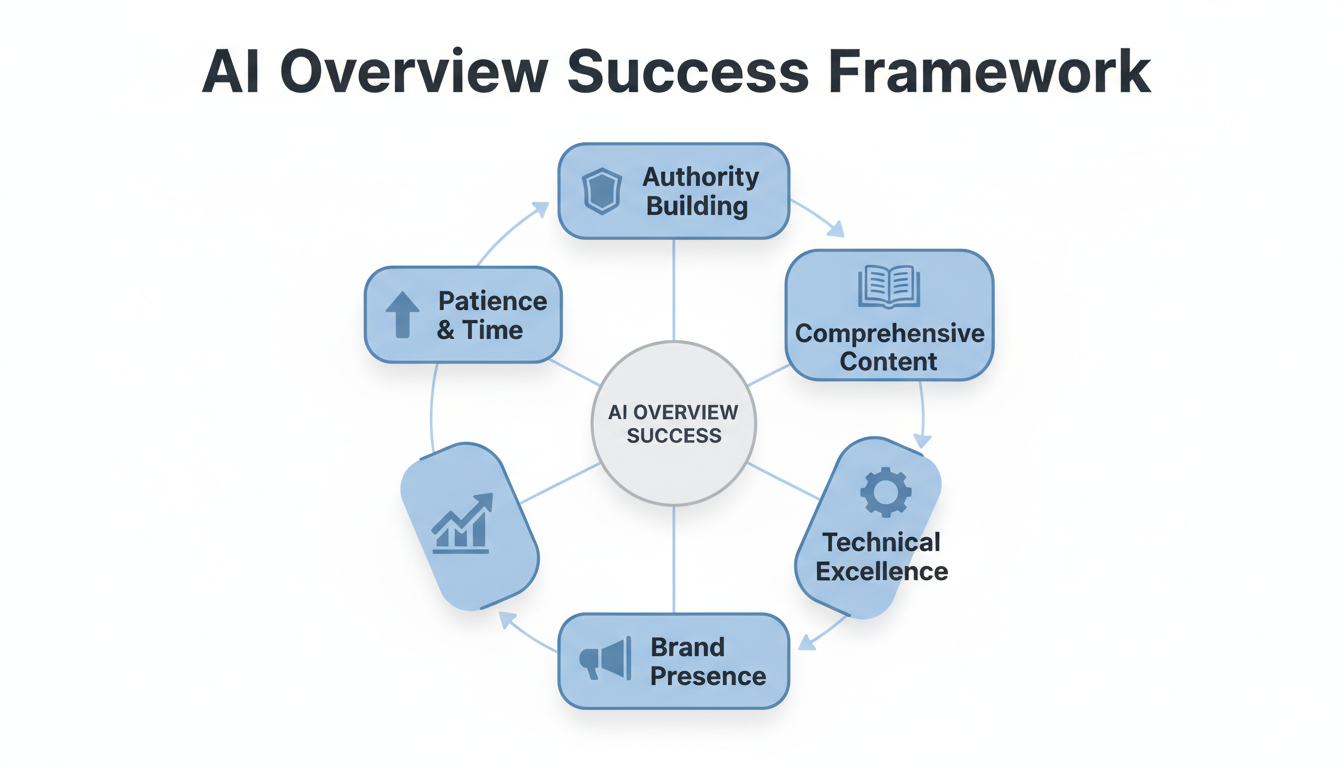
Long-term investment: Neither Connect2 nor Vercel achieved overnight success. Both invested in content quality and brand building over extended periods.
User-centric content: Both focused on genuinely helping their audiences rather than optimizing for algorithms. Quality content that serves users gets cited.
Technical foundation: Strong technical SEO—structured data, performance, crawlability—supported content efforts.
Measurable goals: Both organizations tracked specific metrics and adjusted strategies based on data.
The case studies reveal that AI Overview success requires:
The brands winning in AI Overviews aren't using tricks or shortcuts. They're applying fundamental principles of value creation—being genuinely helpful, authoritative, and trustworthy. In a landscape where AI systems evaluate content quality at scale, these principles matter more than ever.
By submitting this form, you agree to our Privacy Policy and Terms & Conditions.