
February 19, 2026



AEO for SaaS companies requires distinct approaches that reflect how B2B software buyers research, evaluate, and make purchasing decisions. As buyers increasingly rely on ChatGPT, Perplexity, Gemini, and Claude to research software solutions, SaaS brands that remain invisible in these AI-generated answers lose opportunities to competitors who've adapted their visibility strategies.
This guide provides industry-specific Answer Engine Optimization strategies for SaaS companies, addressing the unique challenges and opportunities of positioning B2B software brands for AI search visibility.
SaaS purchasing decisions involve extended research cycles, multiple stakeholders, and complex evaluation criteria that differ fundamentally from consumer purchases. AEO strategies must address these realities.
Modern B2B software buyers conduct extensive independent research before engaging vendors. Research indicates that B2B buyers complete 70-80% of their evaluation process before contacting sales teams. Increasingly, this research happens through AI platforms.
How AI changes SaaS research:
When AI platforms answer "What's the best CRM for mid-market companies?" or "How does [Tool A] compare to [Tool B]?", the brands appearing in those responses capture buyer attention during critical decision moments.
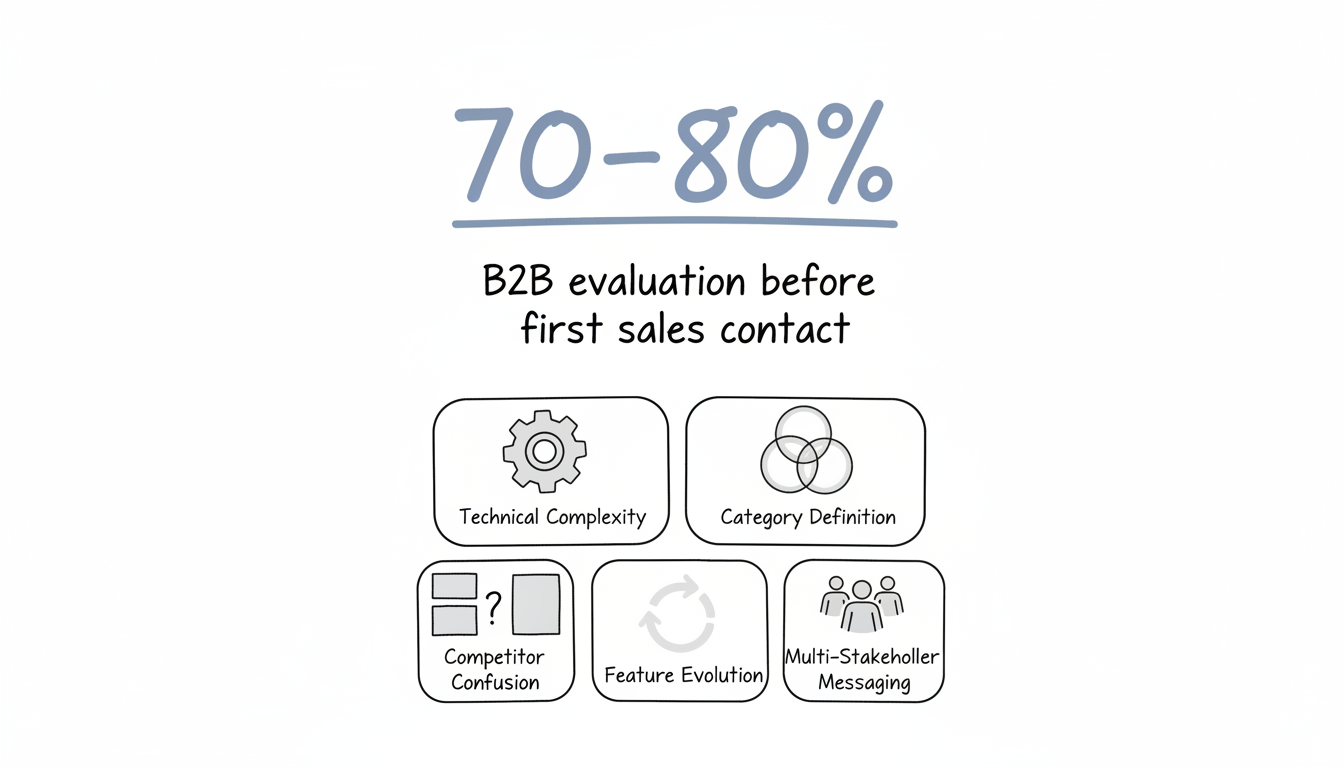
SaaS companies face unique AEO challenges that consumer brands don't encounter:
Technical complexity: Software capabilities require clear explanation for AI systems to understand and accurately represent.
Category definition: SaaS products often span multiple categories or create new ones, complicating how AI systems classify and recommend them.
Competitor confusion: Similar-sounding products can blur AI understanding of distinct offerings.
Feature evolution: Regular updates and new capabilities require continuous optimization to maintain accurate AI representation.
Multi-stakeholder messaging: Different buyers (technical, financial, operational) need different information, complicating content organization.
AI systems must understand what your SaaS product does before they can recommend it appropriately. Entity clarity forms the foundation of effective SaaS AEO, and implementing proper entity optimization for AI search ensures accurate representation across platforms.
Clearly position your product within recognizable software categories while differentiating from competitors.
Category positioning requirements:
Implementation: Create a consistent positioning statement appearing across your homepage, product pages, about section, and marketing materials. AI systems synthesize information from multiple sources—consistency ensures accurate understanding.
AI systems draw on knowledge graphs to understand entities and their relationships.
Knowledge graph strategies:
Schema implementation for SaaS:
{
  "@context": "https://schema.org",
  "@type": "SoftwareApplication",
  "name": "Your Product Name",
  "applicationCategory": "BusinessApplication",
  "operatingSystem": "Web-based",
  "offers": {
    "@type": "Offer",
    "price": "0",
    "priceCurrency": "USD"
  }
}
Structured data helps AI systems accurately categorize and describe your product, particularly when combined with effective generative AI for structured data implementation.
AI systems frequently cite sources when answering specific capability questions. Clear feature documentation increases citation likelihood.
Feature content optimization:
SaaS content must serve multiple purposes: educating buyers, demonstrating expertise, and providing extractable information for AI citations.
AI platforms frequently receive comparison queries: "What's the difference between X and Y?" or "Which tool is best for [use case]?"
Comparison content requirements:
Why honesty matters: AI systems evaluate content quality. Transparently acknowledging where competitors excel actually increases citation likelihood because it demonstrates expertise and builds trust signals.
B2B buyers research solutions for specific problems. Content addressing particular use cases earns citations when AI platforms answer related queries, and understanding what is geo in search engine optimization helps target location-specific use cases.
Use case content structure:
Example structure: "[Product Name] for [Use Case]: [Direct capability statement]. Companies using [Product] for [use case] typically achieve [outcomes]. Here's how the solution addresses key requirements..."
SaaS buyers frequently ask about integrations. AI platforms answering "Does X integrate with Y?" need clear documentation to cite.
Integration content requirements:
Integration pages often earn citations for specific technical queries that broader marketing content misses.
B2B SaaS buyers value expertise. Thought leadership content demonstrating genuine insight earns both buyer trust and AI citations.
Citation-worthy thought leadership:
Key principle: Generic thought leadership gets ignored. Content providing unique insights or data that AI systems can't find elsewhere earns citation priority.
SaaS websites often have technical characteristics requiring specific AEO attention, and conducting a thorough AEO technical audit identifies optimization opportunities.
Many SaaS sites inadvertently block AI crawlers through robots.txt or technical configuration.
Crawler access checklist:
Common SaaS-specific issues:
SaaS documentation often contains exactly the information AI systems need for technical queries.
Documentation optimization:
Well-optimized documentation can earn citations for "how to" queries that marketing content doesn't address.
Pricing queries are common in SaaS research. AI platforms answering pricing questions need clear information to cite.
Pricing page requirements:
Even "custom pricing" models benefit from clarity about what determines pricing and typical ranges.
AI systems prioritize authoritative sources. SaaS companies must build authority signals AI systems recognize, and studying AEO success stories and case studies reveals effective authority-building patterns.
G2, Capterra, TrustRadius, and similar platforms significantly influence AI perceptions of SaaS products.
Review platform optimization:
AI systems frequently cite review platforms when comparing SaaS options. Strong presence influences how your product appears in comparisons.
Being mentioned by respected industry publications builds authority AI systems recognize.
Publication strategies:
Reddit and other communities appear frequently in AI citations. Strategic community presence can influence AI visibility.
Community guidelines:
Community discussions influence how AI systems understand and represent your product's reputation.
SaaS companies need measurement approaches reflecting their specific visibility needs, including tracking AI overview performance alongside traditional metrics.
Monitor how your product appears when AI platforms answer category and comparison questions.
Priority queries to track:
What to measure:
Where possible, connect AI visibility changes to business metrics.
Attribution approaches:
Track competitor AI visibility and adapt accordingly, leveraging insights from mid-tier AI SEO software for comprehensive monitoring.
Competitive monitoring:
Learning from common failures accelerates success.
AI systems struggle with marketing-speak that doesn't clearly explain what products do. "Revolutionary platform that transforms workflows" tells AI nothing useful.
Fix: Use clear, specific language explaining capabilities in practical terms.
SaaS companies often focus AEO on marketing content while ignoring documentation that could earn technical query citations.
Fix: Optimize documentation alongside marketing content. Technical queries deserve optimized answers too.
Different pricing, features, or positioning across platforms confuses AI systems about what's accurate.
Fix: Audit and align information across website, review platforms, directories, and marketing materials.
Some SaaS companies treat review platforms as maintenance rather than visibility channels.
Fix: Actively manage review platform presence as a core AEO activity.
Fear of highlighting competitors leads some SaaS companies to avoid comparison content entirely.
Fix: Create comprehensive comparison content. AI will compare your product anyway—ensure accurate information exists to cite.
Prioritize implementation based on impact and effort, and consider whether to pursue AEO implementation services for faster execution.
Immediate priorities (weeks 1-2):
Short-term priorities (months 1-2):
Ongoing priorities (continuous):
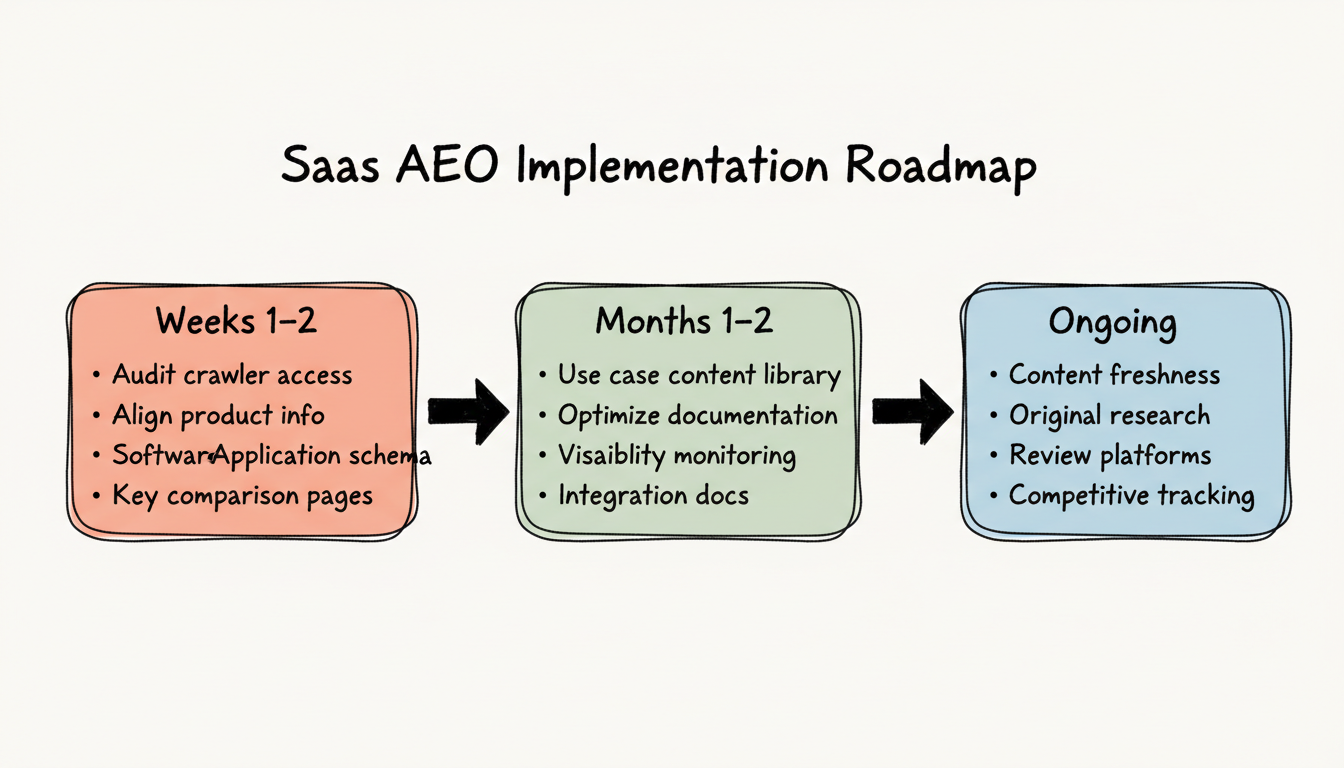
SaaS AEO emphasizes comparison content, technical documentation, use case specificity, and review platform presence more heavily than consumer AEO. The extended B2B evaluation cycle and multiple stakeholder involvement require different content strategies, and understanding AEO vs digital marketing clarifies the broader strategic context.
Yes, comparison content is essential for SaaS AEO. AI platforms frequently receive comparison queries and need accurate information to cite. Honest, comprehensive comparisons demonstrating expertise earn citations more reliably than avoiding the topic.
Technical fixes and content structure improvements may show results within weeks. Authority building and comprehensive visibility improvement typically require 2-4 months. SaaS companies with existing strong SEO foundations often see faster results.
Significantly. AI systems frequently cite review platforms when comparing SaaS options or answering reputation questions. Strong G2, Capterra, and TrustRadius presence influences AI perception and recommendation patterns.
By submitting this form, you agree to our Privacy Policy and Terms & Conditions.



