February 19, 2026



AEO and GEO courses have become essential for marketers adapting to the AI-transformed search landscape. As users increasingly discover information through ChatGPT, Perplexity, Google AI Overviews, and other AI platforms, traditional SEO skills alone no longer suffice. Answer Engine Optimization (AEO) and Generative Engine Optimization (GEO) require distinct competencies that structured learning programs can develop.
This guide examines what AEO and GEO courses cover, the skills they develop, and how to choose the right learning path for your career or team.
Before selecting courses, understanding what each discipline entails helps identify relevant training.
AEO focuses on optimizing content for featured snippets, knowledge panels, voice search responses, and direct answers that appear before traditional search results. When Google or voice assistants provide immediate answers rather than listing links, AEO determines whether your content becomes that answer.
Core AEO skills:
AEO targets single-answer systems where one source receives the featured position.
GEO prepares content for AI platforms that synthesize answers from multiple sources. ChatGPT, Perplexity, Claude, and Google AI Overviews generate responses by combining information from various citations. GEO influences which sources receive attribution within these generated responses.
Core GEO skills:
GEO addresses how AI systems reference, explain, and recommend brands within generated responses.
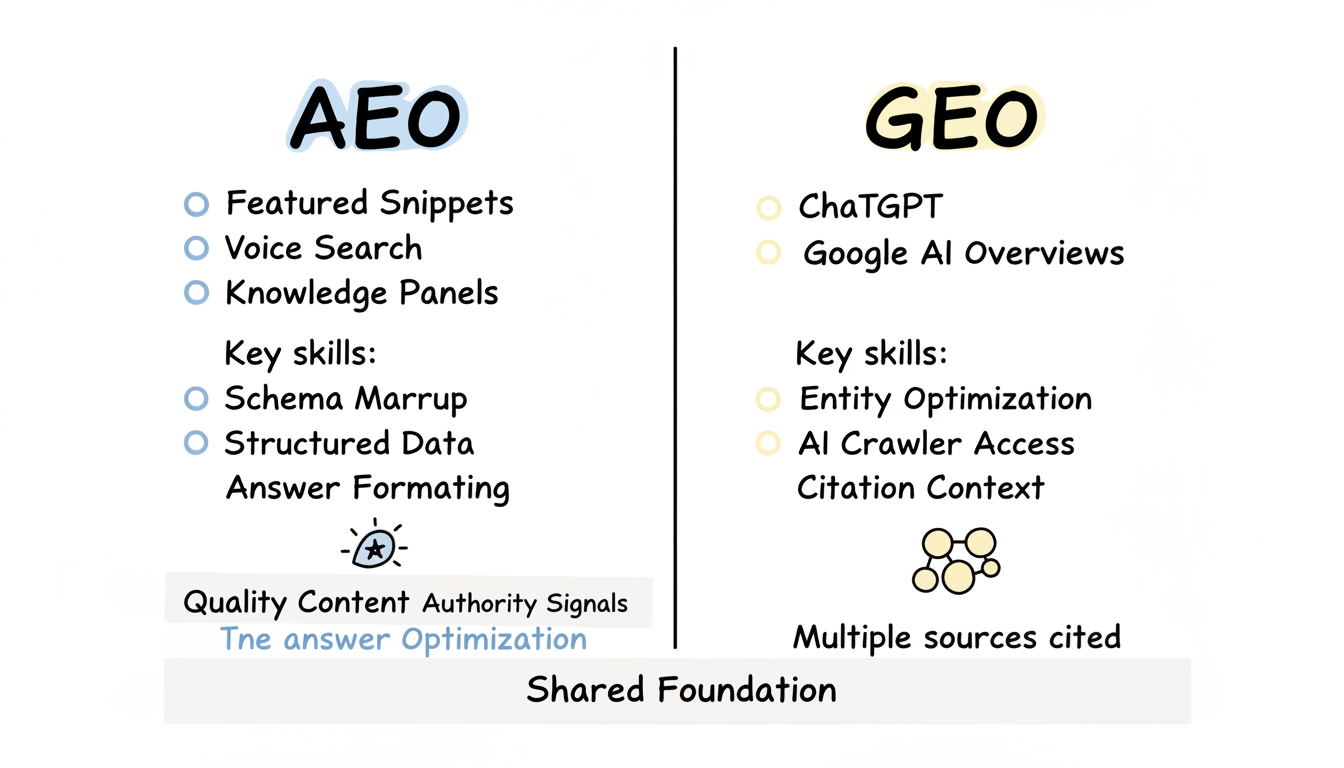
AEO and GEO share foundations—both require quality content, authority signals, and technical optimization. However, they target different discovery mechanisms. Comprehensive courses cover both disciplines, recognizing that effective AI visibility requires competence in each.
Structured courses develop specific competencies beyond what self-directed learning typically provides.
AI visibility requires technical foundations many marketers lack:
Courses provide hands-on practice implementing these technical elements.
Creating content AI systems want to cite requires structural understanding:
Practical exercises in courses develop these architectural instincts.
AI systems prioritize authoritative sources. Courses teach:
Authority building requires strategic understanding courses can provide. For those seeking guidance on establishing authority signals, learning how to choose an AEO agency provides insights into the expertise markers that distinguish effective practitioners.
Tracking AI visibility differs from traditional SEO metrics:
Courses introduce tools and frameworks for meaningful measurement.
Not all courses deliver equal value. Evaluate programs against these criteria.
AI search evolves rapidly. Courses must reflect current platform behaviors rather than outdated practices. Look for:
Courses based on 2023-era understanding miss significant developments. Understanding SearchGPT ranking factors demonstrates the kind of current, platform-specific knowledge quality courses should provide.
Theory without application produces limited skill development. Effective courses include:
Beware courses that only describe concepts without practicing them.
Evaluate instructor backgrounds for relevant experience:
Theory-only instructors may lack practical implementation insight.
Complete programs address both AEO and GEO alongside foundational SEO:
Narrow coverage leaves skill gaps. Understanding Google AI Overview SEO optimization shows how effective courses integrate traditional SEO with AI-specific strategies.
Different formats suit different learning styles and constraints.
Platforms like Udemy, Coursera, and LinkedIn Learning offer self-paced AEO GEO training.
Advantages:
Considerations:
Self-paced works for motivated learners who can maintain momentum independently.
Instructor-led virtual courses provide interactive learning.
Advantages:
Considerations:
Live formats suit learners who benefit from structure and interaction.
Intensive workshops deliver immersive learning experiences.
Advantages:
Considerations:
Workshops work for teams investing in rapid skill development.
Organizations building AI visibility competencies may develop custom training.
Advantages:
Considerations:
Custom programs suit enterprises with specific capability needs.
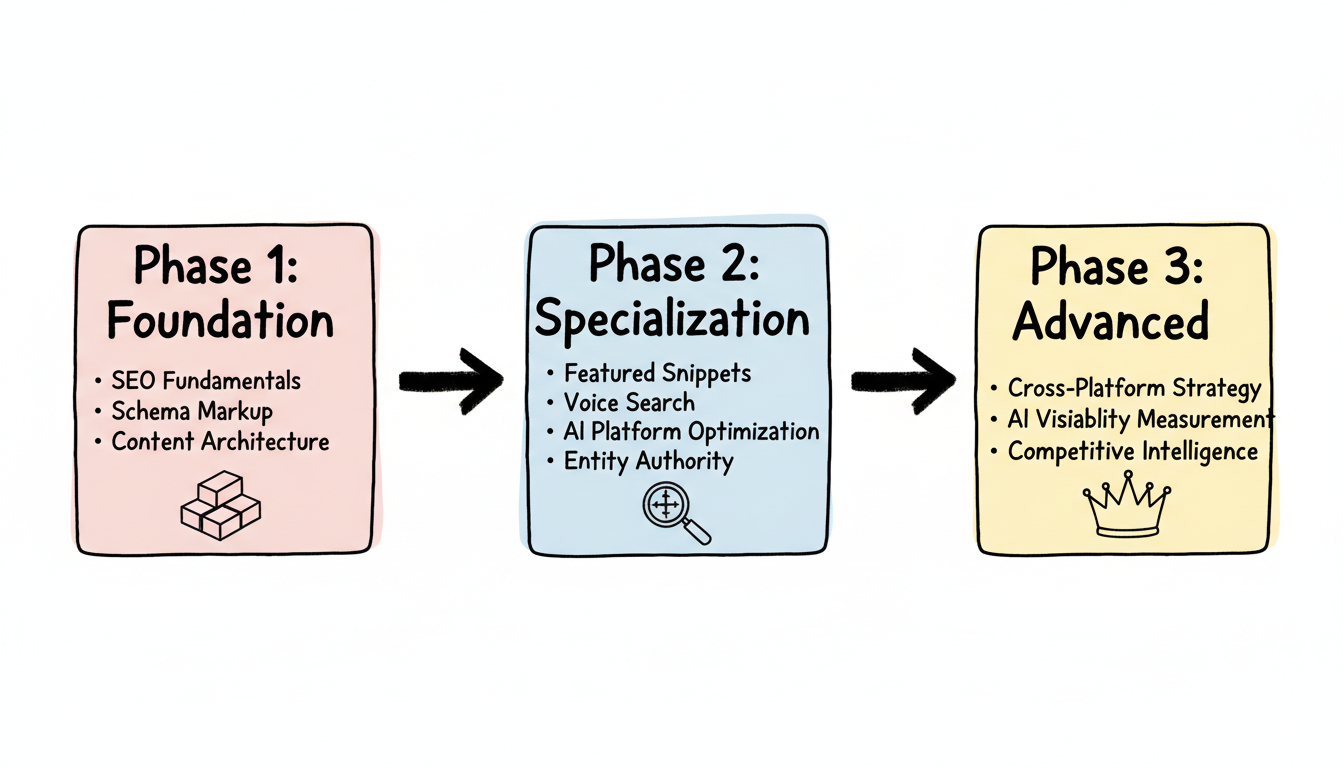
Rather than single courses, consider progressive skill development.
Start with core competencies:
Strong foundations enable advanced AEO GEO learning.
Develop AEO and GEO-specific skills:
Specialization builds on foundational knowledge. Exploring AI Overview citation analysis demonstrates the analytical skills that distinguish advanced practitioners from beginners.
Master strategic and analytical capabilities:
Advanced skills differentiate practitioners.
Courses provide knowledge—application produces results.
After completing courses, implement learning on priority content:
Skill development requires continuous practice:
Confirm course investment produces returns:
Strong SEO foundations help significantly. Research shows 87% of AI citations come from content ranking in organic positions 1-10. Courses assuming SEO knowledge move faster; beginners should start with SEO fundamentals first.
Foundational concepts can be learned in days to weeks. Developing practical proficiency typically requires 2-3 months of applying learned techniques. Mastery emerges through ongoing practice as you encounter varied optimization challenges.
Certifications demonstrate structured learning completion and may support career advancement. However, practical results matter more than credentials. Focus on skill development and documented results rather than certification collection.
Core team members handling SEO and content strategy benefit from comprehensive training. Others may need awareness-level education understanding how AI visibility affects their work without mastering implementation details.
By submitting this form, you agree to our Privacy Policy and Terms & Conditions.