February 19, 2026


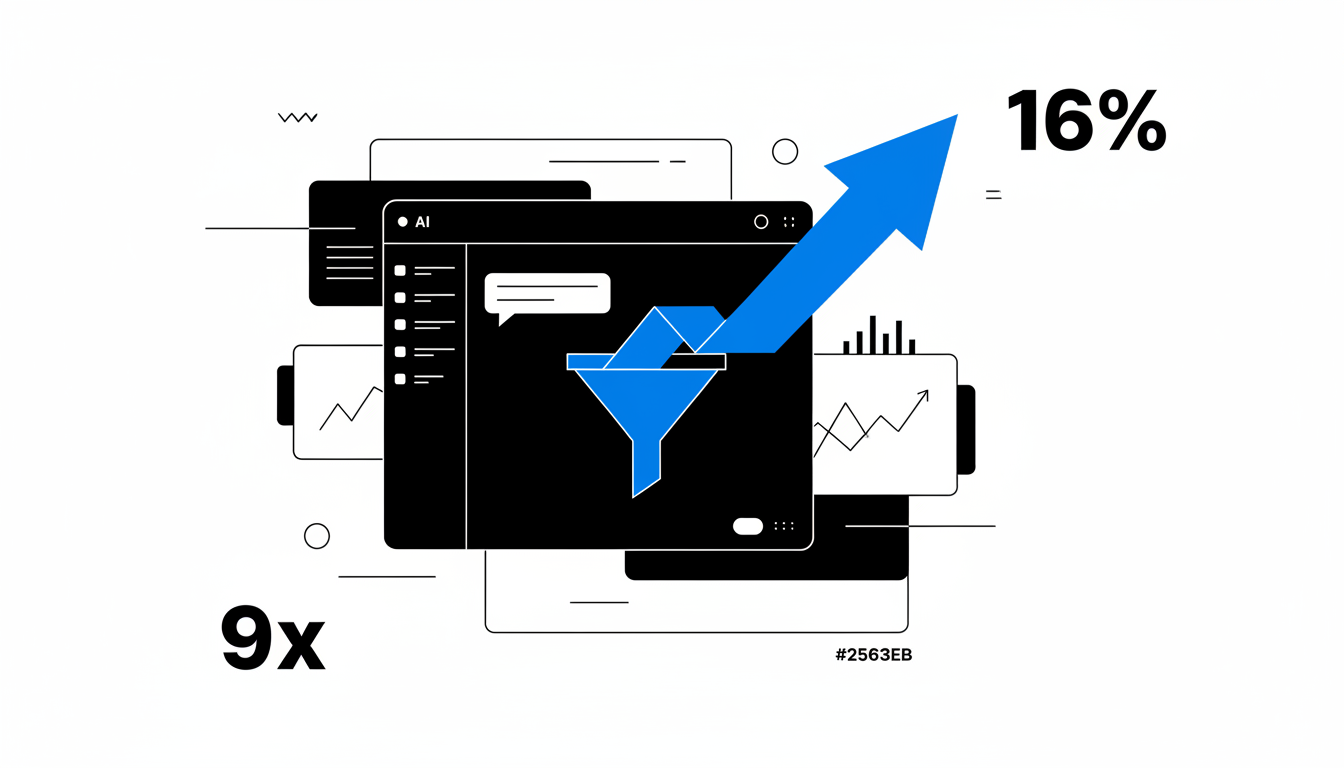
Answer Engine Optimization (AEO) is delivering conversion rates that traditional SEO struggles to match. Early data shows ChatGPT traffic converting at 16% compared to Google organic's 1.8%—nearly 9x higher. For some brands, the gap is even wider.
This guide explores why AEO marketing drives such dramatic conversion improvements and how to implement strategies that capture this high-intent traffic.
The conversion data emerging from AEO-optimized content is remarkable.
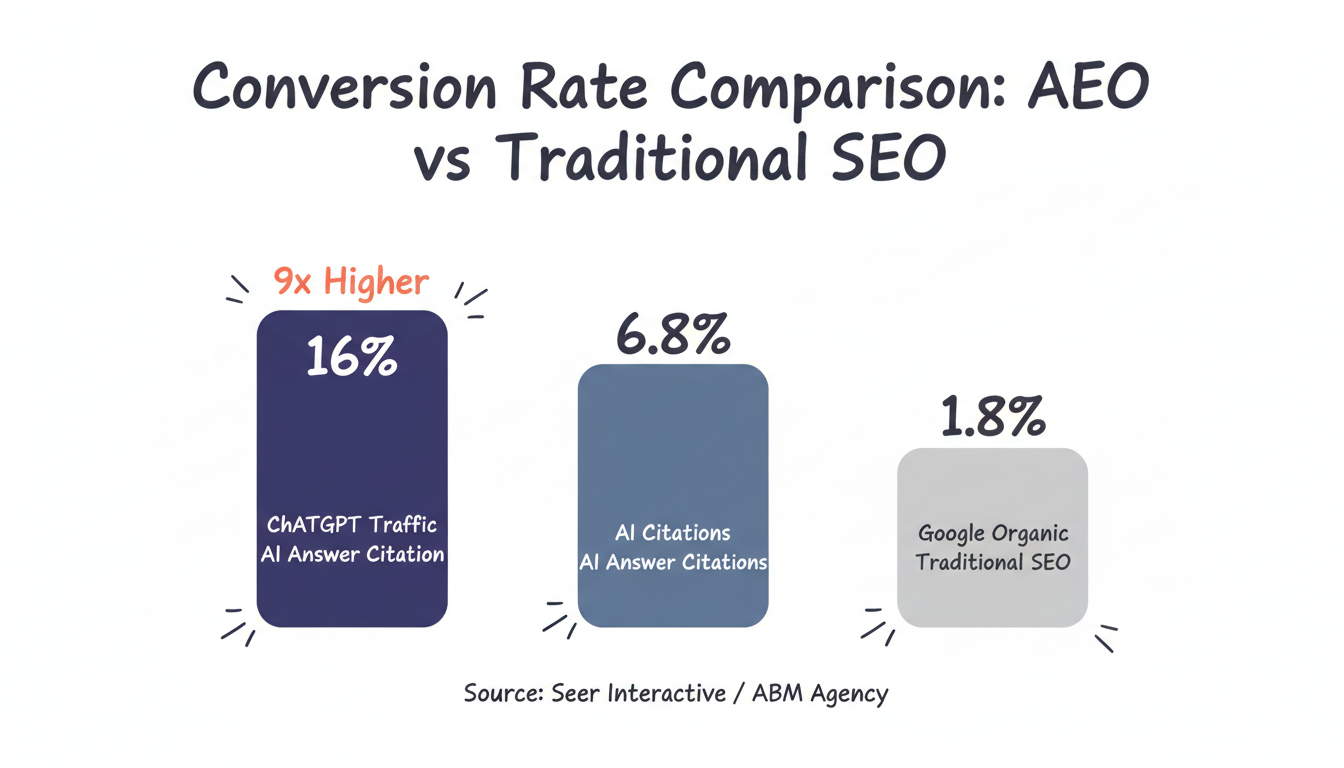
According to analysis from digital marketing researcher Avinash Kaushik, Seer Interactive reports ChatGPT traffic converts at 16% versus Google organic's 1.8%—a dramatic difference that highlights the high-intent nature of AI-referred visitors.
Reported conversion benchmarks:
Traffic Source | Conversion Rate | Notes |
ChatGPT referrals | 16.0% | Seer Interactive data |
Google organic | 1.8% | Traditional SEO baseline |
AI Answer Citations | 6.8% | ABM Agency research |
According to The Digital Elevator's AEO framework, Ahrefs reports AI traffic as their highest converting channel despite being less than 1% of total traffic, with conversion rates exceeding 10%.
Several factors explain the conversion advantage:
Intent clarity: Users asking AI specific questions have already moved past research phase. When they click through to cited sources, they're seeking validation or deeper detail—not starting their journey.
Trust transfer: Being cited by an AI system transfers credibility. Users perceive cited sources as vetted and authoritative.
Friction reduction: AI answers reduce cognitive load. Users arrive at cited sites with context already established, making conversion paths shorter.
According to Spearpoint's AEO guide, Answer Engine Optimization is the strategic practice of structuring content to earn citations and mentions within AI-generated responses across platforms like ChatGPT, Perplexity AI, Google AI Overviews, and other conversational search interfaces.
AEO vs traditional SEO:
Factor | Traditional SEO | AEO Marketing |
Goal | Rank on page 1 | Get cited in AI answers |
Focus | Keywords | Direct answers |
Success metric | Position rankings | Citation frequency |
Traffic type | Link clicks | Citation referrals |
User intent | Variable | High and specific |
According to O8 Agency's AEO guide, AEO focuses on organizing and fine-tuning content so AI-powered answer engines can easily understand, cite, and use it to directly answer user questions.
The industry is experiencing a fundamental measurement shift.
According to ABM Agency's AEO research, unlike SEO agencies that focus on ranking webpages on blue links, AEO agencies focus on ensuring brand content is synthesized into direct answers provided by AI. Their recommendation: stop measuring "Share of Voice" and start measuring "Share of Answer."
New AEO metrics:
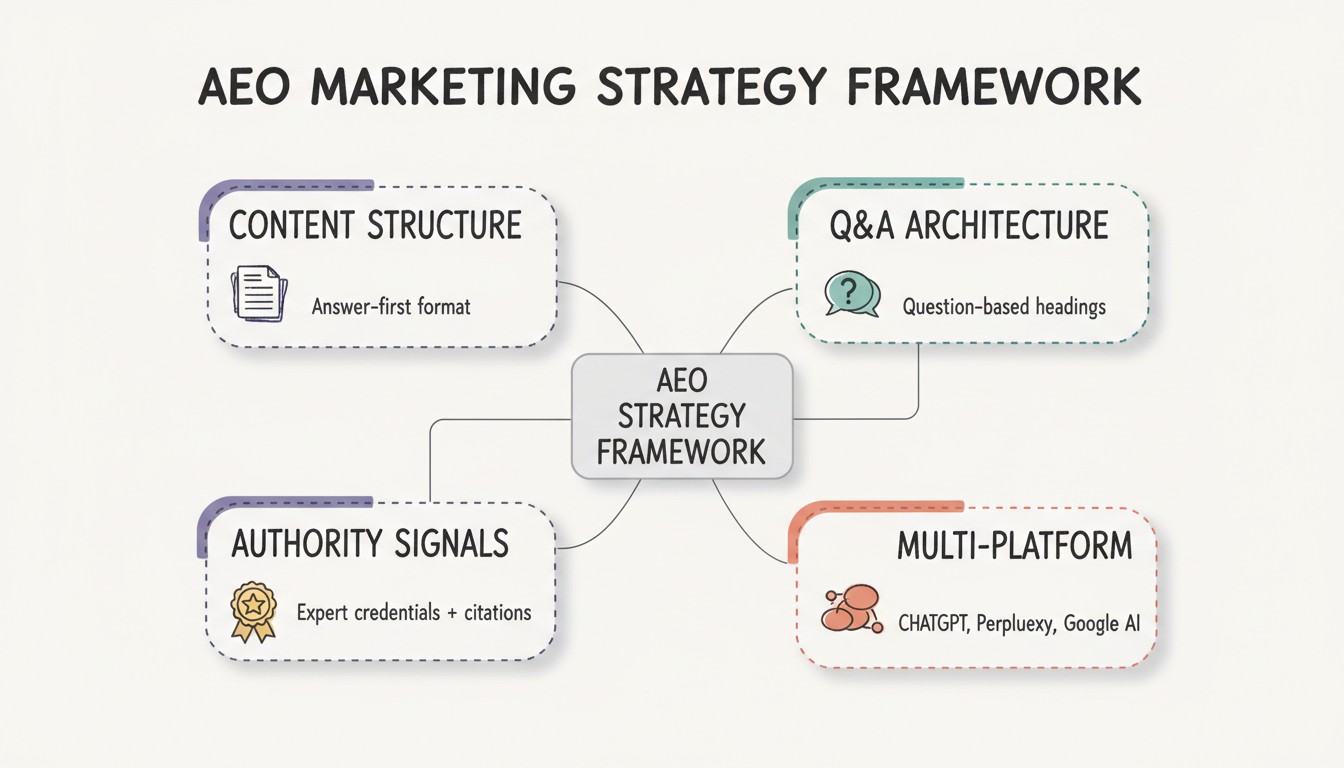
AI systems extract and synthesize information differently than traditional search crawlers.
According to Nativz's AEO services research, AEO-optimized brands see significant boosts in AI Overview visibility. The key is structuring content so AI systems can parse, quote, and cite it effectively.
Content structure principles:
According to O8's optimization framework, instead of generic headings like "Implementation Tips," use specific questions like "How do you implement schema markup for better AEO results?" This approach helps AI engines understand exactly what question your content answers.
Question-based content approach:
AI systems evaluate source credibility before citation. Building authority signals increases citation probability.
Authority factors:
Different AI platforms have different citation patterns.
Platform-specific considerations:
According to Cyclewerx Marketing's AEO analysis, AEO requires optimizing for multiple AI engines including ChatGPT, Google AI Overviews, Bing Copilot, and Perplexity—each with distinct preferences for how they read, interpret, and recommend content.
Platform | Citation Preference |
ChatGPT | Authoritative, well-structured content |
Perplexity | Real-time sources with clear citations |
Google AI Overviews | Traditional authority signals + structured data |
Bing Copilot | Microsoft ecosystem integration |
According to Spearpoint's metrics framework, citation frequency and AI brand score represent core AEO metrics—tracking how often your brand gets mentioned and cited across answer engines provides directional indicators of visibility and authority recognition.
Essential metrics:
AI traffic attribution remains imperfect. Google Analytics doesn't always distinguish AI referrals cleanly, and UTM parameters don't apply to AI-generated citations. When implementing AI search citation tracking, brands need specialized monitoring approaches beyond standard analytics.
Measurement approaches:
According to Elsner Technologies' AEO company analysis, the best AEO companies integrate answer engine optimization with traditional SEO for visibility across all search types—conventional and AI-powered.
Better approach: View AEO as an extension of SEO, not a replacement. Strong traditional SEO foundations improve AEO outcomes. Understanding the relationship between GEO, SEO, and AEO helps integrate these strategies effectively.
Each AI platform cites sources differently. Optimizing for one doesn't guarantee visibility across others.
Better approach: Audit your brand presence across multiple AI platforms and optimize for each.
AI traffic may represent a small percentage of total traffic but converts at dramatically higher rates.
Better approach: Weight AEO performance by conversion value, not just traffic volume.
According to Marketing Illumination's AEO best practices, businesses should create detailed content with structured data to appear in AI answers—because users increasingly find products through AI answers, not by clicking on search results. Following proven AEO best practices for 2026 helps ensure your implementation delivers measurable results.
Initial AEO audit steps:
AEO marketing represents a fundamental shift in how brands capture high-intent traffic:
The dramatic conversion advantage of AEO-optimized content makes this one of the highest-ROI marketing investments available. Brands that build citation authority now will capture disproportionate value as AI search adoption continues expanding.
By submitting this form, you agree to our Privacy Policy and Terms & Conditions.