
February 19, 2026


When evaluating AEO agencies, marketing claims tell one story—client reviews tell another. Understanding where to find authentic AEO services reviews, what patterns indicate quality (or problems), and how to interpret feedback helps identify providers likely to deliver results.
This guide examines client experiences with AEO services and shows you how to use reviews effectively in your evaluation process.
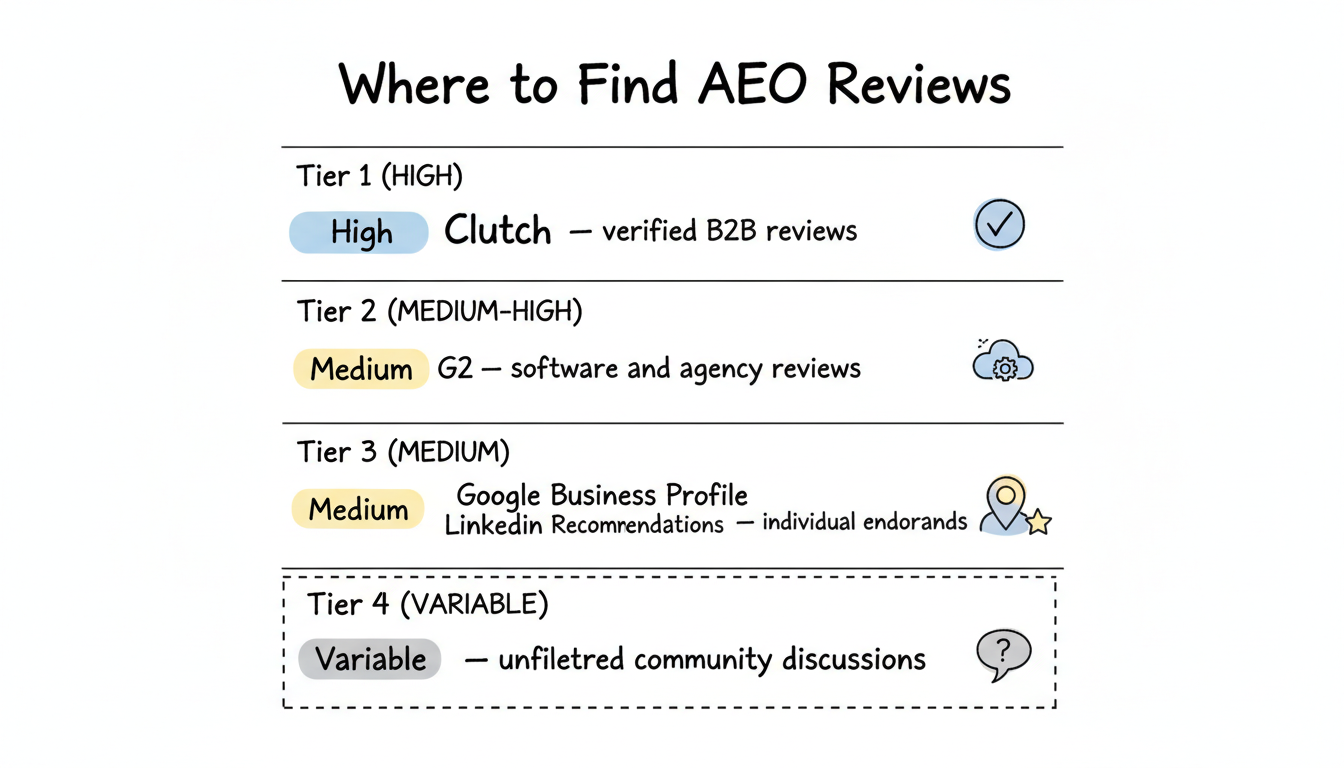
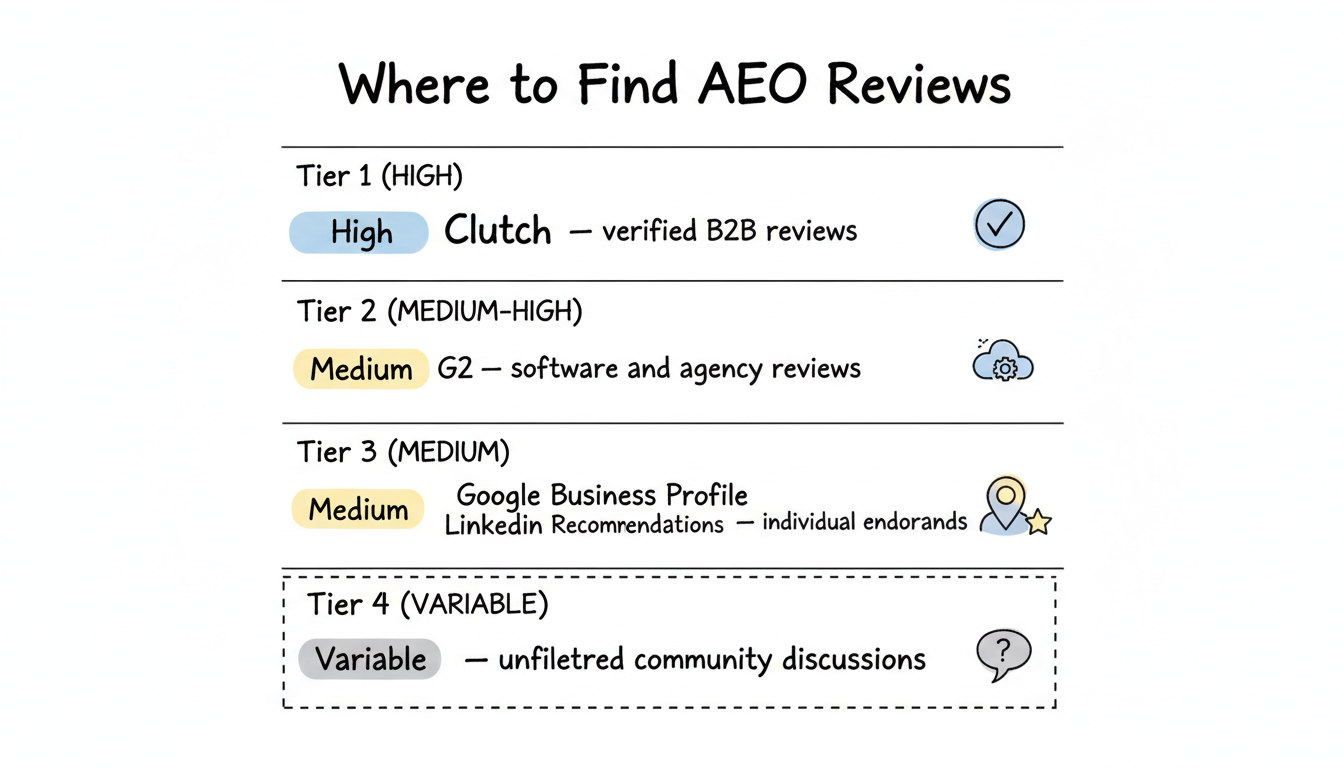
AEO-specific reviews remain less abundant than traditional SEO reviews because the discipline is newer. Knowing where to look increases your chances of finding relevant feedback.
Primary review sources:
Platform | What You'll Find | Reliability |
Clutch | Verified B2B agency reviews with detailed feedback | High |
G2 | Software reviews (often include agency-like tools) | Medium-High |
Google Business Profile | Local agency reviews | Medium |
LinkedIn Recommendations | Individual practitioner endorsements | Medium |
Industry forums | Unfiltered community discussions | Variable |
AEO-specific considerations: Many agencies providing AEO services also offer traditional SEO. Reviews may reference overall agency quality without specifically mentioning AEO work. Look for mentions of "AI search," "AI visibility," "ChatGPT citations," "Perplexity," or "AI Overviews" to identify AEO-relevant feedback.
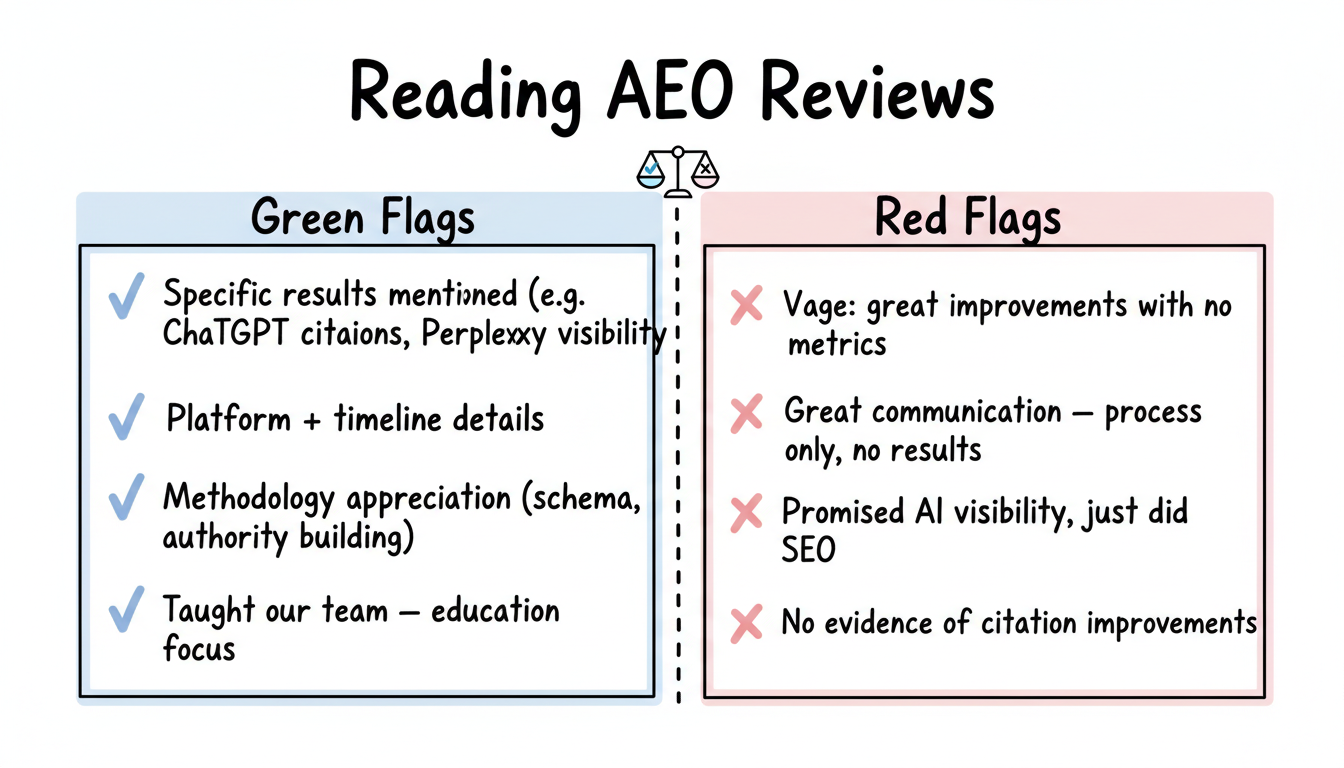
Patterns emerge in positive AEO reviews that indicate genuine service quality.
Strong AEO providers generate reviews mentioning specific outcomes:
Common positive themes:
Red flag: Reviews discussing only process ("great communication") without mentioning results may indicate the agency prioritizes relationship management over outcomes.
Clients of quality AEO agencies often mention specific approaches, similar to what you'd find in a comprehensive answer engine optimization complete guide:
Typical methodology mentions:
Reviews praising clear methodologies suggest the agency has developed genuine AEO expertise rather than applying generic SEO tactics.
Satisfied clients frequently mention learning from their agency:
Education-focused feedback:
Agencies investing in client education typically have confidence in their approach. If you're looking to build internal expertise, understanding the AI search team structure roles can help you evaluate whether an agency is training your team effectively.
Negative patterns and concerning themes help identify agencies to avoid.
Problem indicators:
Genuine client reviews include specifics. Vague testimonials may be manufactured or reflect clients who didn't track actual results.
Watch for:
Good process matters, but it should produce measurable outcomes. Process-only reviews suggest clients didn't see meaningful results.
Red flags in negative reviews:
These patterns indicate agencies that added "AEO" to their service menu without developing genuine expertise. Understanding the fundamental differences in an AEO vs SEO Google official position article can help you identify agencies that truly understand the distinction.
Some review patterns reveal important information indirectly.
How long clients worked with agencies before seeing results indicates realistic expectations:
Typical healthy timelines:
Reviews mentioning results in "weeks" may involve easy wins or unrealistic expectations. Reviews mentioning "still waiting after a year" suggest problems.
How clients describe scope reveals service quality:
Positive scope indicators:
Negative scope indicators:
Communication quality often predicts results quality:
Strong patterns:
Weak patterns:
Agencies prominently feature case studies, but reviews offer different value.
Case studies provide:
Reviews provide:
Use both: case studies show what's possible, reviews show what's likely.
Reviews should generate specific questions for agency conversations.
If reviews mention slow results: "What timeline should we expect for initial citations, and what factors typically delay results?"
If reviews praise methodology: "Can you walk me through your specific approach to [content/technical/authority] optimization?"
If reviews mention communication issues: "How often do you report, and what does a typical report include?"
If reviews lack result specifics: "What specific metrics do you track and report on, and can you show me a sample report?" Consider asking if they use an AI search analytics dashboard for transparent reporting.
Systematic review research yields better insights than casual browsing.
Step-by-step process:
Newer or smaller agencies may have limited review presence.
Alternative evaluation approaches:
Using reviews effectively in AEO agency evaluation:
Client reviews provide unfiltered perspective that marketing materials cannot. Systematic review research identifies agencies likely to deliver results and helps avoid those that underperform their promises.
By submitting this form, you agree to our Privacy Policy and Terms & Conditions.



