
February 19, 2026


Marketing has entered a new era. While traditional AI tools wait for prompts and follow instructions, agentic AI takes action autonomously. These systems don't just analyze data or generate content—they plan, execute, and refine strategies on their own. For marketers seeking competitive advantage, understanding and implementing agentic AI tools has become essential.
This guide explains what agentic AI is, how it differs from the AI tools you're already using, and which platforms lead the market in 2026.
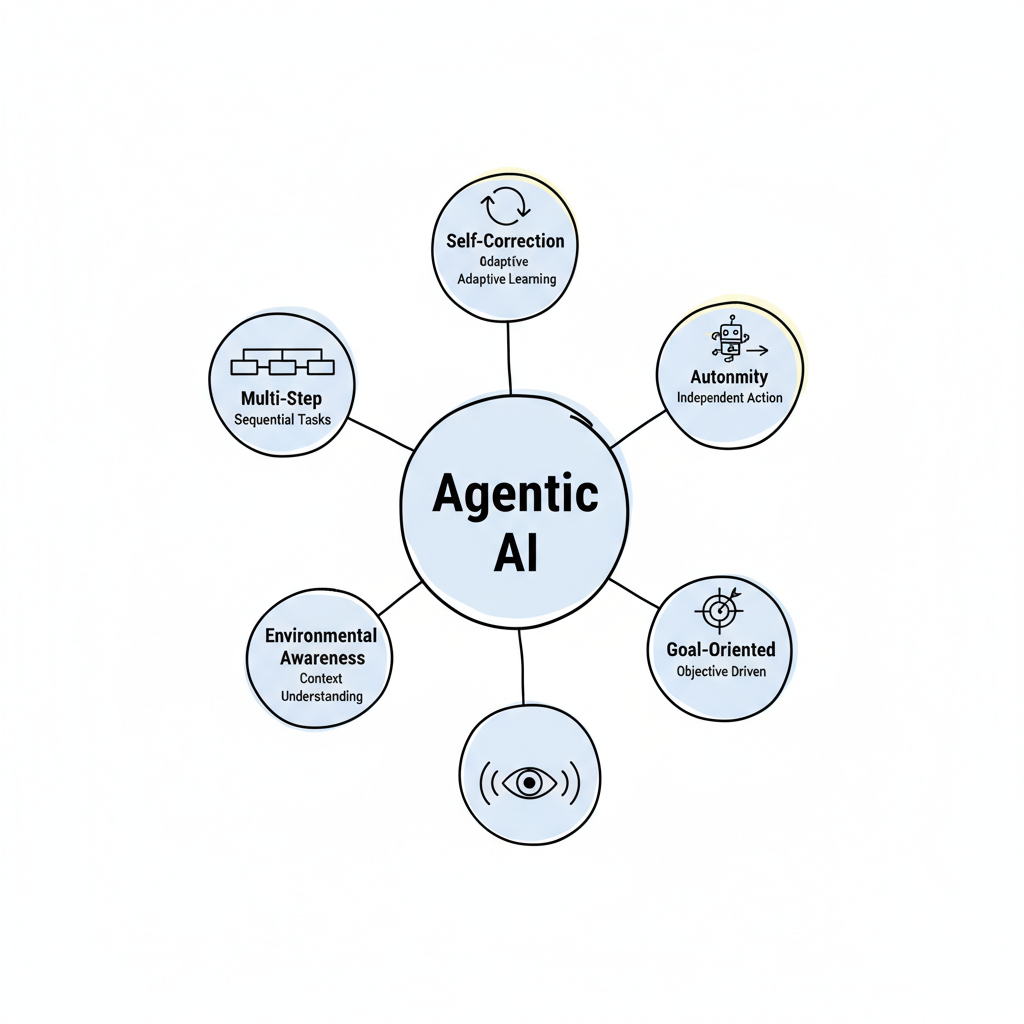
Agentic AI tools are software platforms that use autonomous AI agents capable of independent decision-making and action. Unlike traditional AI that responds to specific prompts, agentic systems operate through continuous perception-reasoning-action loops. They observe their environment, analyze context, plan strategies, take action, and learn from results—all without constant human direction.
The key characteristics that define agentic AI:
In practical terms, a traditional AI tool might generate a blog post when asked. An agentic AI tool would research topics, identify content gaps, plan a content calendar, write articles, optimize them for search, schedule publication, monitor performance, and adjust strategy based on results—autonomously managing the entire workflow.
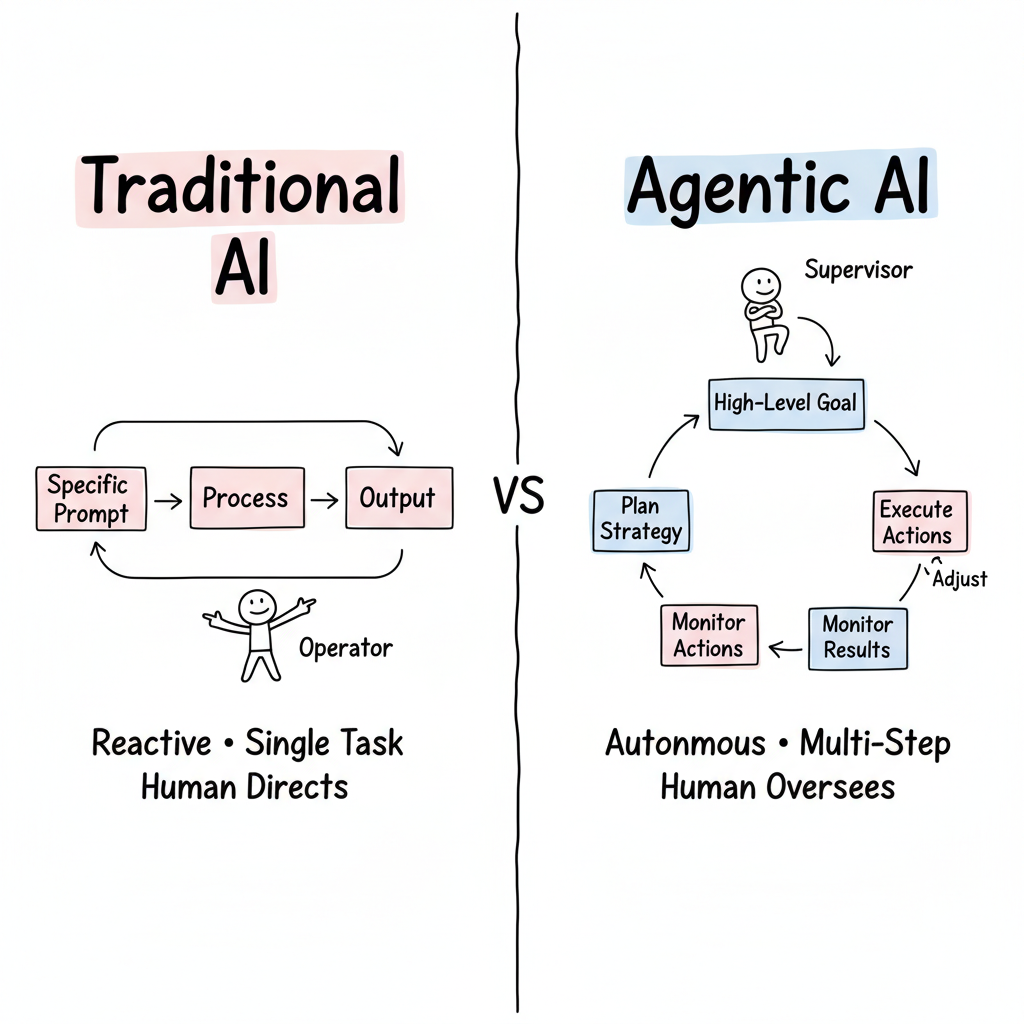
Understanding the distinction helps clarify where agentic tools fit in your marketing stack.
Traditional AI responds to explicit instructions:
Examples include ChatGPT answering questions, Jasper generating copy, or Surfer SEO analyzing content. These tools enhance productivity but require constant human direction.
Agentic AI operates through autonomous workflows:
This fundamental difference means agentic AI can handle end-to-end processes that previously required teams of people coordinating multiple tools. The shift toward agentic AI represents a transformation in how we approach AI-powered search engines and SEO strategies.
Aspect | Traditional AI | Agentic AI |
Input Required | Specific prompts for each action | High-level goals and constraints |
Decision Making | Human decides next steps | AI decides and executes autonomously |
Task Scope | Single tasks | Multi-step workflows |
Learning | Improves through fine-tuning | Learns and adapts in real-time |
Human Role | Operator | Supervisor |
Best For | Specific content/analysis tasks | End-to-end process automation |
Several platforms have emerged as leaders in agentic AI for marketing applications.
Gumloop A visual AI agent builder designed for marketing automation. Gumloop excels at creating workflow automations that connect multiple AI capabilities into cohesive processes. Marketers can build agents for content production, data analysis, and campaign management without coding.
Best for: Marketing teams wanting to automate specific workflows with visual, no-code tools.
Relay.app Combines human-in-the-loop capabilities with autonomous AI agents. Relay lets teams build workflows where AI handles routine decisions while humans approve high-stakes actions. This balance makes it suitable for marketing teams not ready for fully autonomous systems.
Best for: Teams requiring human approval checkpoints in automated workflows.
AirOps Purpose-built for SEO and content teams. AirOps enables marketers to create AI agents that handle keyword research, content optimization, and programmatic SEO at scale. The platform integrates with existing SEO tools and databases, making it particularly effective for teams focused on local AEO optimization.
Best for: SEO teams scaling organic content production.
Google Ads AI Agents Google has integrated agentic capabilities directly into Google Ads. These agents autonomously manage advertising operations—analyzing customer behavior across touchpoints, adjusting budget allocation, and optimizing creative strategies in real-time. E-commerce companies report 30%+ ROAS improvements from autonomous campaign management.
Best for: Advertisers managing significant paid media budgets on Google platforms.
Adobe AI Agents Adobe's creative cloud now includes AI agents that autonomously generate campaign creative variations, optimize visual content for different channels, and maintain brand consistency across thousands of assets. These agents understand brand guidelines and apply them without manual oversight.
Best for: Brands with high-volume creative production needs.
Salesforce Agentforce Salesforce's agentic AI platform creates agents for sales, service, and marketing workflows. Marketing teams use Agentforce to build autonomous lead nurturing, personalization engines, and campaign optimization systems that operate within the Salesforce ecosystem.
Best for: Organizations already using Salesforce CRM and Marketing Cloud.
IBM watsonx IBM's enterprise agentic platform supports building and deploying intelligent agents at scale. WatsonX provides the orchestration layer for multi-agent systems with enterprise-grade governance, making it suitable for large organizations with compliance requirements.
Best for: Large enterprises requiring robust governance and compliance controls.
HockeyStack Focuses specifically on B2B marketing attribution and analytics. HockeyStack's AI agents autonomously track customer journeys, attribute revenue, and identify optimization opportunities across marketing channels.
Best for: B2B marketers needing sophisticated attribution and analytics.
OpenAI Operator OpenAI's agentic offering enables autonomous web browsing and task execution. Marketers can deploy Operator to research competitors, gather market intelligence, and complete online tasks that previously required manual effort.
Best for: Research-heavy marketing functions and competitive intelligence.
Agentic AI transforms SEO workflows by handling complete processes autonomously.
Agentic systems manage the entire content lifecycle:
What previously required content strategists, writers, editors, and SEO specialists can now run autonomously with human oversight at key approval points. Understanding the AEO optimization timeline helps set realistic expectations for implementation.
Agentic tools continuously monitor site health:
These systems work particularly well when combined with schema markup for AI search optimization to ensure structured data remains accurate.
Autonomous agents track competitive landscapes:
When evaluating AEO vs digital marketing approaches, competitive intelligence becomes crucial for staying ahead.
Some organizations deploy agentic systems for outreach:
This remains an area where human oversight is particularly important to maintain authenticity.
Platform | Primary Use | Autonomy Level | Price Range |
Gumloop | Marketing workflow automation | High | $50-500/mo |
Relay.app | Human-AI hybrid workflows | Medium | $30-300/mo |
AirOps | SEO and content | High | $99-999/mo |
Google Ads AI | Paid advertising | High | Included with Ads spend |
Adobe AI Agents | Creative production | High | Enterprise pricing |
Salesforce Agentforce | CRM marketing | Medium-High | Custom pricing |
HockeyStack | B2B analytics | Medium | $1,000+/mo |
OpenAI Operator | Web tasks and research | High | $200+/mo |
When considering costs, many teams find value in using an AEO ROI calculator to justify investment in these advanced platforms.
Successful agentic AI implementation follows a deliberate approach.
Define exactly what agents can and cannot do:
Following AEO content guidelines ensures your autonomous systems align with best practices from the start.
Test agentic systems on processes where errors are recoverable:
Even mature agentic systems benefit from human oversight:
This approach becomes particularly important when implementing FAQ schema for AI overviews, where accuracy directly impacts search visibility.
Track agent performance against clear metrics:
Consider consulting generative engine optimization companies for expert guidance during initial implementation.
Agentic AI adoption is accelerating across enterprises:
For marketers, this means:
More autonomous operations: Routine marketing tasks will increasingly run without human intervention.
Strategic human roles: Marketing professionals will shift from task execution to goal-setting, oversight, and strategic direction. Understanding AEO specialist salary trends can help with workforce planning.
New skill requirements: Understanding how to configure, manage, and optimize AI agents becomes as important as traditional marketing skills. Those seeking expertise can learn through an AEO optimization tutorial.
Competitive differentiation: Early adopters of agentic AI will operate faster and more efficiently than competitors relying on manual processes.
Generative AI creates content—text, images, code—in response to prompts. Agentic AI acts autonomously to achieve goals, potentially using generative AI as one of its capabilities. An agentic system might use generative AI to write content, but it also decides what to write, when to publish, and how to optimize based on performance.
With proper implementation, yes. Key safety practices include defining clear boundaries, implementing human approval checkpoints, monitoring agent actions, and maintaining ability to stop agent activity. Enterprise platforms include governance features designed for business-critical applications.
Pricing varies dramatically. Point solutions for specific workflows start around $50/month. Enterprise platforms with full agentic capabilities range from $1,000 to $10,000+ monthly depending on scale and features. Many platforms price based on agent actions or compute usage. For comparison, review AI SEO agency pricing to understand professional service costs.
Many modern agentic platforms offer no-code or low-code interfaces. Building basic workflow automations requires no programming. More sophisticated multi-agent systems benefit from technical expertise, particularly for custom integrations and complex logic.
Agentic AI will transform marketing roles rather than eliminate them. Routine execution tasks will automate, but strategic thinking, creative direction, and human oversight remain essential. Marketers who learn to work with agentic systems will be more valuable than those who don't.
By submitting this form, you agree to our Privacy Policy and Terms & Conditions.



