February 19, 2026


Last Updated: January 2026
The search landscape has fundamentally changed. In 2026, AI-powered search engines have moved from experimental curiosities to dominant forces reshaping how users find information online. For businesses and marketers, understanding these platforms isn't optional—it's essential for survival in an increasingly AI-driven digital ecosystem.
This comprehensive guide covers everything you need to know about AI-powered search engines and how to optimize your content for them. From understanding the underlying technology to implementing practical AI search optimization strategies, we'll explore the complete landscape for 2026.
AI-powered search engines represent a fundamental departure from traditional search. Rather than returning a list of blue links and leaving users to synthesize information themselves, these platforms use artificial intelligence to understand queries contextually, synthesize information from multiple sources, and deliver direct, conversational answers.
Traditional Search (1998-2020s):
AI-Powered Search (2023-Present):
The transition accelerated dramatically in late 2022 with ChatGPT's release, prompting Google, Microsoft, and startups to race toward AI-first search experiences. By 2026, AI-powered search has matured into distinct categories, each requiring different answer engine optimization approaches.

What distinguishes AI-powered search from traditional alternatives:
Understanding the technology behind AI search engines helps you optimize content more effectively. Three core technologies power modern AI search, and mastering them is crucial for generative search engine optimization.
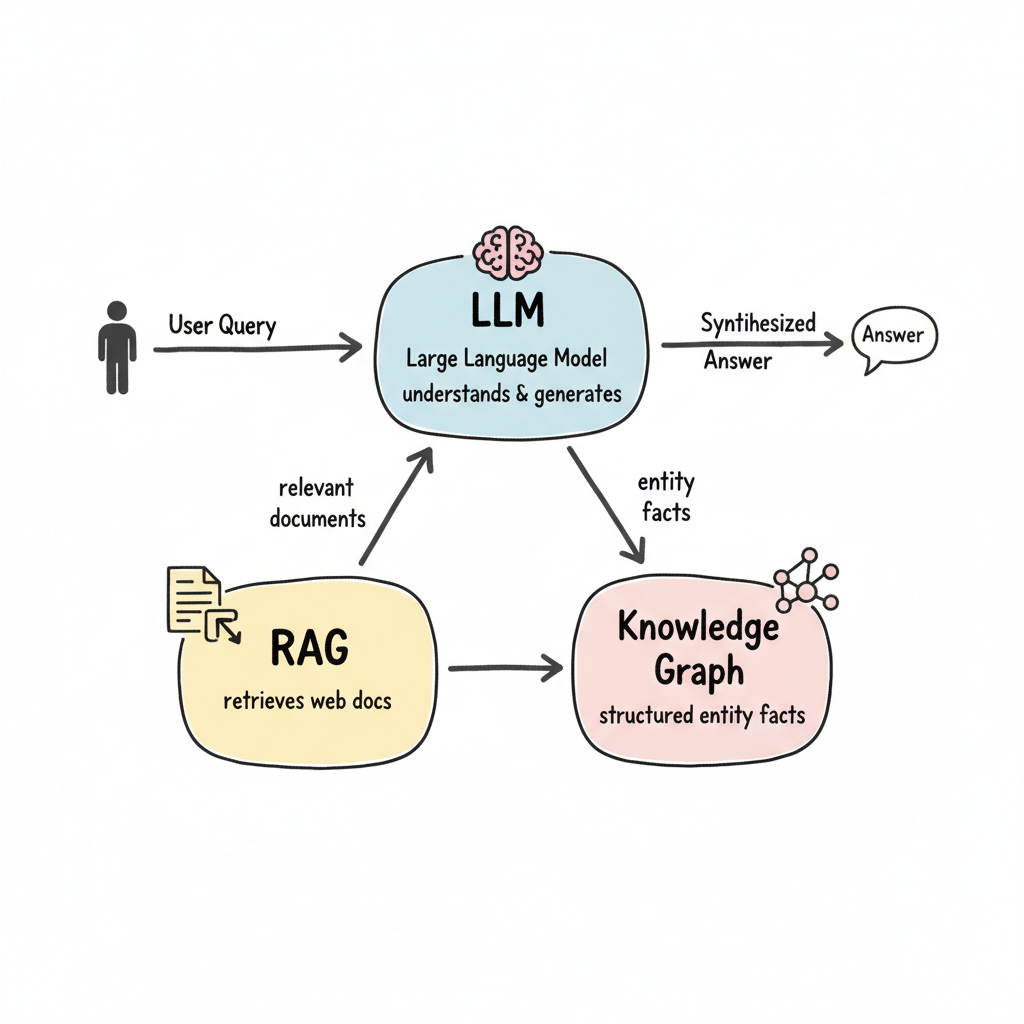
LLMs form the brain of AI search engines. These neural networks, trained on vast text corpora, understand language patterns, context, and meaning at a sophisticated level.
How LLMs Process Search Queries:
Major LLMs powering search in 2026:
RAG architecture solves a critical LLM limitation: knowledge cutoffs. Pure LLMs only know information from their training data. RAG augments this by retrieving current, relevant information at query time.
RAG Workflow:
User Query → Retrieval System → Relevant Documents → LLM Processing → Synthesized AnswerComponents of RAG Systems:
This is why AI search engines can provide current information—they're not just relying on pre-trained knowledge but actively retrieving and synthesizing web content.
Knowledge graphs structure information as interconnected entities and relationships, providing AI search engines with a semantic understanding of the world. This technology underpins effective Wikipedia and Wikidata knowledge graph integration strategies.
Structure of Knowledge Graphs:
Google's Knowledge Graph, launched in 2012, contains billions of facts about millions of entities. AI search engines leverage these structured databases to:
For SEO, this means your content must align with how knowledge graphs represent entities in your industry.
The AI search landscape has consolidated around several key players, each with distinct approaches and capabilities. Understanding these platforms is essential for developing universal AI search tactics.
Launch: 2022 Monthly Active Users (2026): 100+ million Key Differentiator: Citation-first approach
Perplexity has emerged as the leading pure-play AI search engine by prioritizing source attribution. Every claim includes inline citations, building trust through transparency. Learn more about optimizing for this platform in our Perplexity AI search engine review.
Features:
SEO Implications: Perplexity heavily favors authoritative, well-structured content with clear factual claims. The platform indexes and cites content that demonstrates expertise and provides unique information value.
Launch: Late 2024 (wide release) Monthly Active Users (2026): 200+ million (ChatGPT total) Key Differentiator: Seamless integration with conversational AI
OpenAI's ChatGPT Search integrates web search directly into the conversational interface users already know. Released with real-time browsing capabilities, it combines GPT-4's reasoning with fresh web data. Our comprehensive SearchGPT optimization guide covers advanced tactics.
Features:
SEO Implications: ChatGPT Search surfaces authoritative sources prominently and appears to favor content with clear structure, comprehensive coverage, and established domain authority. For more on ChatGPT-specific optimization, see our ChatGPT SEO guide.
Launch: May 2024 (general availability) Coverage: 26%+ of search queries (expanding in 2026) Key Differentiator: Integration with traditional search ecosystem
Google AI Overviews represent the tech giant's integration of generative AI into its core search product. Rather than replacing traditional results, AI Overviews appear above them for qualifying queries. Understanding how Google selects AI Overview sources is critical for visibility.
Features:
SEO Implications: Data shows pages ranking in top 35 organic positions have higher inclusion rates in AI Overviews. E-E-A-T signals appear critical—Google prioritizes authoritative, experienced sources. Explore Google AI Overview optimization tips for detailed strategies.
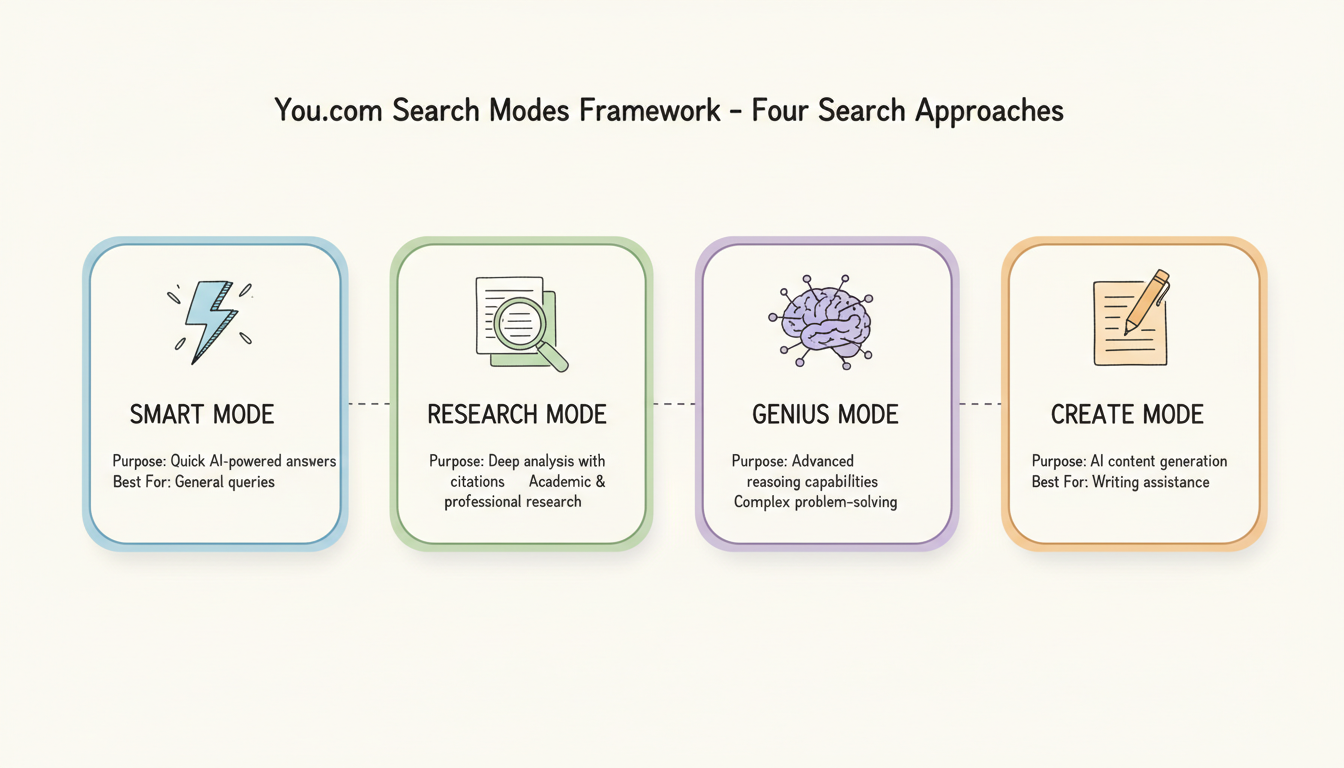
Launch: 2021 Key Differentiator: Multi-mode search with user control
You.com offers unique flexibility, letting users switch between AI chat, traditional search, and specialized modes. Our You.com AI search optimization strategy guide provides platform-specific tactics.
Features:
Launch: 2023 Key Differentiator: Multilingual AI search
Felo AI targets the global market with strong multilingual capabilities, particularly excelling at Chinese-English cross-language search.
Features:
Understanding the fundamental differences between AI and traditional search helps inform optimization strategies. Our traditional SEO vs AI search optimization comparison explores these distinctions in depth.
Aspect | Traditional Search | AI-Powered Search |
Query Understanding | Keyword matching | Semantic understanding |
Intent Recognition | Basic categorization | Nuanced interpretation |
Context Handling | Session-based | Conversational memory |
Query Refinement | Spelling suggestions | Full query reformulation |
Aspect | Traditional Search | AI-Powered Search |
Primary Format | Blue links | Synthesized answers |
Information Density | 10 results per page | Single comprehensive answer |
Source Attribution | Implicit (via links) | Explicit (inline citations) |
Follow-up | New search required | Conversational continuation |
Traditional Search User Journey:
AI Search User Journey:
This shift dramatically changes how content gets discovered and consumed. Click-through rates from AI search differ significantly from traditional SERP behavior, as detailed in our AI search conversion optimization guide.
Research indicates AI search engines can reduce click-through to source websites while simultaneously increasing the value of each visit. Users who do click through from AI search often have higher intent and engagement.
Key metrics shifts:
Optimizing for AI-powered search requires adapting traditional SEO practices while adopting new approaches specific to AI systems. Implementing comprehensive AEO optimization strategies is essential for success.
Google's E-E-A-T framework (Experience, Expertise, Authoritativeness, Trustworthiness) has become even more critical for AI search. AI systems prioritize sourcing from authoritative voices.
Experience Signals:
Expertise Signals:
Authoritativeness Signals:
Trustworthiness Signals:
AI systems process content differently than traditional crawlers. Structure your content for AI comprehension, following on-page AEO optimization best practices.
Clear Hierarchical Structure:
H1: Main Topic (Primary Keyword)
  H2: Subtopic 1
    H3: Detail 1.1
    H3: Detail 1.2
  H2: Subtopic 2
    H3: Detail 2.1
Direct Answer Patterns: Position clear, direct answers early in sections. AI systems often pull initial sentences as answer candidates.
Example:
"The average cost of Reddit advertising in 2026 ranges from $0.50 to $5.00 per click, depending on targeting and competition."
Structured Data Formats:
AI search engines favor comprehensive coverage of topics over thin, keyword-stuffed pages.
Cluster Content Strategy:
Content Depth Requirements:
Understanding content depth vs brevity for answer engines helps strike the right balance.
Since AI search engines cite sources explicitly, optimizing for citation potential is crucial. Learn more about AI Overview citation analysis to improve your visibility.
Strategies for Citation:
Technical factors affect AI search visibility. Conducting an AEO technical audit helps identify optimization opportunities.
Crawlability:
Page Experience:
Schema Markup:
The AI SEO software market has exploded with tools designed to help optimize for both traditional and AI search. Our comprehensive guide to the best AI SEO tools provides detailed comparisons.
Semrush
Ahrefs
SE Ranking
Surfer SEO
For in-depth comparisons, see our Surfer SEO vs Clearscope analysis.
Clearscope
Frase
MarketMuse
Our MarketMuse review provides detailed insights into this platform.
A new category has emerged specifically for tracking AI search performance:
OmniSEO
Otterly.AI
Profound
Ahrefs Brand Radar
Learn more about tracking AI Overview performance with these tools.
When choosing AI SEO tools, consider:
Our AI SEO software guide and AEO software guide provide comprehensive selection frameworks. For mid-market solutions, explore our mid-tier AI SEO software recommendations.
Solo Practitioners/Small Teams:
Mid-Size Teams:
Enterprise:
For automation-focused workflows, see our SEO automation tools guide.
Knowledge graphs provide the semantic foundation AI search engines use to understand entities and relationships. Optimizing for knowledge graphs improves AI search visibility. Our comprehensive Google Knowledge Graph optimization guide covers advanced strategies.
Entity SEO focuses on establishing your brand, products, and key concepts as recognized entities within knowledge graphs.
Entity Components:
Step 1: Claim and Optimize Knowledge Panel Triggers
Addressing Google Knowledge Panel errors is crucial for maintaining accurate entity representation.
Step 2: Consistent NAP Information
Step 3: Entity Attributes in Content
Implement comprehensive schema markup:
{
  "@context": "https://schema.org",
  "@type": "Organization",
  "name": "Your Company Name",
  "url": "https://yourcompany.com",
  "logo": "https://yourcompany.com/logo.png",
  "foundingDate": "2015",
  "founder": {
    "@type": "Person",
    "name": "Founder Name"
  },
  "address": {
    "@type": "PostalAddress",
    "streetAddress": "123 Business St",
    "addressLocality": "City",
    "addressRegion": "State",
    "postalCode": "12345",
    "addressCountry": "US"
  },
  "sameAs": [
    "https://twitter.com/yourcompany",
    "https://linkedin.com/company/yourcompany",
    "https://facebook.com/yourcompany"
  ]
}
Strengthen entity associations through:
Indicators of entity recognition:
Google AI Overviews (formerly SGE) represent the most significant change to Google Search in its history. Understanding and optimizing for AI Overviews is essential for 2026 SEO. Our complete Google AI Overviews optimization resource provides comprehensive strategies.
Based on latest research and AI-powered search engine statistics:
High AI Overview Likelihood:
Lower AI Overview Likelihood:
Understanding Google AI mode vs AI Overview distinctions helps target the right features. Additionally, explore Google AI Overview mobile vs desktop differences for device-specific optimization.
1. Target Information Synthesis Queries Create content that comprehensively answers questions AI Overviews aim to synthesize.
2. Structure for Direct Answers Position clear, direct answers within the first paragraph of relevant sections, following AI Overview content requirements.
3. Provide Unique Value Include information, data, or perspectives not available elsewhere—this creates citation opportunities.
4. Optimize for Featured Snippet Patterns Content that wins featured snippets often gets cited in AI Overviews:
For keyword-specific tactics, see our guide on long-tail keywords for featured snippet success.
5. Build Topical Authority Create comprehensive content clusters demonstrating expertise in your domain.
6. Maintain Factual Accuracy AI Overviews appear to verify information across sources. Ensure accuracy to avoid exclusion.
Track your AI Overview visibility:
For those who prefer to opt out, explore block AI Overview extensions. If you want to enable the feature, see how to turn on Google AI Overviews.
Understanding the AI search market landscape helps inform strategic decisions. For detailed data, see our AI-powered search features analysis.
AI Search Market (2026):
For enterprise-specific insights, explore enterprise AI search Copilot and Copilot enterprise security considerations.
Perplexity AI:
ChatGPT (including Search):
Google AI Overviews:
For international considerations, see Google AI Overview international and Google AI Overview international regional guides.
How Users Interact with AI Search (2026):
Query Type Distribution:
Voice-based interactions are also growing; see our voice search optimization for answer engines and voice search AEO optimization guides.
Businesses are increasingly using AI search tools:
The AI search landscape continues to evolve rapidly. Understanding the history of AEO provides context for these emerging trends.
Multimodal Search Expansion AI search engines are rapidly improving at processing images, video, audio, and documents alongside text. Expect:
Agent-Based Search AI agents that can take actions on behalf of users represent the next frontier, driven by agentic AI tools:
Personalization at Scale AI enables unprecedented personalization:
Content Quality Bar Rises As AI can easily generate mediocre content, truly valuable content becomes more important. Implementing AI content optimization and generative AI SEO optimization becomes essential:
Entity Authority Increases Known entities will increasingly dominate AI search visibility:
Technical SEO Shifts
Understanding the relationship between GEO vs SEO vs AI helps navigate these shifts. Additionally, exploring what is GEO search engine optimization, what is generative engine optimization GEO, and what does GEO stand for in marketing provides crucial context.
Immediate Actions:
Medium-Term Strategy:
Long-Term Positioning:
For specific industry applications, explore AEO for eCommerce and track AI search success metrics by industry.
Consider professional AEO audit services for comprehensive analysis.
For platform comparisons, explore our AI search platform comparison, AI search platform selection framework, and AEO platform comparison guides.
Before investing, review AEO optimization cost, AEO agency pricing and costs, and affordable AEO services options. Use our AEO ROI calculator to project returns. Understand AEO benefits and why it matters, weigh AEO challenges, and decide between in-house vs agency AEO. For career planning, see AEO specialist salary data.
For businesses operating across search engines, explore Bing SEO vs Google SEO for AEO differences. Understand the nuances of GEO content optimization, GEO in SEO, GEO SEO combined strategy, GEO AI SEO, and GEO SEO generative engine optimization. Access specialized GEO tools for implementation.
AI-powered search engines have fundamentally transformed how information is discovered and consumed online. In 2026, success requires understanding both the technology powering these systems and the optimization strategies that drive visibility within them.
The key principles remain constant: create genuinely valuable content, demonstrate authentic expertise, and build real authority in your domain. What's changed is how these qualities are measured and surfaced—AI systems are increasingly sophisticated at identifying and prioritizing truly authoritative sources.
For businesses and marketers, the opportunity is significant. Those who adapt their strategies for AI search will capture visibility as these platforms continue to grow. Those who don't risk becoming invisible in the search experiences that increasingly define how users find information.
Start with the fundamentals: optimize for E-E-A-T, implement proper technical SEO, and create content that genuinely serves user needs. Then expand into AI-specific optimizations: entity development, citation optimization, and AI visibility monitoring.
The future of search is AI-powered. The question is whether your content will be part of the answer.
By submitting this form, you agree to our Privacy Policy and Terms & Conditions.