February 19, 2026


While consumer AI search garners headlines, enterprise AI search represents a distinct—and often more valuable—optimization opportunity. Microsoft Copilot, embedded across Office 365 applications used by over 85% of Fortune 500 companies, surfaces content recommendations to decision-makers during their actual work processes. This guide explores strategies for optimizing visibility within the Microsoft enterprise AI ecosystem.
Enterprise AI search differs fundamentally from consumer search in reach, context, and business impact.
Microsoft's enterprise AI penetration creates massive reach potential.
Enterprise adoption statistics (2026):
Unlike consumer AI where users actively seek information, enterprise AI surfaces recommendations during actual work tasks—creating valuable passive discovery opportunities for brands providing relevant expertise. Understanding how to optimize for AI search engines requires recognizing these distinct contexts.
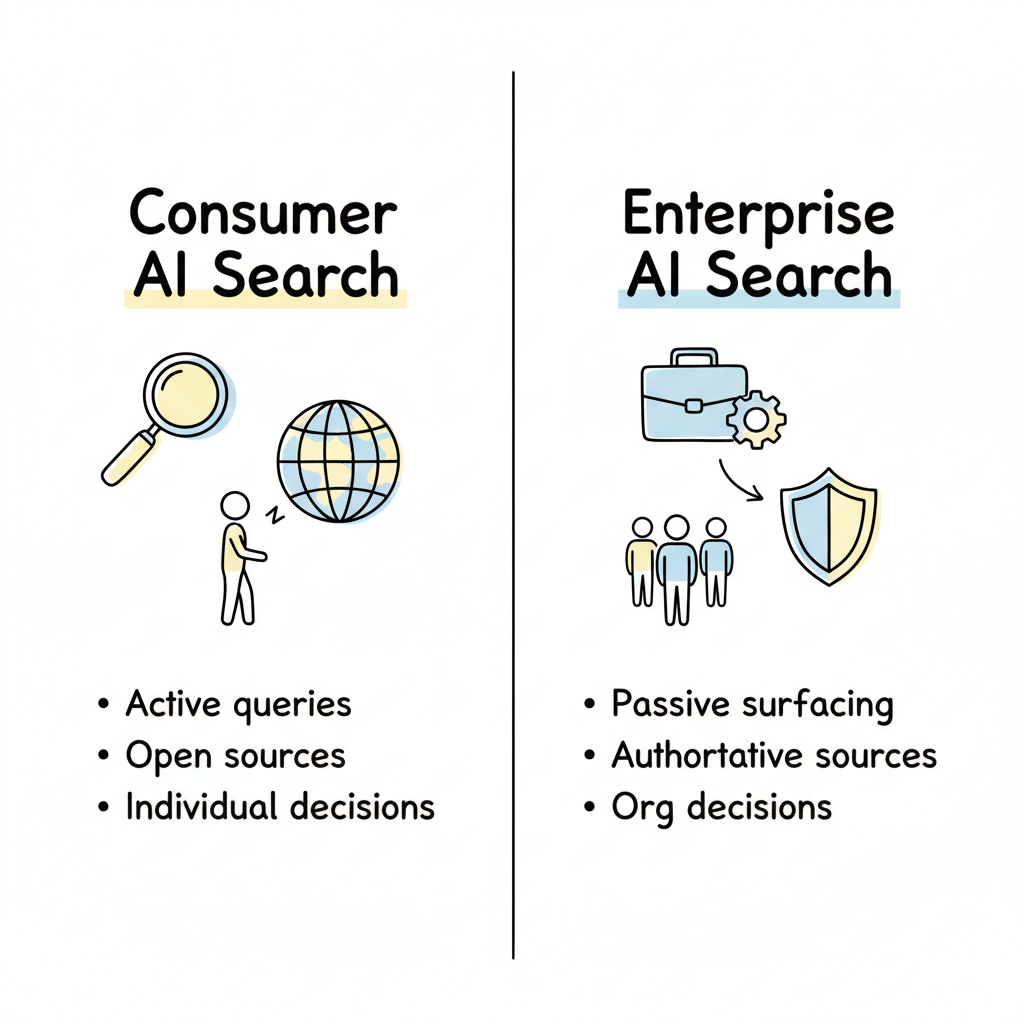
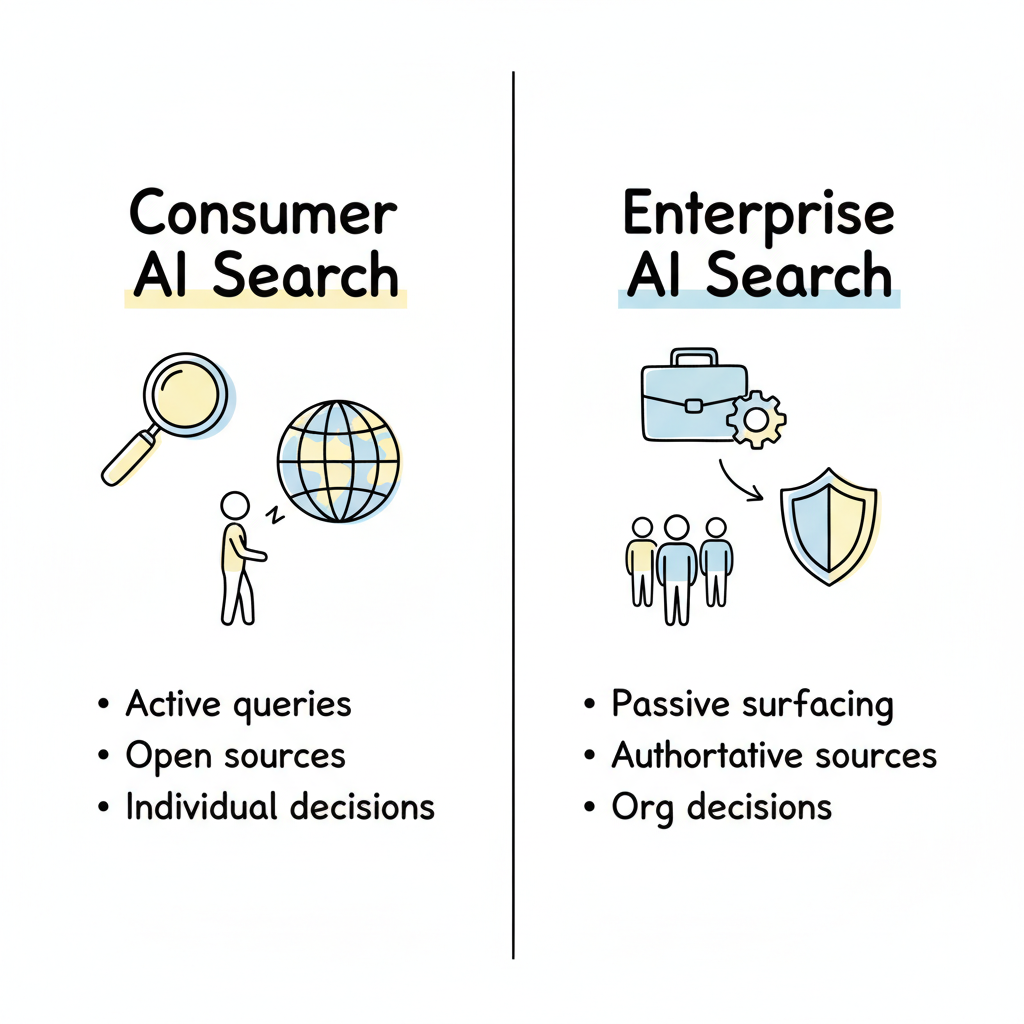
Enterprise AI search operates under different dynamics than consumer AI.
Consumer AI search:
Enterprise AI search:
Organizations optimizing only for consumer AI miss the enterprise channel entirely. The geo vs seo vs ai comparison reveals how these channels require fundamentally different approaches.
Understanding Copilot's architecture reveals optimization opportunities.
Copilot operates across the entire Microsoft 365 suite.
Key integration surfaces:
Microsoft 365 Copilot Chat: Direct conversational AI interface for research, analysis, and content creation—similar to ChatGPT but with enterprise data context.
Word: Document drafting, summarization, and research assistance. Copilot cites external sources when answering questions within document context.
Excel: Data analysis, formula generation, and insight extraction. Copilot references authoritative data sources for benchmarking and analysis guidance.
PowerPoint: Presentation creation and content suggestions. Copilot draws on external expertise when building industry-specific presentations.
Outlook: Email drafting, meeting summarization, and communication assistance. Copilot may reference best practices and industry guidance.
Teams: Meeting transcription, action item extraction, and collaborative research. Copilot integrates external information during team discussions.
SharePoint: Knowledge management and content discovery. SharePoint Knowledge Agent organizes and surfaces relevant expertise.
Each integration point represents an opportunity for your content to reach enterprise decision-makers during high-value work moments when they're actively solving business problems. Effective linkedin and microsoft copilot integration amplifies this reach across professional networks.
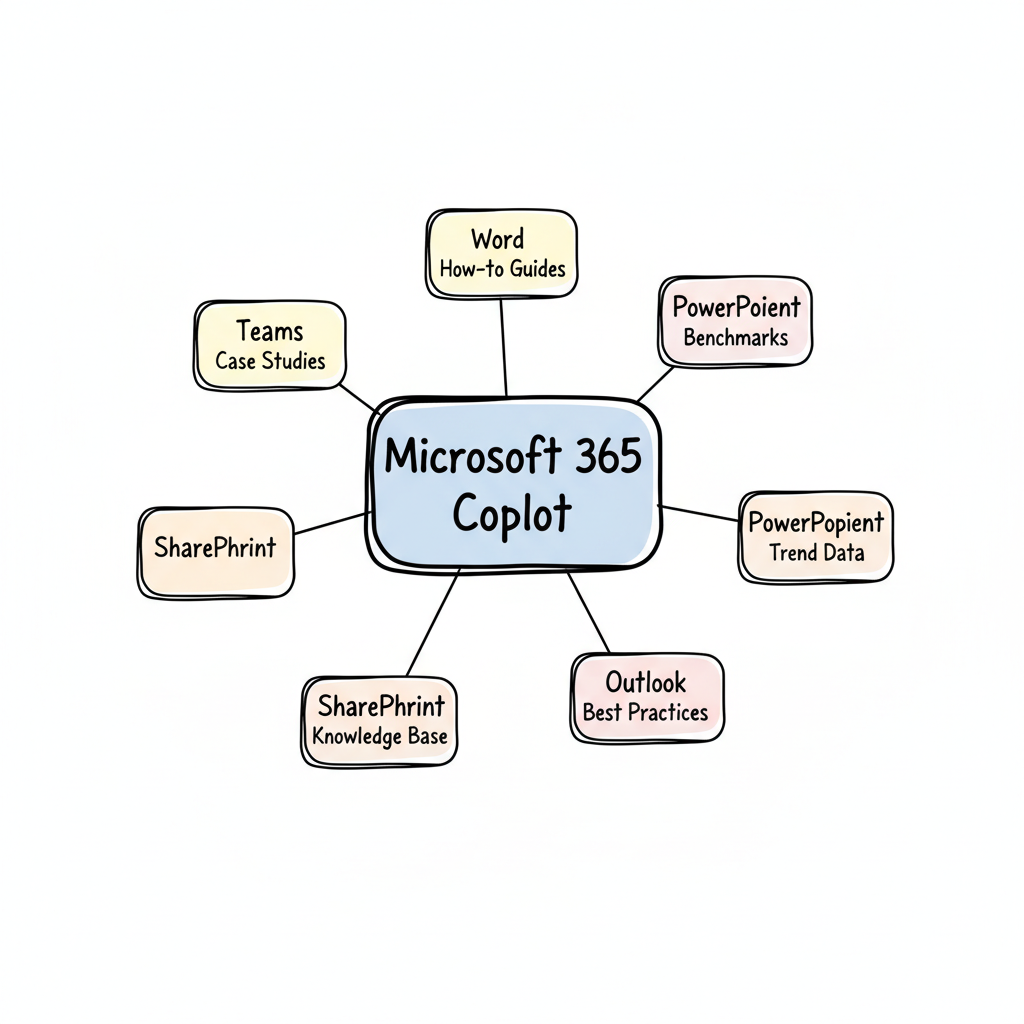
Microsoft Graph powers Copilot's enterprise understanding.
Graph capabilities:
Content connected to Microsoft Graph through legitimate indexing and partnerships gains privileged access to enterprise discovery channels.
Optimize for specific Office 365 contexts where your expertise applies.
When enterprise users research topics within Word, Copilot draws on external sources.
Optimization strategies:
Create comprehensive how-to guides: Enterprise users frequently research implementation approaches. Detailed guides with specific steps earn citations.
Provide templates and frameworks: Copilot often recommends frameworks when users draft business documents. Publish downloadable, well-documented frameworks.
Include specific data points: Enterprise documents require credible statistics. Content with clear, citable data earns more references.
Structure for extraction: Use clear headings, bulleted lists, and summary sections that Copilot can easily excerpt. This aligns with answer engine optimization principles for structured content.
Data-related queries present opportunities for analytical content.
Excel context optimization:
Publish benchmark data: Industry benchmarks help users contextualize their analysis. Regular benchmark publications earn consistent citations.
Create methodology guides: Explain analytical approaches for common business analyses—financial modeling, forecasting, performance metrics.
Offer formula and function tutorials: Technical Excel guidance for business applications connects expertise to practical needs.
Presentation creation drives research behavior.
PowerPoint optimization:
Industry trend content: Presentation builders seek current trend data and future projections.
Visual data and statistics: Charts, graphs, and infographics that can inform presentation content earn citations.
Executive summary formats: Content structured as presentation-ready insights transfers easily to slide decks. Following google ai overview ranking factors helps ensure this content surfaces in multiple AI contexts.
Collaborative research in Teams surfaces expertise.
Teams optimization:
Meeting topic expertise: When teams discuss topics in your domain, related expertise may surface during conversations.
Best practice guides: Teams users seek guidance on process improvements, methodologies, and industry standards.
Case studies: Real-world examples help teams evaluate options and make decisions.
Enterprise AI requires distinct content approaches.
Enterprise purchases involve multiple stakeholders.
Stakeholder content mapping:
Executive audience: Strategic implications, ROI justification, competitive advantage content.
Technical evaluators: Implementation details, integration requirements, technical specifications.
End users: Usability guidance, training resources, productivity improvement content.
Procurement/Legal: Compliance information, security documentation, vendor comparison frameworks.
Create content addressing each stakeholder's concerns within the purchase process. This multi-faceted approach mirrors the complexity of generative engine optimization guide strategies.
Enterprise AI prioritizes authoritative, specialized sources.
Depth requirements:
Vertical expertise: Generic content rarely earns enterprise citations. Demonstrate specific industry knowledge.
Technical accuracy: Enterprise users have domain expertise—surface-level content loses credibility.
Regulatory awareness: Industry-specific compliance and regulatory considerations demonstrate expertise.
Case study evidence: Enterprise buyers require proof—detailed case studies with metrics outperform theoretical content. Review aeo services case studies for examples of evidence-based approaches.
Certain formats perform better in enterprise contexts.
High-performing enterprise formats:
White papers: In-depth analysis positions organizations as thought leaders. Gate for lead generation while providing executive summaries for citation.
Research reports: Original research with proprietary data earns authoritative status. Annual reports become reference standards.
Implementation guides: Step-by-step guidance for enterprise implementations demonstrates practical expertise.
ROI calculators: Interactive tools quantifying business value support purchase decisions.
Comparison frameworks: Structured evaluation criteria help enterprise buyers assess options.
LinkedIn's connection to Microsoft Graph creates optimization opportunities.
Professional profiles influence enterprise AI perception.
Profile optimization:
Complete professional history: Comprehensive career information establishes credibility.
Skill endorsements: Endorsed skills signal expertise areas to Microsoft Graph.
Content publishing: LinkedIn articles contribute to authority signals within the Microsoft ecosystem.
Company page quality: Well-maintained company pages with detailed information strengthen organizational authority.
LinkedIn content feeds into enterprise AI awareness.
Strategy elements:
Regular thought leadership: Consistent publishing builds authority signals recognized by Microsoft Graph.
Engagement with enterprise content: Participation in enterprise-focused discussions increases visibility.
Employee advocacy: Multiple employees sharing expertise amplifies organizational authority.
Industry group participation: Active involvement in professional groups demonstrates domain engagement. Understanding copilot market adoption trends helps identify which groups and topics deserve focus.
Traditional SEO foundations support enterprise AI visibility.
Enterprise AI systems inherit traditional crawling capabilities.
Technical priorities:
Fast, accessible pages: Enterprise AI systems require efficient crawling and content extraction.
Schema markup: Structured data helps AI systems understand content type and context. Implementing article schema ai platforms markup improves enterprise discoverability.
Mobile optimization: Enterprise users increasingly access content on mobile devices.
Security (HTTPS): Enterprise AI systems may prioritize secure sources.
Enterprise AI emphasizes authoritative sources.
Authority signals:
Industry publication backlinks: Links from recognized industry sources strengthen enterprise credibility.
Conference presentations: Speaking at industry events builds recognizable authority.
Analyst relationships: Coverage by industry analysts creates authoritative citations.
Awards and recognition: Third-party validation reinforces expertise claims.
Partner ecosystem: Relationships with enterprise software vendors create ecosystem authority.
Expert authorship: Named experts with verifiable credentials outperform anonymous corporate content in enterprise contexts. Building entity-based seo topical authority accelerates recognition.
Enterprise AI prioritizes current, maintained content.
Freshness strategies:
Regular data updates: Refresh statistics and benchmarks at least quarterly. Outdated data undermines enterprise credibility.
Version documentation: Clearly date content and note when significant updates occur. Enterprise buyers need current information.
Trend monitoring: Publish regular updates on evolving industry topics. Consistent publishing signals active expertise.
Archive management: Remove or update severely outdated content. Old information can harm overall domain authority.
Enterprise AI attribution presents unique challenges.
Direct Copilot attribution is limited, requiring proxy metrics.
Measurement strategies:
Brand search tracking: Monitor enterprise-related branded searches that may result from Copilot exposure.
Lead source surveys: Ask leads how they discovered your organization—specifically about AI assistant recommendations.
Enterprise content engagement: Track engagement patterns on enterprise-focused content that may indicate AI discovery.
LinkedIn analytics: Monitor professional network engagement correlated with content efforts. Setting up google analytics 4 ai search tracking provides baseline measurement infrastructure.
Focus on metrics indicating enterprise AI impact.
KPIs to track:
Enterprise lead quality: Are leads from enterprise companies increasing?
Decision-maker engagement: Are C-level and senior contacts engaging with content?
Industry-specific traffic: Is traffic from target industries growing?
Content citation tracking: Are industry publications and competitors referencing your research?
Different enterprise functions present distinct optimization opportunities.
Relevant content types:
Relevant content types:
Relevant content types:
Relevant content types:
Execute enterprise AI optimization systematically.
Initial activities:
Content priorities:
Authority activities:
Continuous improvement:
Following a comprehensive aeo analytics setup process ensures you capture performance data throughout this implementation journey.
Enterprise AI visibility creates sustainable competitive advantages.
Organizations establishing enterprise AI authority early gain compounding advantages.
Early mover advantages:
Competitors entering later face steeper climbs against established authority.
The enterprise AI channel remains under-optimized by most organizations.
Differentiation approaches:
Organizations treating enterprise AI strategically gain advantages over competitors focused solely on consumer AI channels. Understanding the traditional seo vs ai search optimization distinction clarifies where to allocate resources.
Enterprise AI operates within work contexts, surfacing recommendations during actual business tasks rather than responding to active searches. The user doesn't query "best CRM software"—Copilot suggests relevant resources while they draft a CRM evaluation document. This passive discovery requires different optimization approaches focused on contextual relevance and enterprise authority signals.
Formal partnerships aren't required for basic visibility—Copilot draws on publicly accessible content. However, partnerships can provide advantages: co-marketing opportunities, preferred listing in marketplace, and deeper integration possibilities. Start with public content optimization, then explore partnership opportunities as your enterprise strategy matures.
Direct attribution is limited. Focus on proxy metrics: enterprise lead quality improvements, decision-maker engagement increases, industry-specific traffic growth, and brand search volume from enterprise segments. Qualitative signals matter too—are enterprise prospects mentioning AI-assisted discovery in sales conversations?
Yes. Copilot emphasizes enterprise-appropriate sources with strong authority signals, compliance considerations, and business relevance. ChatGPT draws more broadly from consumer-oriented content. Enterprise optimization requires deeper industry expertise, more formal authority signals, and content addressing organizational (not just individual) needs.
White papers, research reports, and comprehensive implementation guides consistently perform well in enterprise contexts. These formats demonstrate depth and commitment to thorough analysis. Interactive tools like ROI calculators and assessment frameworks also earn strong engagement. Avoid thin blog posts and superficial listicles—enterprise AI prioritizes substantive, authoritative content that helps users accomplish serious business tasks.
Enterprise AI authority builds gradually. Initial visibility improvements may appear within 2-3 months as you publish optimized content. Meaningful lead generation impact typically requires 6-12 months of consistent effort. Enterprise sales cycles are longer than consumer, so patience is essential. Focus on leading indicators like content engagement, enterprise traffic patterns, and brand search growth while waiting for lagging indicators like closed deals.
By submitting this form, you agree to our Privacy Policy and Terms & Conditions.