February 19, 2026


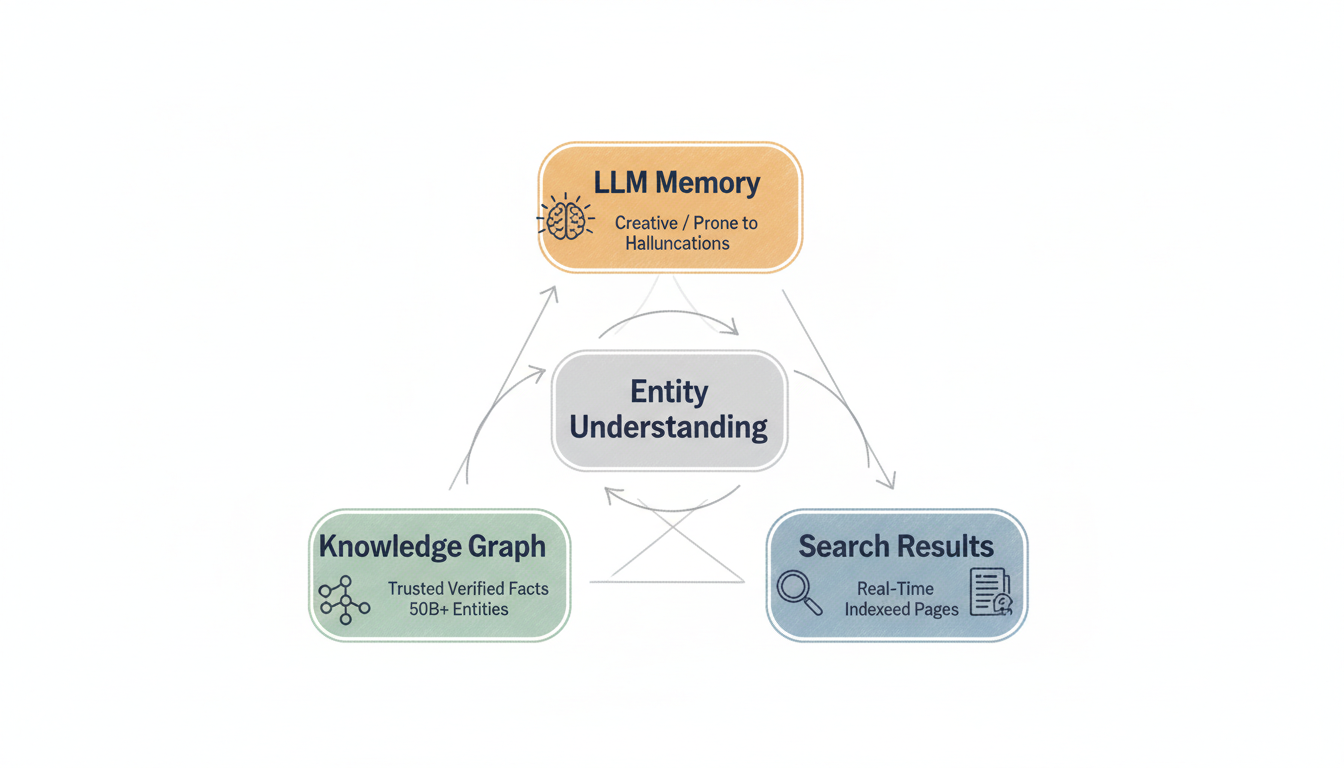
Your Google Knowledge Panel is the most valuable real estate in branded search. That information box appearing beside search results for your name or business signals to users—and increasingly to AI systems—that Google recognizes you as a legitimate, authoritative entity.
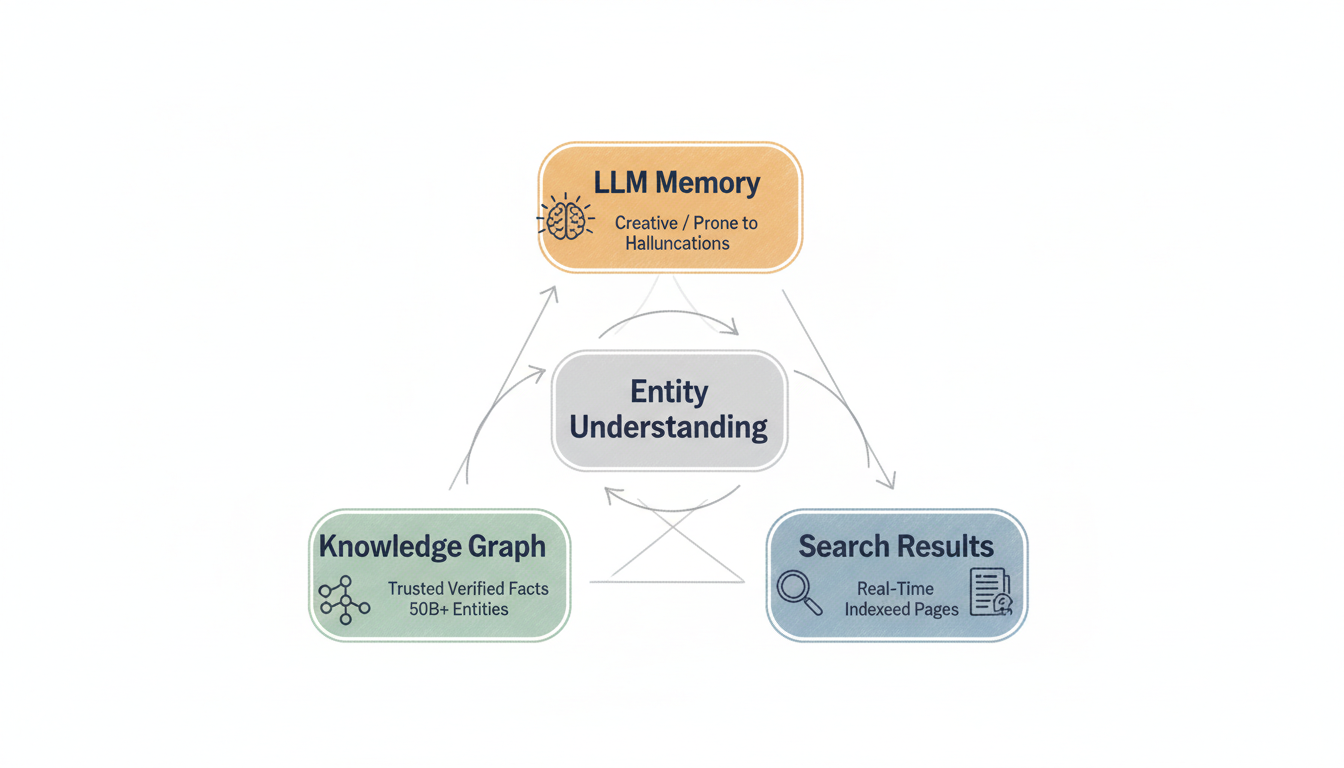
According to Kalicube's research, Google's Knowledge Graph contains over 50 billion entities, but only 3.65% of domains (62,202 out of 1,738,093 tracked) qualify as trusted reference sources. Getting into that elite group requires systematic entity building.
This guide breaks down exactly how to optimize for Google's Knowledge Graph and earn a Knowledge Panel in 2026.
Google's Knowledge Graph is a massive database of entities—people, places, organizations, concepts—and the relationships between them. Unlike traditional search indexing that focuses on keywords and web pages, the Knowledge Graph understands things, not strings.
According to ALM Corp's SEO analysis, Knowledge Graph optimization is critical because it:
How the Knowledge Graph Works:
Google builds entity understanding through what practitioners call the "Algorithmic Trinity":
According to Kalicube's entity research, brands typically need approximately 30 entity-validated URLs from trusted "isReference" domains to establish a stable Knowledge Panel.
Getting a Knowledge Panel isn't about paying for placement—it's about proving to Google that you're a notable, verifiable entity worth including in their knowledge base.
Core Requirements:
Requirement | Description | Importance |
Notability | Demonstrated significance in your field | Essential |
Verifiability | Multiple authoritative sources confirming your existence | Essential |
Consistency | Identical information across trusted platforms | Critical |
Entity Home | A definitive web page that anchors your identity | High |
According to the FatRank Knowledge Panel guide, if you don't have a Knowledge Graph Machine ID (KGM ID), you're not a "known entity" in Google's system—regardless of how much people discuss entity SEO.
The Entity Verification Checklist:
According to Indexsy's Knowledge Panel analysis, Google may require official documents to verify your identity—including government-issued identification, business licenses, or certificates.
Google identifies entities through consistent patterns of corroborating mentions across trusted domains. The more sources that agree on who you are and what you do, the stronger your entity recognition.
Key Entity Signals:
According to Search Engine Land's hallucination guide, the critical entity fields Google recognizes include:
Building Entity Consistency:
The foundation of entity recognition is consistency. According to HasMeta's GEO ranking framework:
Why Consistency Matters:
When Google encounters conflicting information about an entity—different addresses, varying company descriptions, inconsistent founding dates—it reduces confidence in that entity's legitimacy. The Knowledge Graph relies on consensus across trusted sources, and understanding how GEO differs from traditional SEO can help you prioritize entity signals appropriately.
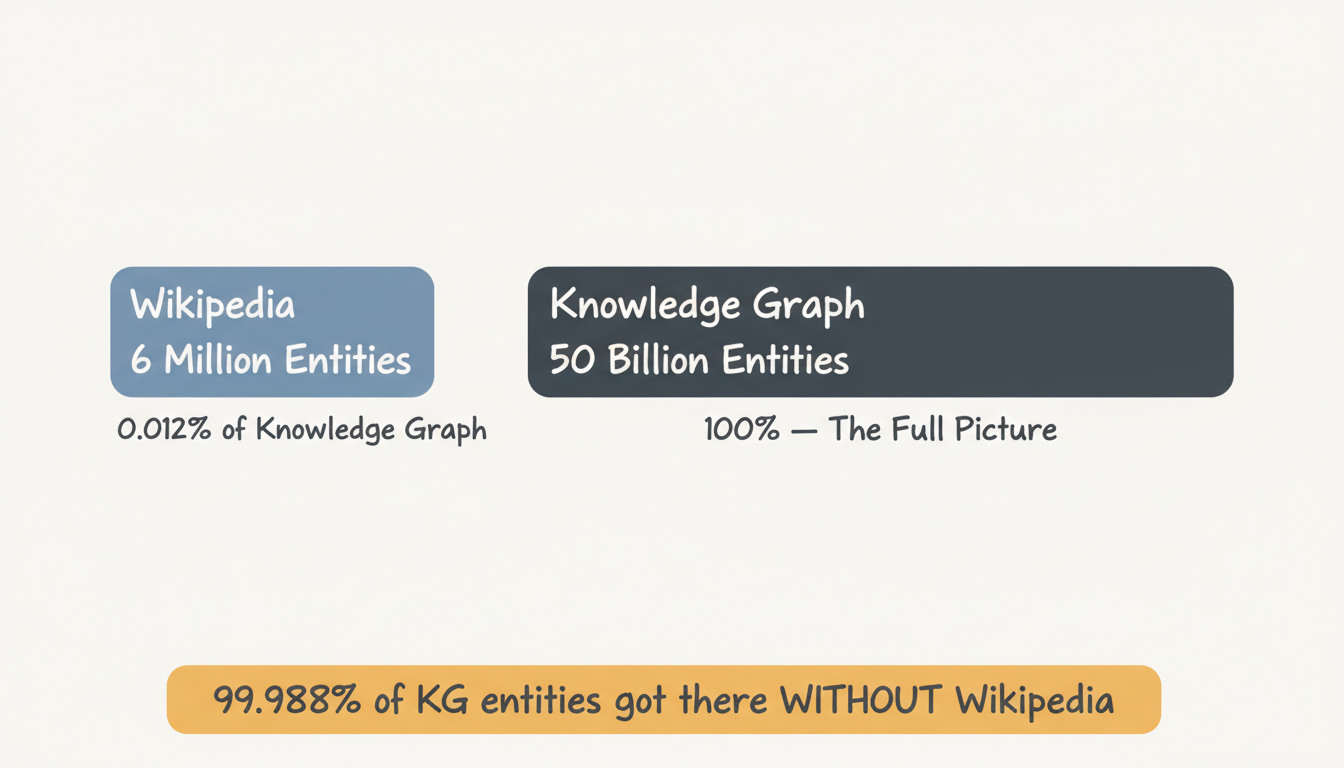
Wikipedia and Wikidata are powerful accelerators for Knowledge Graph inclusion, but they're not the only path—and for most brands, they're not even the best path.
The Wikipedia Reality Check:
According to Kalicube's research:
This means 99.988% of Knowledge Graph entities got there without Wikipedia.
When Wikipedia Makes Sense:
According to HasMeta's GEO framework, if your brand qualifies (meets notability guidelines), Wikipedia is the single highest-impact GEO investment. One Wikipedia page with 10+ citations can unlock:
Budget 20-40 hours for quality Wikipedia creation. For detailed implementation guidance, review our Knowledge Graph case study showing real-world results.
Wikidata as an Alternative:
Wikidata is Wikipedia's structured data counterpart. According to Wikipedia Page Creation Service, Wikidata contributions can strengthen Knowledge Panel plausibility through:
The Non-Wikipedia Path:
For entities that don't meet Wikipedia's notability requirements, build a Knowledge Panel through approximately 30 isReference URLs from trusted domains in your niche—industry directories, professional associations, news coverage, and authoritative databases.
Schema markup is the primary method for getting your entities recognized in Google's Knowledge Graph. It translates your content into the structured language search engines understand without interpretation.
According to ALM Corp's schema guide, sites with comprehensive Organization schema are 3.7x more likely to earn Knowledge Panels than those with basic or missing implementation. Before deploying schema, test it with schema markup validators to ensure accuracy.
Essential Organization Schema:
{
  "@context": "https://schema.org",
  "@type": "Organization",
  "@id": "https://yoursite.com/#organization",
  "name": "Your Company Name",
  "url": "https://yoursite.com",
  "logo": "https://yoursite.com/logo.png",
  "description": "Your company description matching other sources",
  "foundingDate": "2020",
  "founder": {
    "@type": "Person",
    "name": "Founder Name"
  },
  "sameAs": [
    "https://www.linkedin.com/company/yourcompany",
    "https://twitter.com/yourcompany",
    "https://www.crunchbase.com/organization/yourcompany",
    "https://www.wikidata.org/wiki/Q12345678"
  ]
}
The sameAs Property:
According to Digital Information World's schema analysis, the sameAs property is particularly valuable. It creates a network of corroborating signals that AI systems use to validate your identity and distinguish you from similarly named entities.
Person Schema for Founders and Authors:
In the age of AI-generated content, Person schema establishes author credentials and E-E-A-T signals:
{
  "@context": "https://schema.org",
  "@type": "Person",
  "@id": "https://yoursite.com/team/founder/#person",
  "name": "Founder Name",
  "jobTitle": "CEO & Founder",
  "worksFor": {
    "@id": "https://yoursite.com/#organization"
  },
  "sameAs": [
    "https://www.linkedin.com/in/foundername",
    "https://twitter.com/foundername"
  ]
}
According to Backlinko's schema guide, when you use schema markup to tell Google what your content is about, you're reducing the work a search engine has to do—literally optimizing content delivery.
Knowledge Panel eligibility depends on authority signals that demonstrate your entity's legitimacy and significance.
The Authority Building Framework:
According to HasMeta's ranking factors, key authority strategies include:
Strategy | Impact | Implementation |
PR & Media Coverage | High | Get featured on DA 75+ publications |
Wikipedia Presence | Very High | 10+ citations from reliable sources |
Community Validation | Medium | Active presence on Reddit, Quora, forums |
Thought Leadership | High | Regular contributions to industry publications |
For brands with limited budgets, affordable AEO services can help prioritize high-impact authority signals without overspending on generic tactics.
IMDB and Industry Databases:
According to the James Dooley Knowledge Panel interview, IMDB profiles are powerful entity signals. In 2026, podcast appearances with IMDB credits create entity connections:
"Anyone who's a guest on my episode on any podcast of the eight gets—if they've not got one—gets an IMDB profile created... It's very important for you if you're working with any clients to get the business owners or the CMO to get that entity being set up."
Industry-Specific Authority Sources:
Generic authority lists miss 95%+ of niche-specific opportunities. According to Kalicube, each niche has unique entity authority patterns:
Understanding whether AEO is replacing traditional SEO helps you balance Knowledge Graph authority building with conventional link-building strategies.
Earning a Knowledge Panel is just the beginning. Optimization ensures accuracy and maximizes value, particularly as AI search market share grows and Knowledge Panels influence more platforms.
Claiming Your Knowledge Panel:
According to Indexsy, the claiming process involves:
Panel Optimization Actions:
Once claimed, you can:
Monitoring for Drift:
According to Search Engine Land, you can't edit the Knowledge Graph directly. Instead, update your verified sources—website schema, Wikidata entry, and official profiles—and Google's Knowledge Graph automatically refreshes from these structured sources over time.
Impact on AI Systems:
Knowledge Panels now influence AI responses beyond Google. According to SEOPress, ChatGPT added local Knowledge Graph-style results in late 2025, pulling data from Google Business Profiles. A well-optimized Knowledge Panel strengthens your presence across the AI ecosystem, including how to rank on ChatGPT and other LLM platforms.
Even established entities encounter Knowledge Graph problems. Here's how to diagnose and resolve them.
Issue 1: No Knowledge Panel Despite Strong Presence
Diagnosis: Entity signals aren't consolidated enough for Google to recognize you as a distinct entity.
Fix:
Use AEO checker tools to monitor entity recognition progress and identify gaps in your Knowledge Graph signals.
Issue 2: Incorrect Information in Knowledge Panel
Diagnosis: Conflicting information across sources or outdated data.
Fix:
Issue 3: Entity Confusion (Wrong Entity Displayed)
Diagnosis: Google is conflating your entity with a similarly named one.
Fix:
Issue 4: Knowledge Panel Disappears
Diagnosis: Entity signals have weakened or become inconsistent.
Fix:
Google Knowledge Graph optimization in 2026 is essential for branded search dominance and AI visibility:
For enterprise implementations, consider working with an AEO marketing consultant who can integrate Knowledge Graph optimization with broader generative AI SEO strategies.
Timeline varies significantly based on existing entity strength. For entities with strong fundamentals (consistent online presence, third-party coverage, Wikipedia/Wikidata entries), Knowledge Panels can appear within 1-3 months. For entities starting from scratch, expect 6-12 months of consistent entity building.
No. Google Knowledge Panels cannot be purchased directly. They're generated algorithmically based on entity signals from the Knowledge Graph. However, you can invest in the activities that build those signals—PR, schema implementation, directory listings, and third-party coverage. Review AEO services pricing to understand typical investment levels.
Knowledge Panels appear on the right side of search results for entities (people, organizations, places). Knowledge Cards appear as boxes within search results providing quick answers to queries. Both draw from the Knowledge Graph, but panels are entity-focused while cards are query-focused.
No. According to Kalicube research, Wikipedia covers only 0.012% of Google's Knowledge Graph. Most entities earn Knowledge Panels through consistent entity signals across approximately 30 trusted reference domains in their niche, combined with comprehensive schema markup.
By submitting this form, you agree to our Privacy Policy and Terms & Conditions.