February 19, 2026


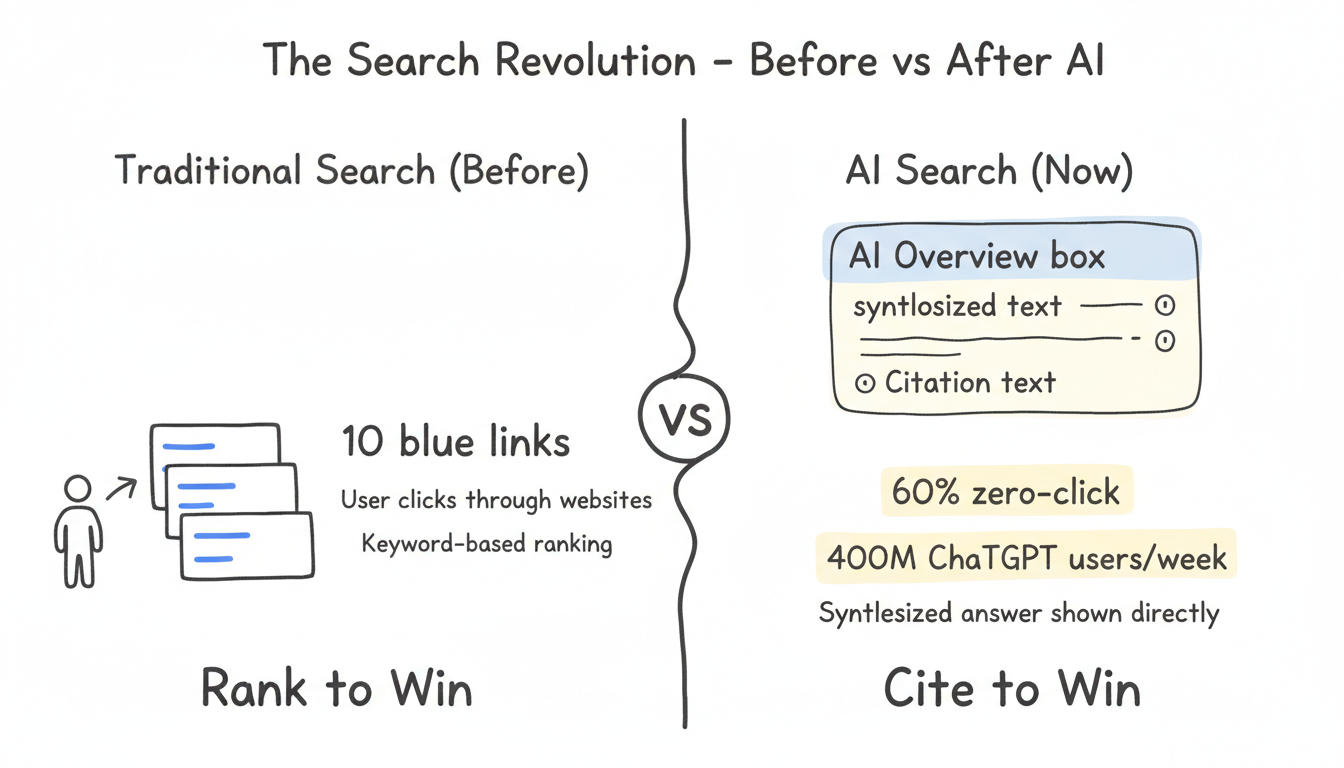
Generative AI has fundamentally altered how search engines work and how marketers must approach optimization. In 2026, search is no longer about returning lists of links—it's about synthesizing answers, understanding context, and delivering information through AI-generated responses. This shift requires SEO professionals to adapt their strategies for a landscape where AI systems decide what content to cite and recommend.
Understanding generative AI's role in SEO helps marketers stay competitive as search behavior continues evolving toward AI-first discovery.
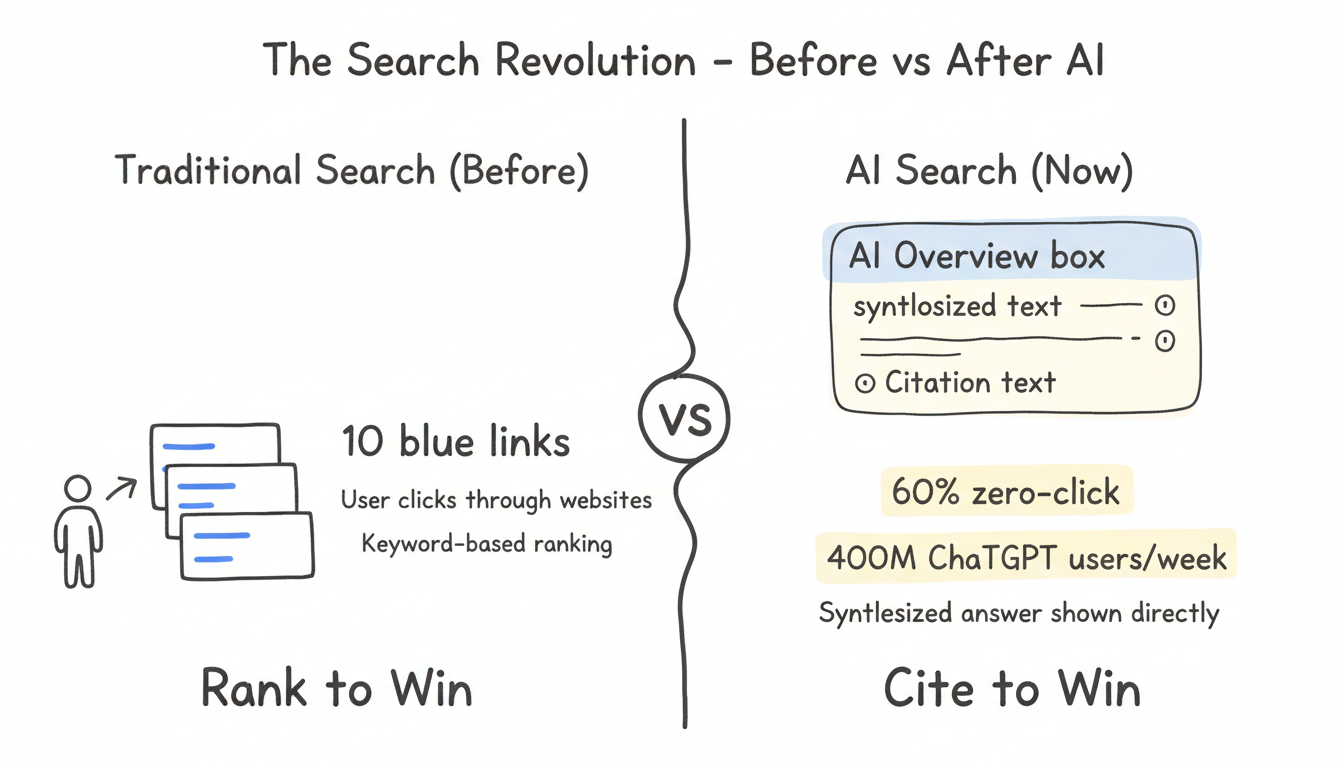
Search has transformed dramatically. Google AI Overviews now appear at the top of results for many queries, synthesizing information before users see traditional blue links. ChatGPT serves over 400 million weekly active users who use it as a primary research tool. Perplexity, Claude, and other AI platforms handle millions of queries daily.
Interest in AI Overviews has increased substantially, reflecting how central AI has become to search experiences. Nearly 60% of Google searches now end without a click to external websites—users get their answers directly from AI-generated summaries.
This transformation means SEO can no longer focus exclusively on ranking pages. Success now requires ensuring AI systems understand, trust, and cite your content when generating responses.
User expectations have shifted fundamentally. People no longer want to browse multiple websites to find answers—they expect AI to understand their intent and deliver synthesized responses immediately.
Query patterns have evolved. Users ask more conversational, complex questions when interacting with AI systems. Instead of typing "best laptop 2026," they ask "what laptop should I buy for video editing under $2000 with good battery life?" AI systems can handle this complexity and deliver tailored responses.
Research behavior has changed. Users increasingly start research in ChatGPT or Perplexity rather than traditional search engines. They trust AI to synthesize information from multiple sources and present balanced perspectives.
Citation replaces clicking. When AI systems generate responses, they cite sources within the answer. Users see recommendations without necessarily visiting the recommended sites. Visibility means being cited, not just ranking.
Several specific changes affect how SEO professionals must approach optimization.
Google AI Overviews appear at the top of search results, pushing traditional organic listings further down the page. These AI-generated summaries answer user queries directly using information synthesized from multiple sources.
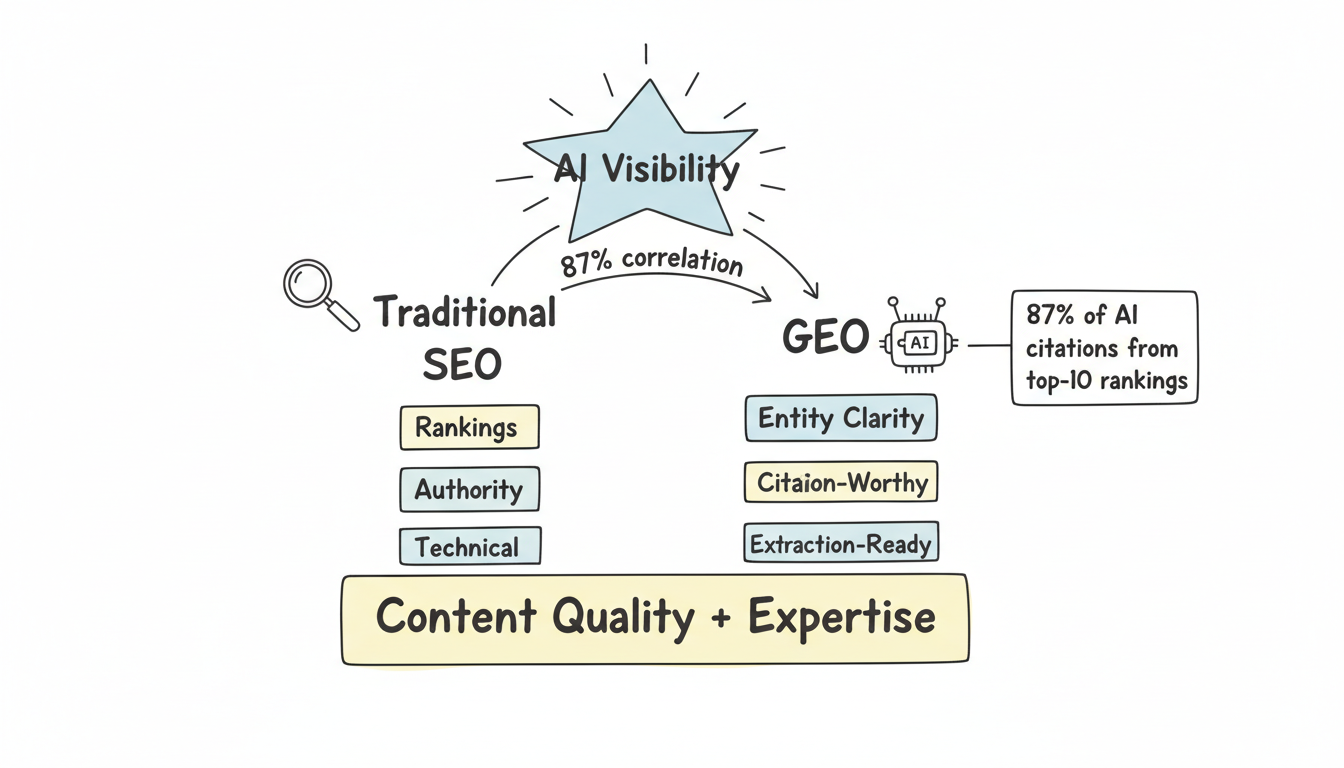
Research shows that 87% of AI Overview citations come from content ranking in positions 1-10. This means traditional SEO remains important—but it's no longer sufficient. Content must both rank well and be structured for AI extraction. Understanding AI Overview CTR data helps marketers assess the real impact of these features on click-through behavior.
Experience, Expertise, Authoritativeness, and Trustworthiness have become the most important factors in AI citation decisions. AI systems prioritize sources demonstrating genuine expertise over content farms optimizing for volume.
This shift rewards:
Content lacking E-E-A-T signals gets passed over regardless of keyword optimization.
AI systems extract information in chunks—they pull specific passages to quote and synthesize. How content is structured determines whether AI systems can effectively use it.
Effective structure includes:
Well-structured content extracts cleanly into AI responses. Dense, poorly organized content gets overlooked even when the information is excellent. Implementing descriptive subheadings for AEO can significantly improve how AI systems parse and cite your content.
AI systems now process multiple content formats. Video, images, and audio all contribute to AI responses. YouTube citations in AI Overviews increased 121% in recent periods, signaling the growing importance of video content.
Effective SEO strategies now encompass:
Brands limiting themselves to text-only content miss visibility opportunities across expanding multimodal search.
Generative Engine Optimization (GEO) has emerged as the discipline specifically focused on AI visibility. While traditional SEO optimizes for search engine rankings, GEO optimization tactics focus specifically on AI citation and recommendation.
Research indicates 63% of marketers now prioritize generative search optimization in their content strategies. This isn't replacing SEO—it's extending it for the AI era.
GEO involves:
The relationship between SEO and GEO is complementary. Strong SEO foundations increase GEO success—the 87% correlation between top-10 rankings and AI citations demonstrates this connection.
Practical adaptations help marketers succeed in AI-influenced search.
Start by understanding where you currently appear in AI responses. Search priority queries across ChatGPT, Perplexity, and Google AI Overviews. Document where your content appears, where competitors appear, and where gaps exist.
This baseline reveals optimization opportunities and informs strategy. For platforms like SearchGPT, tracking SearchGPT market share trends helps prioritize optimization efforts.
Restructure content so AI systems can easily extract and cite it:
AI systems favor authoritative sources. Build authority through:
Verify AI crawlers can access your content. Check robots.txt to ensure you're not blocking GPTBot (OpenAI), ClaudeBot (Anthropic), PerplexityBot, or other AI crawlers. Enable server-side rendering since AI crawlers typically don't execute JavaScript.
AI platforms increasingly favor recent information. Regularly update content with current statistics, recent examples, and new developments. Display update timestamps to signal freshness.
Success in 2026 requires integrating traditional SEO with AI-specific optimization:
Traditional SEO builds the authority foundation AI systems recognize. Sites with strong organic rankings have dramatically higher chances of being cited.
AI optimization adds structuring for extraction, entity clarity, and citation-worthiness that maximize visibility in AI-generated responses.
Organizations implementing both approaches see significantly better results than those pursuing either in isolation. The disciplines are complementary rather than competing.
Generative AI's influence on search will only increase. AI systems will become more sophisticated in understanding content quality and user intent. Multimodal capabilities will expand. New AI platforms will emerge alongside existing ones.
Brands that understand generative AI's role in SEO and adapt their strategies accordingly position themselves for sustained visibility. Those clinging to traditional SEO alone risk diminishing returns as AI-mediated search becomes the norm.
The fundamentals of quality content, demonstrated expertise, and user value remain important—but how that value reaches users has changed. Generative AI has made SEO more complex but also more rewarding for brands that truly provide value.
No. Generative AI extends SEO rather than replacing it. Traditional SEO foundations—technical excellence, quality content, authority building—remain essential and directly influence AI citation likelihood. The 87% correlation between top-10 rankings and AI Overview citations demonstrates that traditional SEO success enables AI visibility.
SEO professionals should develop understanding of how AI systems select and cite sources, content structuring for AI extraction, entity optimization, and AI visibility tracking. Existing SEO skills remain valuable—AI optimization builds on traditional foundations rather than replacing them.
Monitor AI visibility through manual searches across platforms like ChatGPT, Perplexity, and Google AI Overviews for queries relevant to your business. Specialized tools from providers like Semrush, Ahrefs, and dedicated GEO platforms offer automated citation tracking across multiple AI systems.
By submitting this form, you agree to our Privacy Policy and Terms & Conditions.