
February 19, 2026


Google's AI Overviews have fundamentally changed what SEO success looks like. When AI-generated summaries occupy prime real estate at the top of search results, traditional ranking strategies need serious upgrades. The brands winning in 2026 aren't just ranking—they're becoming the sources that AI systems trust and cite.
This playbook provides a complete strategy for earning visibility in Google AI Overviews, from foundational optimization to advanced authority building.
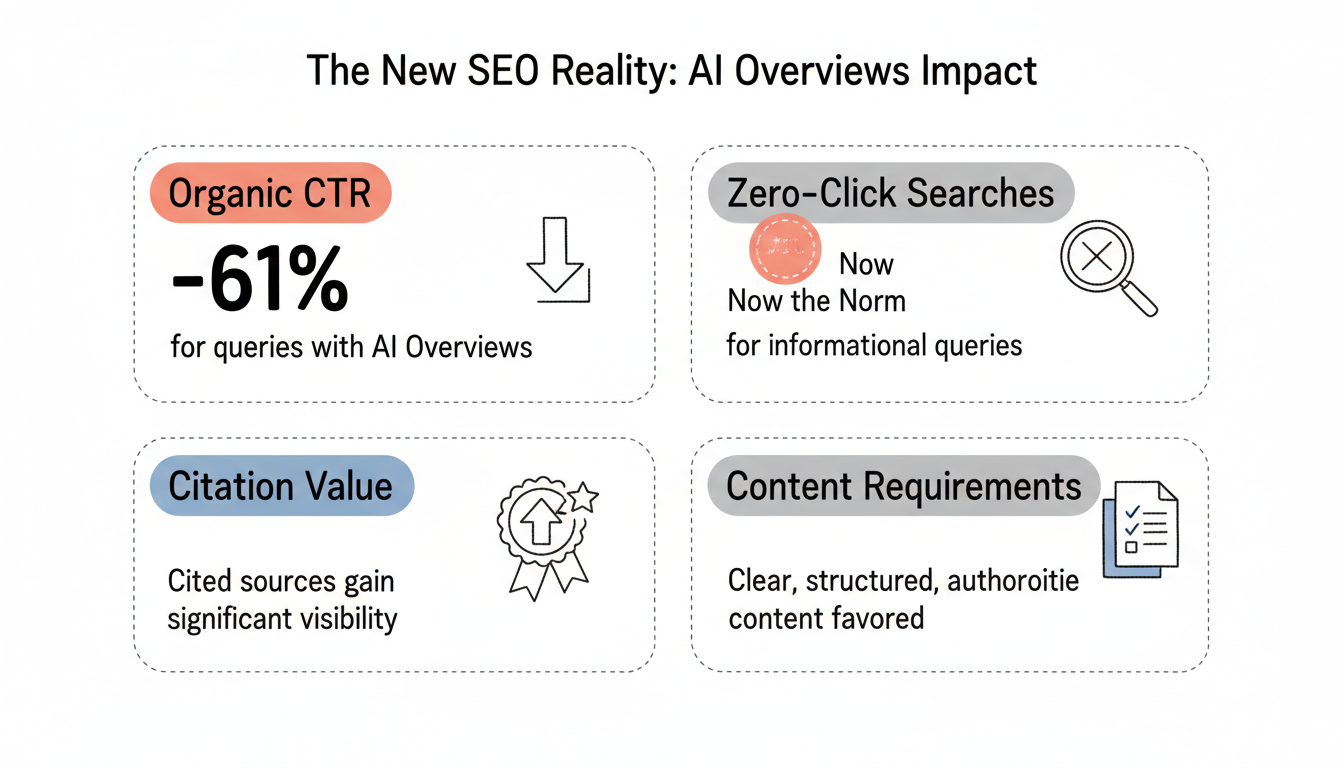
The data tells a striking story about how AI Overviews have transformed search behavior:
Metric | Impact |
Organic CTR | Dropped 61% for queries with AI Overviews |
Zero-click searches | Now the norm for informational queries |
Citation value | Sources cited in AI Overviews gain significant visibility |
Content requirements | Clear, structured, authoritative content favored |
The shift is clear: SEO is no longer about ranking in the top 10 blue links—it's about becoming the source AI systems trust to cite in their answers.
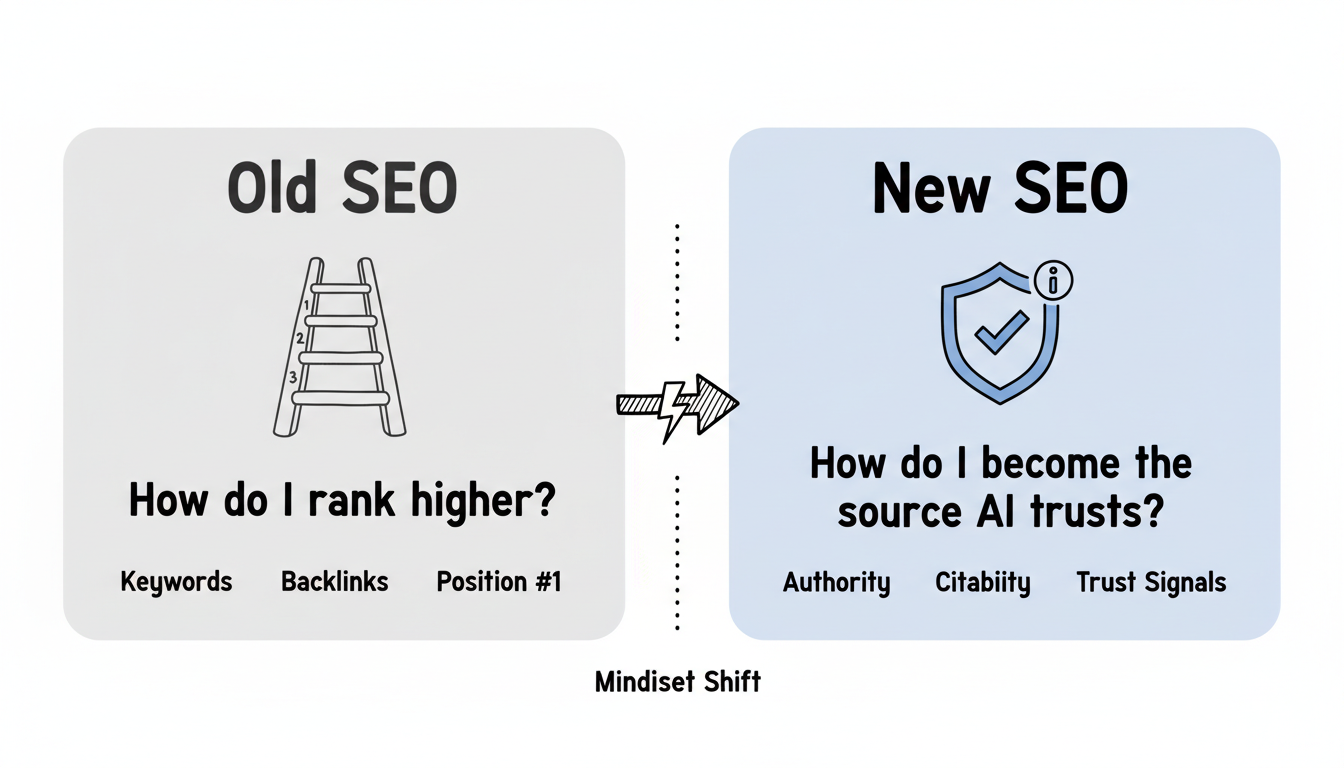
Modern AI Overview SEO requires a fundamental mindset shift.
"How do I rank higher?"
"How do I become the source AI trusts?"
This shift changes everything—from how you write content to how you structure authority signals. Google's AI systems evaluate content for trustworthiness, accuracy, and citability before inclusion in AI Overviews.
Before optimizing for AI Overviews, ensure technical fundamentals are solid.
Element | Requirement | Impact |
Core Web Vitals | All metrics in "Good" range | Crawlability and user experience |
Schema markup | Organization, Author, FAQ, HowTo | AI comprehension |
Mobile optimization | Fully responsive design | Indexing priority |
Site architecture | Clear hierarchy and navigation | Crawl efficiency |
Page speed | Under 3 seconds load time | User experience signal |
Implement these schema types for AI Overview optimization:
Organization schema: Establishes entity identity with name, description, contacts, and sameAs links to verified properties.
Person schema: For authors and experts, including credentials and expertise areas.
FAQ schema: Marks up question-answer pairs that AI can extract directly.
HowTo schema: Structures step-by-step processes for clear AI extraction.
AI Overviews favor specific content characteristics. Structure your content strategy around these principles. Understanding AI overview content requirements is essential for creating content that Google's systems will trust and cite.
AI systems extract content—structure it for easy extraction:
Effective patterns:
Avoid:
Content Section | Purpose |
Opening answer | Direct response to the query (2-3 sentences) |
Supporting context | Explanation and elaboration |
Evidence | Data, examples, citations |
Comprehensive coverage | Related aspects and depth |
Summary | Key takeaways for reinforcement |
High-performance content types:
Underperforming content:
Applying descriptive subheadings AEO boost techniques helps AI systems parse and extract your content more effectively, increasing citation probability.
AI Overviews heavily weight authority signals. Build systematic authority through these approaches.
Google's E-E-A-T framework is critical for AI Overview visibility:
Experience indicators:
Expertise signals:
Authoritativeness markers:
Trustworthiness factors:
Search engines build knowledge graphs, not keyword lists. Establish entity authority by:
Defining your entity:
Building entity connections:
AI systems learn about brands from multiple sources. Expand visibility through:
Structure your AI Overview SEO strategy in phases.
Week 1-2: Assessment
Week 3-4: Technical fixes
Week 5-6: Content audit
Week 7-8: Content updates
Leveraging AI search content structure principles ensures your updates align with how AI systems process and extract information.
Week 9-10: External presence
Week 11-12: Measurement and refinement
Track these metrics to evaluate your AI Overview SEO strategy:
Metric | Measurement Approach |
AI Overview appearances | Manual monitoring or AEO tracking tools |
Citation frequency | Track mentions in AI-generated results |
Brand visibility | Monitor presence across AI platforms |
Organic traffic trends | Compare periods with/without AIO presence |
Authority signals | Track backlink quality and brand mentions |
The brands succeeding in 2026 track:
Short-term tactics don't build lasting visibility. Focus on fundamentals that establish genuine authority.
AI Overview content still needs to rank well enough to enter the retrieval pool. Technical SEO remains foundational, and understanding SEO vs AEO key differences helps you balance both approaches effectively.
AI can summarize—but users trust experience. Create content with lived insights that AI cannot replicate.
Users search across Google, YouTube, ChatGPT, and Perplexity. Multi-platform presence is mandatory.
Most strategies require 3-6 months for meaningful results. Technical fixes and content restructuring can show faster impact; authority building takes longer. Consistency matters more than speed.
No. AI Overviews synthesize from multiple sources, often citing content from positions 5-20. Being the most citable source matters more than ranking position.
Yes, but it's foundational rather than dominant. Technical SEO, crawlability, and on-page optimization still matter, but success depends on authority, relevance, and how well AI engines understand and trust your content.
Both. The strategies overlap significantly—high-quality, authoritative, well-structured content performs well in both. Prioritize based on your audience's search behavior and query types.
By submitting this form, you agree to our Privacy Policy and Terms & Conditions.



