
February 19, 2026


Getting your brand mentioned by ChatGPT, Perplexity, and Google AI Overviews requires a fundamentally different approach than traditional SEO. LLM optimization focuses on making your content citation-worthy for AI systems that synthesize information rather than simply rank pages.
In this guide, we break down practical LLM optimization examples you can implement today to increase your visibility in AI-generated responses.
LLM optimization (LLMO) is the practice of structuring and presenting content so that large language models like ChatGPT, Claude, and Gemini can easily understand, extract, and cite your information. According to Semrush's LLM optimization guide, key techniques include getting positive mentions on reputable websites and creating original, useful content that LLMs are more likely to reference.
Unlike traditional SEO that targets ranked link lists, LLM optimization aims for inclusion within AI-generated answers and summaries. Understanding how AI SEO works is essential for implementing effective optimization strategies.
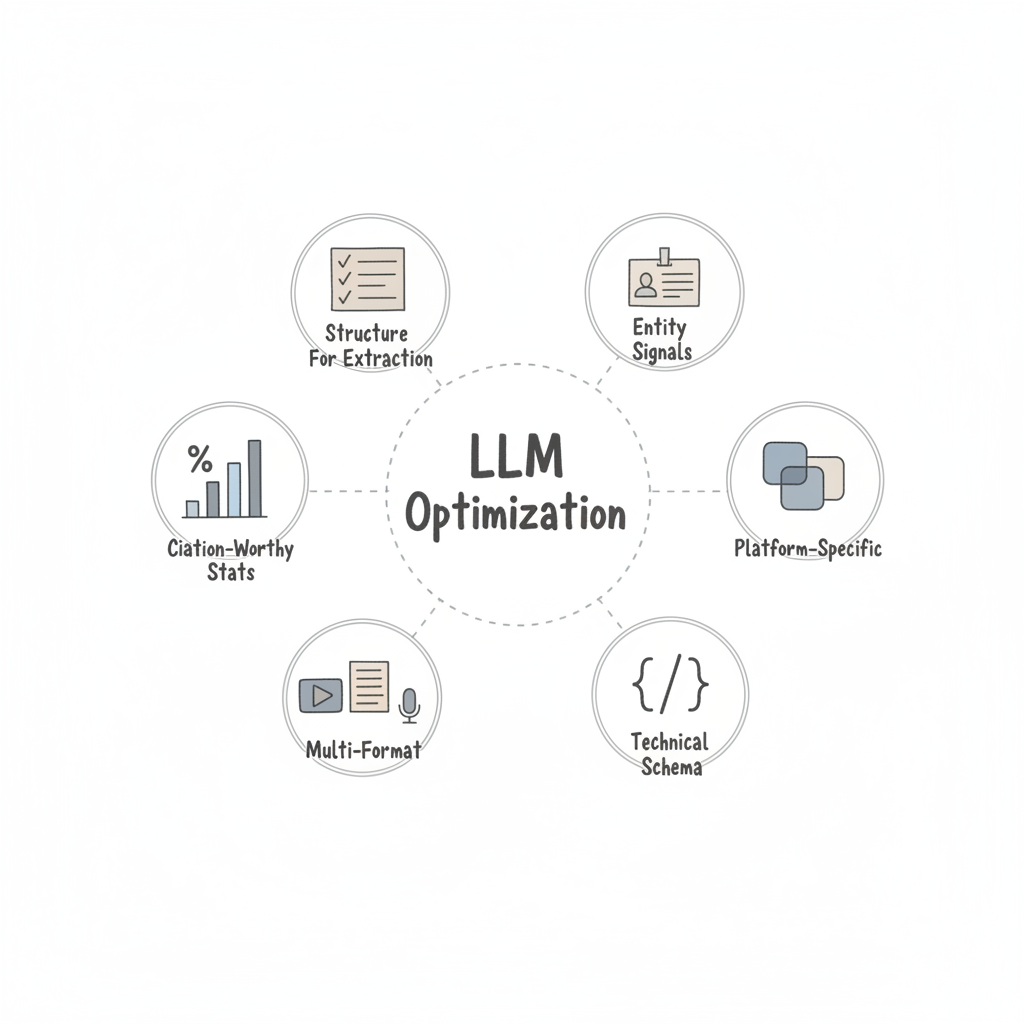
One of the most effective LLM optimization tactics is creating content that AI can easily parse and quote.
The Problem: Long, dense paragraphs make it difficult for LLMs to identify and extract key information.
The Solution: Use a clear heading hierarchy with direct answers immediately following each heading.
Implementation Example:
Instead of writing:
"When considering the various factors that influence search engine optimization, it's important to understand that there are many elements that come into play, including technical aspects, content quality, and user experience signals that search engines evaluate..."
Write:
What factors influence SEO rankings?
Three primary factors influence SEO rankings: technical optimization, content quality, and user experience. Technical optimization ensures search engines can crawl and index your pages. Content quality demonstrates expertise and provides value to users. User experience signals like page speed and mobile-friendliness affect how search engines evaluate your site.
According to Pro Marketer's LLM optimization guide, starting each section by answering the question immediately helps AI prefer clear, direct answers at the top of every section.
LLMs depend on entity recognition to understand who you are and when you're relevant. This is a core principle of entity-based SEO topical authority.
The Problem: Inconsistent brand information across the web confuses AI systems about your business identity.
The Solution: Maintain consistent NAP (Name, Address, Phone) data and brand messaging across all platforms.
Implementation Checklist:
As noted by Paperstack's AI visibility research, LLMs look for real-world proof that your business delivers what it promises through consistent entity signals.
AI systems favor content containing original data, quotes, and statistics.
The Problem: Generic content without supporting data rarely gets cited.
The Solution: Include specific, verifiable statistics with clear source attribution.
Implementation Example:
Weak approach:
"Many businesses see improved results from SEO."
Strong approach:
"According to Semrush research, content containing quotes and statistics achieves 30-40% higher visibility in AI-generated responses."
Data-Driven Content Tips:
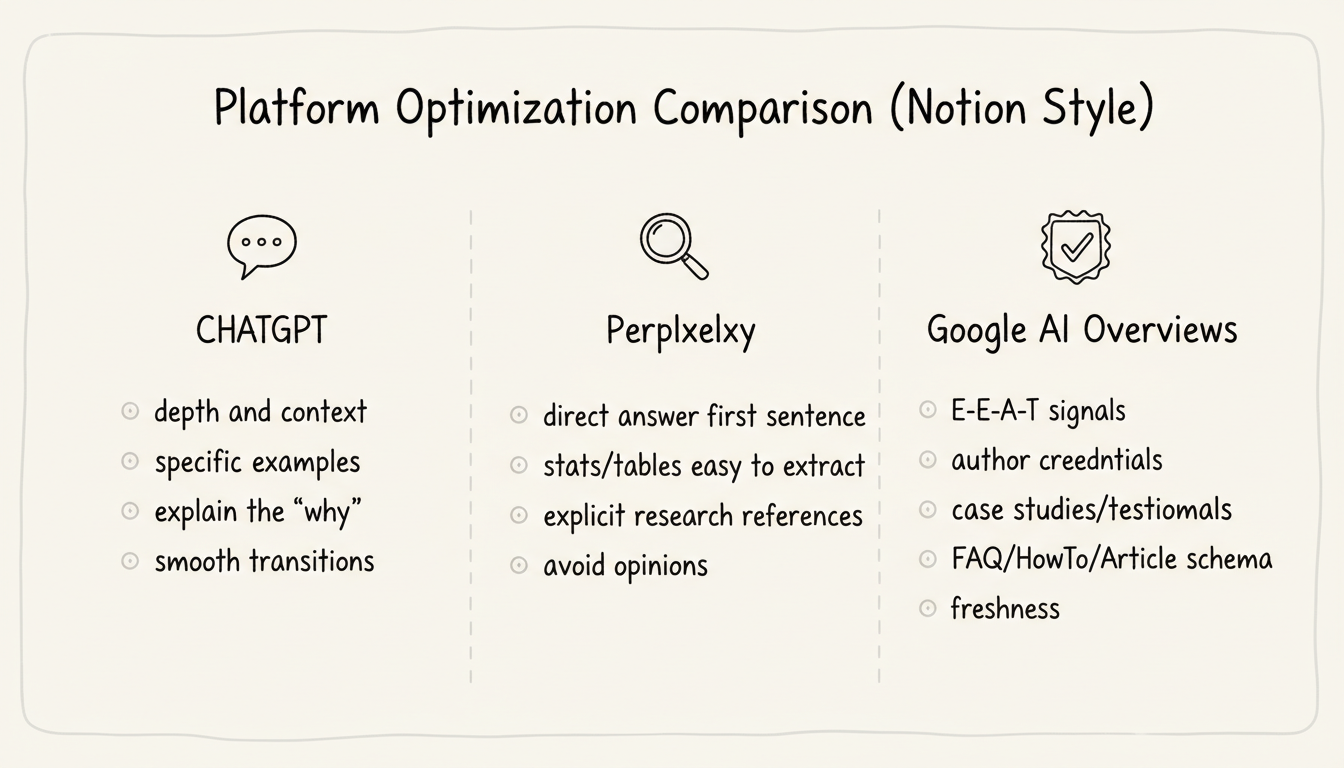
Each AI platform has distinct preferences for the content it cites.
ChatGPT values depth and contextual understanding. According to Addlly's platform comparison, to rank on ChatGPT you should:
Perplexity acts as a strict answer engine that prioritizes factual accuracy.
Google's AI Overviews prioritize E-E-A-T signals (Experience, Expertise, Authoritativeness, Trustworthiness). For websites looking to optimize for this feature, AI Overview website optimization requires specific technical and content strategies.
Publishing content in multiple formats gives LLMs more opportunities to find and cite your brand.
Implementation Example from Duolingo:
According to SeoProfy's LLM SEO strategies, Duolingo repackages core content into three flagship formats:
This multi-format approach gives LLMs options: blog posts win for depth, while short-form content from platforms like Reddit or Quora often gets quoted directly for personal insights.
Your Multi-Format Checklist:
Schema markup helps AI interpret your content as specific content types. Using structured data for AI search significantly improves your chances of being cited by language models.
JSON-LD FAQ Schema Example:
{
  "@context": "https://schema.org",
  "@type": "FAQPage",
  "mainEntity": [{
    "@type": "Question",
    "name": "What is LLM optimization?",
    "acceptedAnswer": {
      "@type": "Answer",
      "text": "LLM optimization is the practice of structuring content so that large language models can easily understand, extract, and cite your information in AI-generated responses."
    }
  }]
}
According to MonsterInsights, 36.6% of search keywords trigger featured snippets derived from schema markup.
LLM optimization requires a shift from keyword-focused tactics to creating genuinely citation-worthy content:
Unlike traditional SEO, LLM optimization can show faster results because AI models are updated more frequently. However, building the authority signals that LLMs trust typically takes 3-6 months of consistent effort.
Yes. Start by restructuring existing content with clear headings, adding direct answers at the beginning of sections, including specific statistics with sources, and implementing appropriate schema markup.
Manually test by asking AI tools questions related to your content and noting if they cite you. Tools like Semrush Enterprise AIO and HubSpot's AI Search Grader can automate this monitoring process.
By submitting this form, you agree to our Privacy Policy and Terms & Conditions.



