February 19, 2026


SearchGPT and other AI search platforms don't just analyze your website—they evaluate what the entire internet says about your brand. In 2026, online reviews have become a critical factor in AI recommendation algorithms. Platforms like G2, Clutch, TrustPilot, and Capterra influence whether SearchGPT recommends your company when users ask commercial questions. This guide explains how to optimize your review presence for AI search visibility.
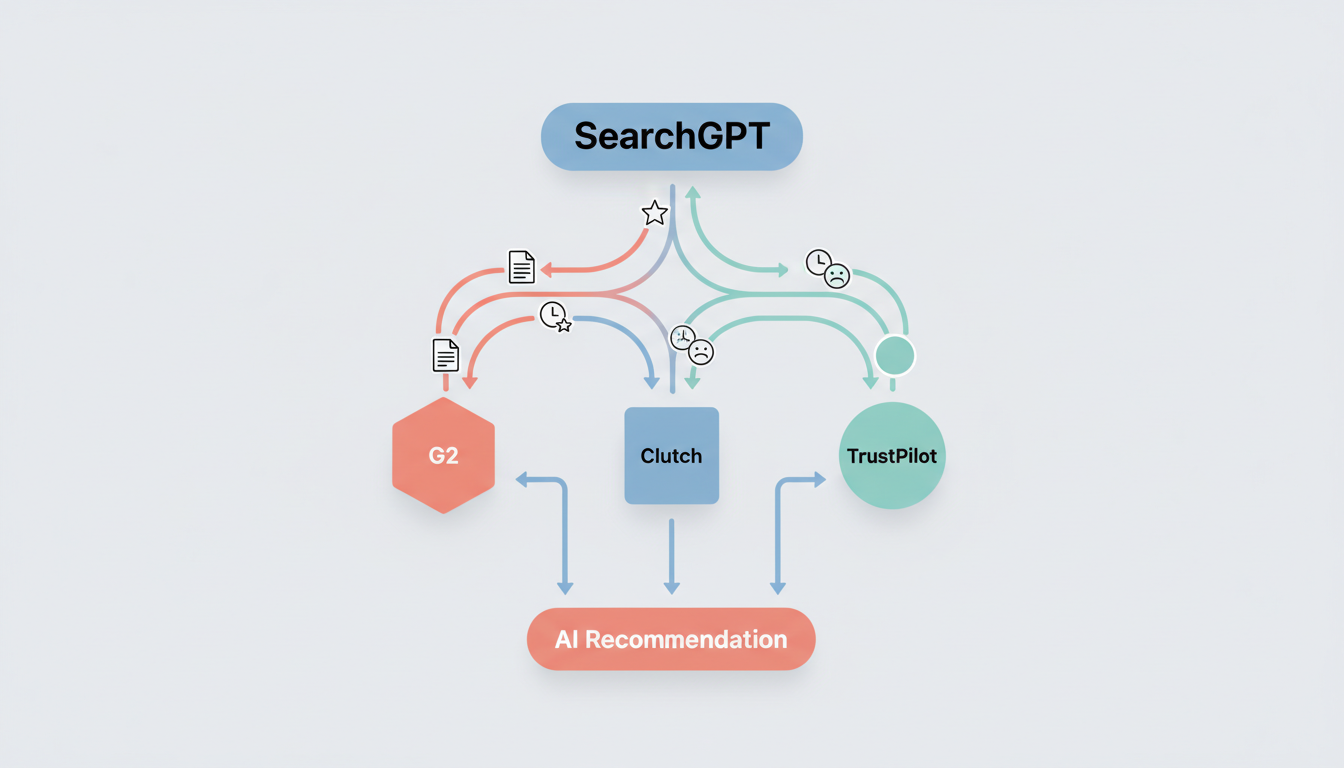
SearchGPT's recommendation algorithm considers multiple signals when deciding which companies to suggest. Reviews provide structured, easily parseable data that AI systems use to evaluate credibility and quality.
How SearchGPT uses review data:
Research indicates that online review sites and aggregators play a substantial role in informing SearchGPT recommendations. These platforms present information in hierarchical formats that AI systems can easily process to separate high-quality providers from lower-rated alternatives.
When users ask SearchGPT questions like "What's the best CRM software?" or "Which marketing agency should I hire?", the system pulls from review data to inform its recommendations. Companies without review presence—or with poor ratings—may never appear in these responses. Understanding how Google selects AI overview sources can help you apply similar principles to optimize for SearchGPT.
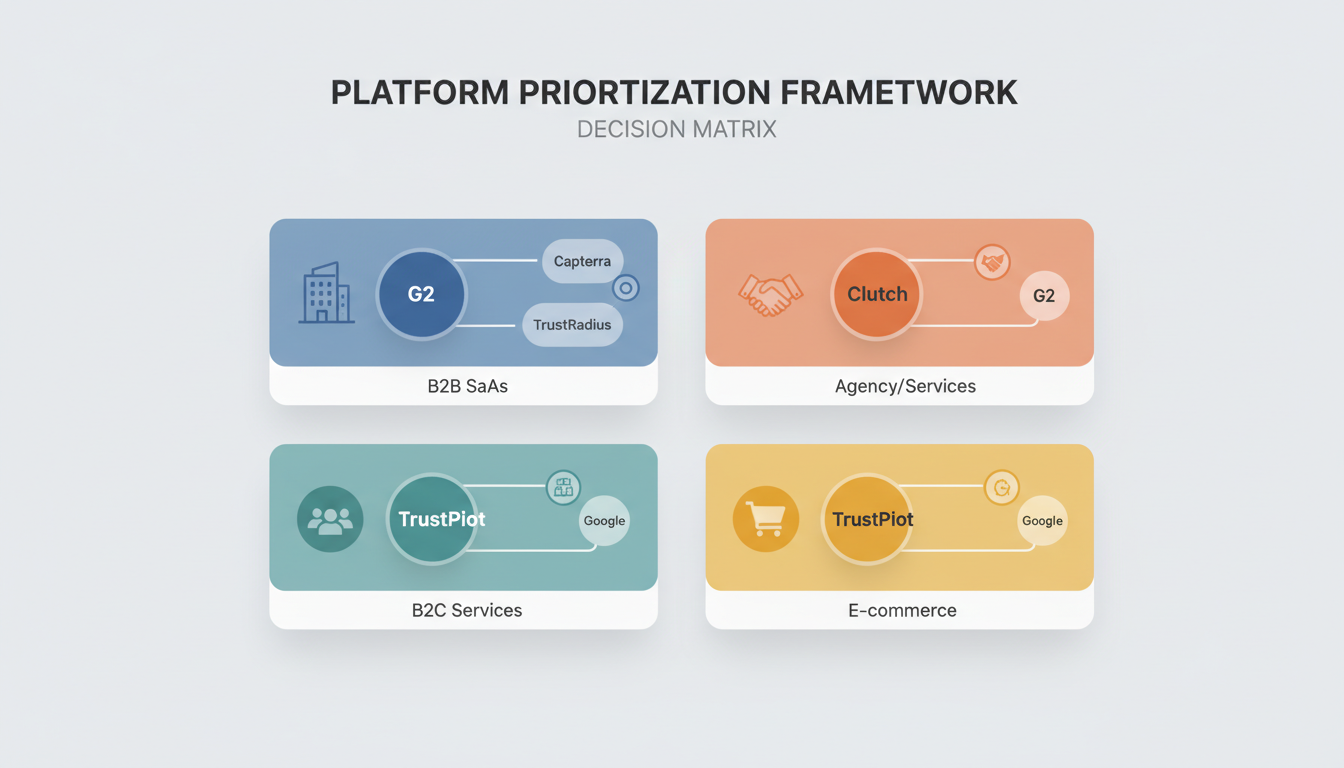
Different review platforms carry different weight with AI systems. Prioritize platforms based on your industry and the types of queries SearchGPT users make.
G2 dominates B2B software reviews with detailed category rankings and verified user feedback. SearchGPT frequently references G2 when recommending software products. The platform's structured category system makes it easy for AI to understand where your product fits.
Capterra provides similar B2B software coverage with strong presence in certain categories. Its ownership by Gartner adds authority signals that AI systems recognize.
Clutch focuses on B2B services—agencies, consultants, and professional services firms. SearchGPT often pulls from Clutch when recommending service providers.
TrustPilot offers broad consumer review coverage across industries. Its verified review system and structured rating display make it highly accessible for AI parsing.
BBB (Better Business Bureau) provides trust signals particularly for US-based businesses. Accreditation and complaint resolution records contribute to credibility assessments.
CNET and Wirecutter reviews influence product recommendations through expert editorial reviews that AI systems weight heavily.
Google Business Profile reviews remain essential for local queries. SearchGPT incorporates Google review data when location matters.
Yelp continues influencing recommendations for local service businesses despite its consumer focus.
Business Type | Primary Platforms | Secondary Platforms |
B2B Software | G2, Capterra | TrustPilot, G2 Crowd |
B2B Services | Clutch, G2 | UpCity, Expertise |
E-commerce | TrustPilot, Amazon | Google, Sitejabber |
Local Services | Google, Yelp | BBB, Facebook |
SaaS | G2, Capterra | TrustRadius, Software Advice |
Building strong review profiles requires systematic approaches to solicitation and collection.
Request reviews at moments of highest customer satisfaction:
After successful outcomes — When customers achieve goals using your product or service, they're most likely to share positive experiences.
Following support resolution — Customers who receive excellent support often feel motivated to acknowledge that experience publicly.
At milestone achievements — Annual renewals, usage milestones, or project completions create natural review request opportunities.
AI systems increasingly detect and discount inauthentic reviews. Build genuine review presence through ethical practices:
Ask satisfied customers directly. Personal requests from account managers or customer success teams generate higher response rates than automated emails.
Make the process easy. Provide direct links to review platforms. Reduce friction by specifying exactly where and how to leave feedback.
Don't incentivize inappropriately. Platforms prohibit review incentives. Discounts or gifts in exchange for reviews violate terms of service and risk account penalties.
Follow up but don't pressure. A single reminder is appropriate. Multiple follow-ups feel pushy and can generate negative sentiment.
Guide customers toward reviews that help AI systems understand your value:
Encourage specificity. Reviews mentioning specific features, outcomes, or use cases provide more useful data for AI parsing than generic praise. This specificity aligns with broader search engine optimization AI strategies that prioritize detailed, contextual content.
Request context. Ask customers to mention their industry, company size, or use case. This context helps AI systems match recommendations to user queries.
Suggest structure. Some customers appreciate prompts like "What problem did we solve?" or "What results did you achieve?" that produce more informative reviews.
Active review management extends beyond generation to monitoring and response.
Track reviews across platforms systematically:
Set up alerts for new reviews on primary platforms. Many platforms offer notification options for business accounts.
Use aggregation tools to monitor multiple platforms from single dashboards. Services like Birdeye, ReviewTrackers, and Podium consolidate monitoring.
Check competitor reviews to understand how AI systems might compare your reputation to alternatives.
Response patterns influence both platform algorithms and AI perception:
Respond to negative reviews professionally. Acknowledge concerns, offer resolution, and demonstrate customer-first orientation. SearchGPT may evaluate response patterns when assessing credibility.
Thank positive reviewers. Brief acknowledgment shows active engagement without appearing automated.
Address factual inaccuracies. If reviews contain false claims, professional corrections protect your reputation while demonstrating engagement.
If your review profile shows weaknesses:
Identify patterns in negative feedback. Common complaints indicate real issues worth addressing.
Fix underlying problems before focusing on review volume. More reviews won't help if they reflect ongoing issues.
Request updates from customers whose concerns you've resolved. Platforms often allow review edits that can improve ratings.
The content within reviews affects how AI systems understand and recommend your business.
Reviews containing relevant keywords help AI systems categorize your business accurately:
Industry terminology helps AI understand your market position. Reviews mentioning "enterprise software" or "small business accounting" provide classification signals.
Feature mentions connect your product to specific capabilities users search for. Reviews discussing particular features inform AI recommendations for users seeking those capabilities.
Outcome descriptions demonstrate results that AI systems can reference when recommending solutions. Quantified outcomes are particularly valuable, similar to how what is geo generative engine optimization emphasizes measurable performance indicators.
Reviews with clear structure parse more effectively:
Star ratings provide primary signals for quality assessment. Maintain high averages across platforms.
Category selections (when platforms offer them) help AI systems understand your positioning.
Verified status increases review weight in AI evaluations. Encourage customers to verify their reviews where possible.
Track whether review efforts translate to AI recommendation presence.
Monitor SearchGPT mentions. Regularly query SearchGPT for prompts where your company should appear. Note whether recommendations reference your review ratings.
Track referral sources. While AI search attribution remains imperfect, watch for traffic patterns suggesting AI recommendation influence.
Compare competitive position. Document how SearchGPT positions your company versus competitors over time. Improvement may correlate with review profile strengthening.
Use AI visibility tools. Emerging platforms from providers like Semrush and specialized GEO tools offer citation tracking that may capture review-influenced recommendations. Consider implementing aeo checker tools to monitor your overall AI search performance.
Review management represents one component of comprehensive SearchGPT optimization. Maximum effectiveness requires integration with other elements:
Website optimization ensures SearchGPT can access and understand your primary content. Reviews support but don't replace strong website presence.
Authority building through backlinks, PR, and thought leadership creates the credibility foundation that reviews reinforce.
Content quality determines whether SearchGPT considers your content citation-worthy. Reviews validate quality claims but can't compensate for weak content.
The combination of strong owned properties and validated third-party reputation creates the trust profile that earns SearchGPT recommendations.
The most important platform depends on your industry. For B2B software, G2 typically carries the most weight. For B2B services, Clutch matters more. For consumer businesses, TrustPilot and Google reviews influence recommendations most significantly.
There's no minimum threshold, but more reviews with consistent positive ratings strengthen your position. Focus on building sustainable review volume over time rather than rapid accumulation that might trigger platform scrutiny.
Yes. AI systems evaluate overall sentiment and rating patterns. Consistent negative feedback can prevent recommendations or cause SearchGPT to mention concerns when discussing your company. Address negative review patterns through both reputation management and underlying business improvements.
By submitting this form, you agree to our Privacy Policy and Terms & Conditions.