February 19, 2026


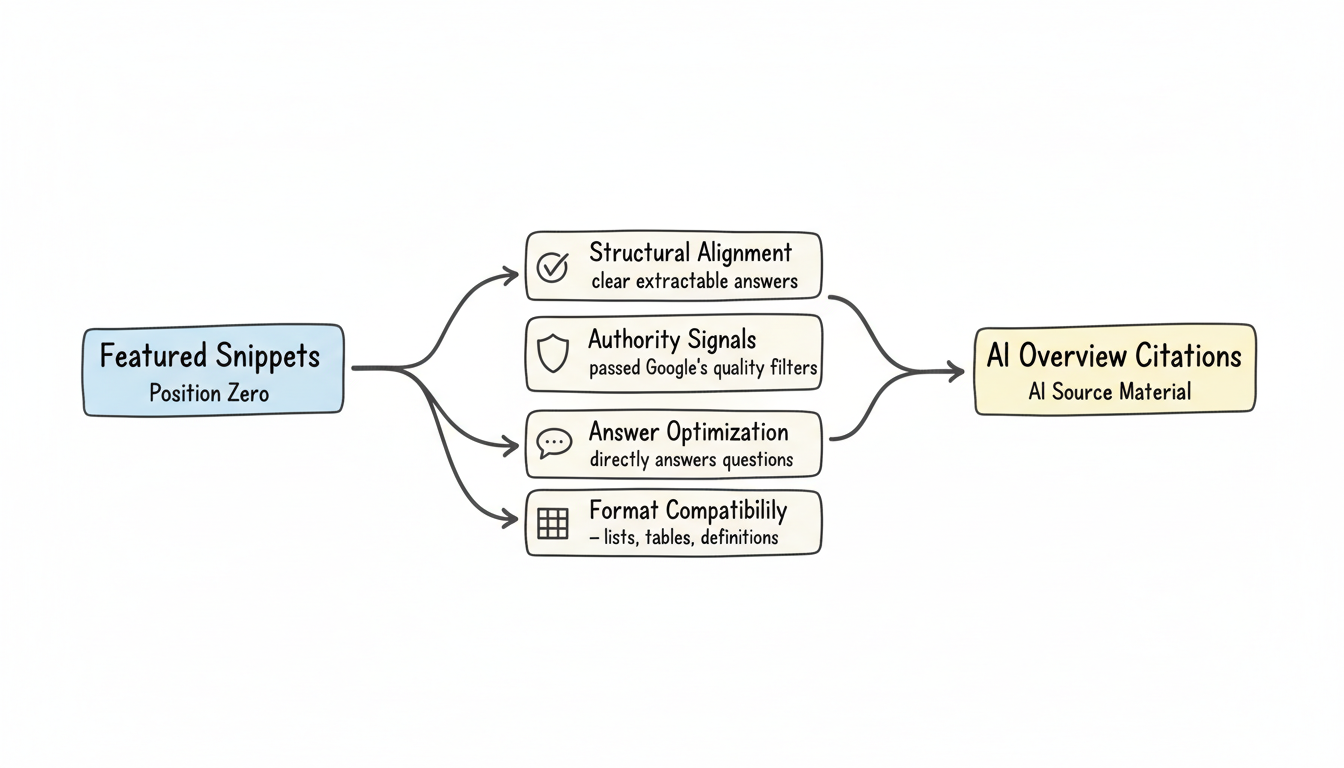
Featured snippets have long been the holy grail of organic search—position zero visibility that captures user attention before traditional rankings. But in 2026, featured snippets serve an even more strategic purpose: they function as a pipeline to AI Overview citations.
Google's AI systems draw heavily from content that already earns featured snippets. The logic is straightforward—if content is structured and authoritative enough to answer a query in snippet form, it's likely structured and authoritative enough to cite in AI-generated responses.
This guide examines how to optimize for featured snippets as part of a broader AI visibility strategy, covering format types, optimization techniques, and the connection between snippets and AI citations.
The relationship between featured snippets and AI Overviews isn't coincidental. Both features aim to provide direct answers to user queries, and both rely on well-structured, authoritative content.
According to industry research, Google's AI Overview system uses a "query fan-out" technique that breaks complex queries into subqueries, retrieves content for each, and synthesizes comprehensive answers. Content that already answers subqueries effectively—the same content earning featured snippets—naturally becomes source material for AI responses.
The connection works because:
Structural alignment: Featured snippets require clear, extractable answers. AI systems need the same content structure to generate accurate responses.
Authority signals: Content earning snippets has already passed Google's quality filters. AI systems trust these same authority signals.
Answer optimization: Snippet-optimized content directly answers questions—exactly what AI Overviews need to synthesize.
Format compatibility: The formats that win snippets (lists, tables, definitions) are also the formats AI systems parse most effectively.

While featured snippets can drive significant traffic, AI Overviews change the calculus. According to 2026 CTR research, AI Overviews can reduce click-through rates by 30% or more, even for pages ranking in position one.
Additional research shows:
This doesn't mean snippets are less valuable—it means their value has shifted. Featured snippets now serve as:
Winning featured snippets in 2026 isn't just about position zero traffic. It's about establishing your content as the authoritative answer that AI systems reference when generating responses across related queries.
Not all featured snippets are equal. Different formats serve different query types, and understanding format selection helps optimize effectively.
Paragraph snippets provide direct text answers to definitional or explanatory queries.
Trigger queries:
Optimization approach:
Example structure:
## What Is [Concept]?

[Concept] is [clear definition in one sentence]. This [explanation of significance or context]. Organizations use [concept] to [primary benefit or application].
Paragraph snippet characteristics:
Element | Optimal Range |
Length | 40-60 words |
Sentences | 2-4 |
Position | Immediately after H2 question |
Format | Prose, not fragmented |
List snippets appear for queries seeking steps, options, or ranked items. They come in two varieties: ordered (numbered) and unordered (bulleted).
Ordered list triggers:
Unordered list triggers:
Optimization approach:
List snippet characteristics:
Element | Optimal Range |
Items | 5-8 |
Item length | 8-15 words |
Total items visible | Usually 4-6 (with "More items" link) |
Heading | Direct question match |
Table snippets display data comparisons and are particularly valuable for commercial queries.
Trigger queries:
Optimization approach:
Table snippet characteristics:
Element | Optimal Range |
Columns | 3-5 |
Rows | 4-6 (more may truncate) |
Cell content | 1-3 words ideal |
Headers | Include target keywords |
Video snippets appear for "how-to" and demonstration queries, pulling timestamps from YouTube content.
Trigger queries:
Optimization approach:
Winning featured snippets requires intentional content structure combined with topical authority.
Structure content to directly answer queries:
Step 1: Identify snippet-worthy queries in your topic area using tools like Semrush or Ahrefs that flag queries currently triggering snippets.
Step 2: Create H2 headings that exactly match target queries:
Step 3: Provide the answer immediately after the heading—don't bury it in context.
Step 4: Follow the answer with supporting detail that reinforces your authority.
Journalism's inverted pyramid works exceptionally well for snippet optimization:
Paragraph 1: The complete answer (snippet target) Paragraph 2: Key supporting details Paragraph 3: Additional context and nuance Paragraph 4: Related information and sources
This structure ensures Google can extract a clean answer while users get comprehensive information if they click through.
According to 2026 SEO research, schema markup delivers 20-40% CTR improvements, and 72% of first-page results now use structured data.
Priority schema types for snippet optimization:
FAQ Schema: Mark up question-answer content
{
  "@type": "FAQPage",
  "mainEntity": [{
    "@type": "Question",
    "name": "What is featured snippet optimization?",
    "acceptedAnswer": {
      "@type": "Answer",
      "text": "Featured snippet optimization is..."
    }
  }]
}
HowTo Schema: Mark up step-by-step content
{
  "@type": "HowTo",
  "name": "How to Optimize for Featured Snippets",
  "step": [{
    "@type": "HowToStep",
    "name": "Step name",
    "text": "Step description"
  }]
}
Article Schema: Establish authorship and publication details for authority signals.
Research indicates that long-tail keywords offer significant snippet opportunities. Targeting specific, longer queries often yields faster snippet wins than competing for head terms.
Long-tail advantages:
Example progression:
Understanding how Google processes queries for AI Overviews helps optimize content for citation.
When a user submits a complex query, Google's AI system:
For example, the query "best practices for AI SEO in 2026" might decompose into:
Content that answers these subqueries effectively—especially content already earning featured snippets for them—becomes citation material for the comprehensive response.
Create comprehensive pillar content that addresses multiple related subqueries within a single resource.
Build topic clusters where supporting content answers specific subqueries that link back to pillar pages.
Target snippet opportunities for subqueries to establish authority that transfers to AI citations.
Structure for extraction so AI systems can pull specific answers from your comprehensive content.
Track not just primary query rankings, but performance across the subquery family:
Query Type | Metric | Goal |
Primary query | AI Overview citation | Source citation |
Subqueries | Featured snippet wins | Position zero |
Related queries | Organic ranking | Top 5 positions |
Brand queries | Citation frequency | Consistent presence |
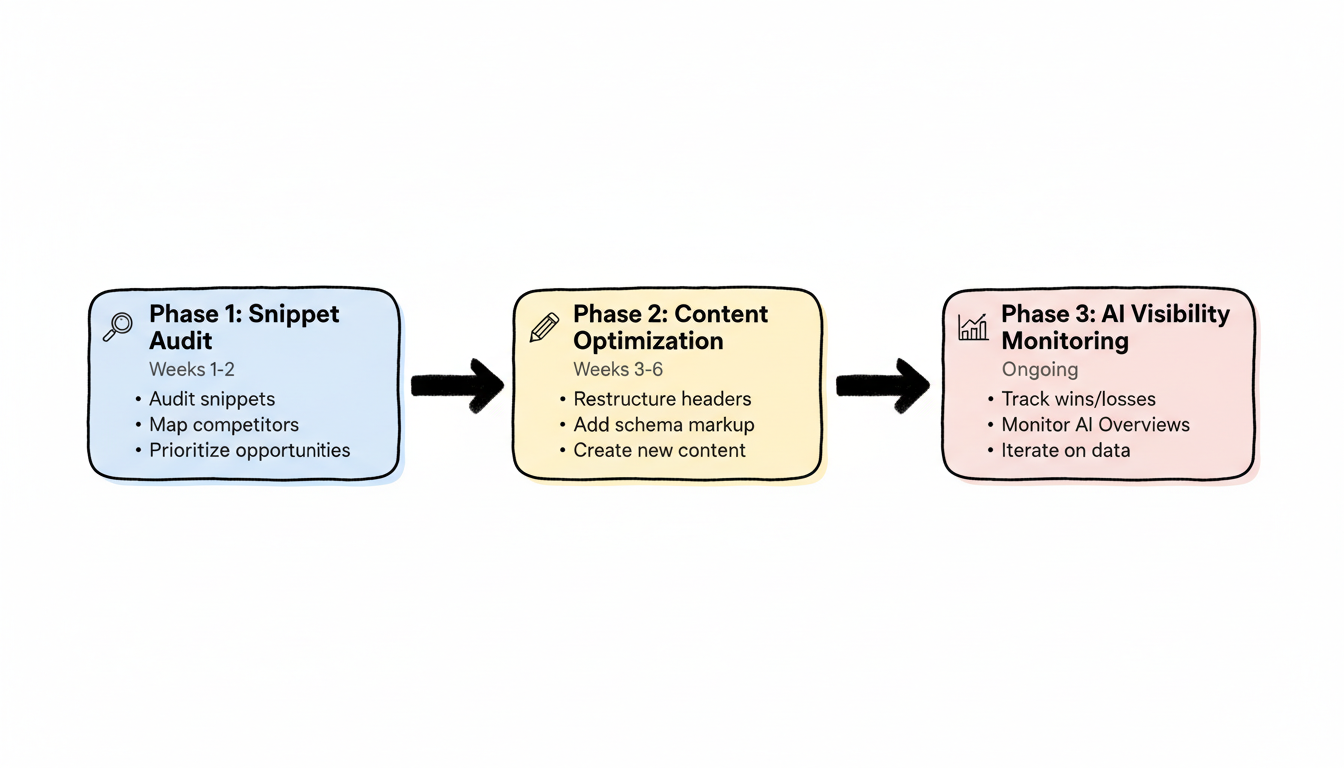
Implement a systematic approach to move from snippet wins to AI citations.
Current state analysis:
Tools for audit:
Optimize existing content:
Create new snippet-targeted content:
Understanding GEO vs SEO vs AEO differences helps align your content strategy with the right optimization approach for each search environment.
Track the pipeline:
Iterate based on data:
Many organizations avoid common AEO marketing mistakes by implementing systematic monitoring and iterating based on actual AI citation performance rather than assumptions.
Traditional snippet metrics focused on CTR. AI-era metrics require broader measurement.
Metric | Measurement | Target |
Snippet wins | Tracking tools | +10% quarterly |
AI citations | Manual audit + tools | Presence for target queries |
Brand mentions | AI response monitoring | Consistent appearance |
Citation quality | Source position in AI response | Primary/secondary source |
Metric | Measurement | Target |
Organic traffic | GA4 | Maintain despite AI features |
Branded search | GSC | Increase from AI exposure |
Conversion rate | CRM attribution | Higher than non-AI traffic |
Topic authority | Ranking cluster performance | Consistent top 10 |
Calculate snippet and AI visibility ROI:
Visibility Value = (Brand Impressions × CPM Equivalent) + (Clicks × CPC Equivalent) + (Conversions × Conversion Value)Include brand value even when clicks decline—AI visibility builds recognition that converts through other channels. Evaluating AEO services ROI requires accounting for both direct traffic and brand visibility metrics.
No, but they strongly correlate. Content earning featured snippets demonstrates the structure and authority AI systems need, making citation more likely. However, AI systems may cite different sources depending on query context. Organizations implementing E-E-A-T answer engine optimization strategies see higher correlation between snippet wins and AI citations.
The core optimization is similar—clear structure, direct answers, and authoritative content. However, AI Overviews may synthesize from multiple sources, so comprehensive coverage matters more than single-answer optimization. Understanding AI SEO vs traditional SEO differences helps balance these approaches.
Timelines vary based on competition and existing authority. New content targeting low-competition queries might win snippets in 4-8 weeks. Competitive queries may require 6-12 months of authority building.
Yes. While direct CTR may decline, snippets provide brand visibility, establish authority for AI citations, and still drive traffic for queries without AI Overviews. The strategic value extends beyond immediate clicks. Reviewing AI Overview case studies demonstrates the long-term brand value even when immediate traffic declines.
E-E-A-T signals (Experience, Expertise, Authoritativeness, Trustworthiness) influence snippet selection and AI citations. Build author profiles, demonstrate expertise, cite authoritative sources, and provide accurate information to support both goals. Many top generative engine optimization companies prioritize E-E-A-T as the foundation of their snippet optimization strategies.
By submitting this form, you agree to our Privacy Policy and Terms & Conditions.